Ultimate Duomo di Milano Guide: History, Highlights, Terraces, Rooftop Tips & Milan Duomo Tickets
FREE Milan Travel Guide Sampler
The Duomo di Milano, also known as Milan Cathedral, represents an extraordinary collaboration of countless minds and hands across centuries. This Gothic masterpiece has withstood wars, political upheavals, and the test of time to emerge as one of the world's greatest architectural feats. Its breathtaking beauty draws visitors from near and far, offering a spectacle that evolves with every perspective.
Spanning an immense 109,000 square feet (about 10,000 square meters), the Duomo's intricate details ensure that no two views are the same. Whether you're standing in Piazza del Duomo gazing up at its soaring spires or exploring its interior up close, the experience is transformative.
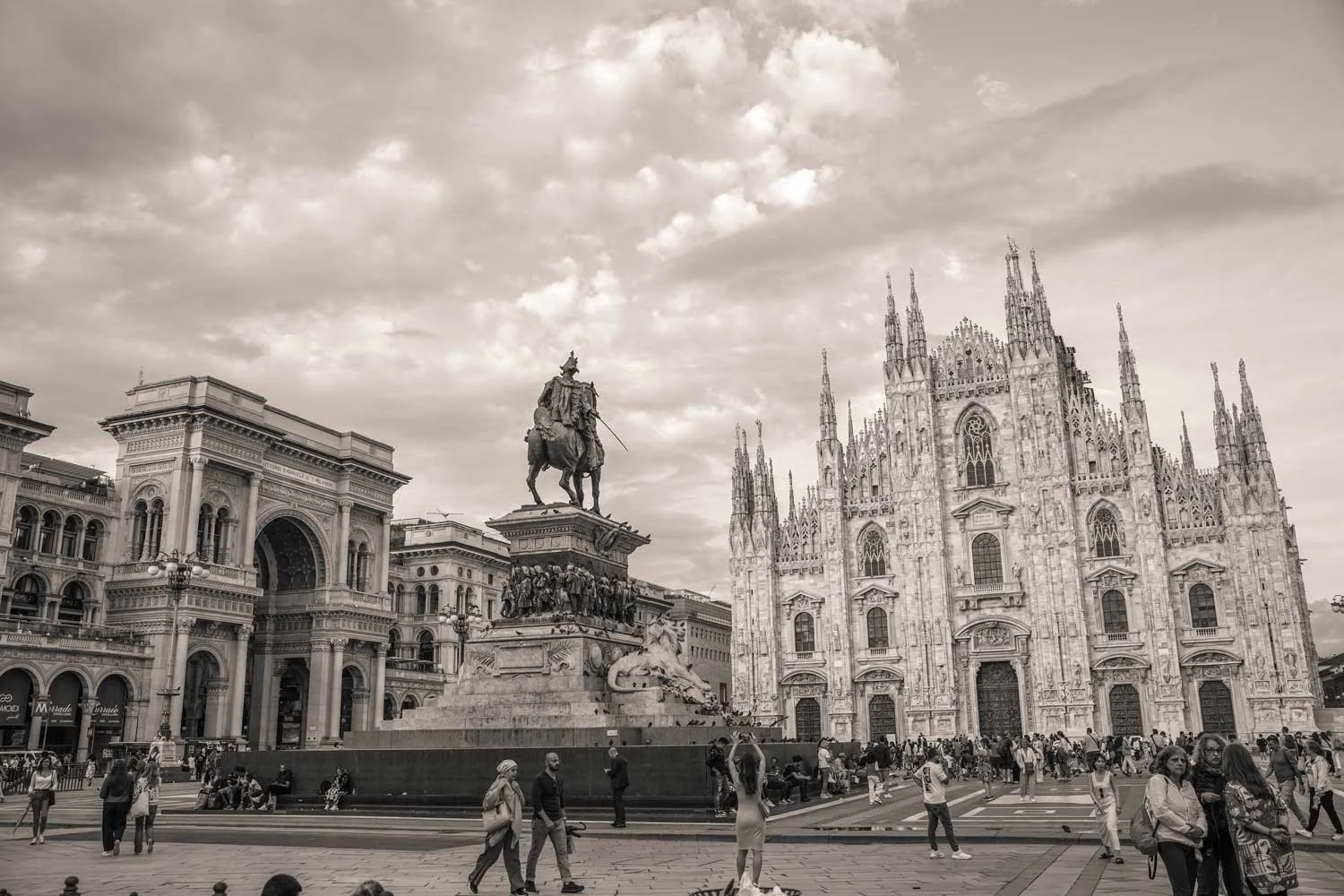
In this comprehensive guide, I'll take you on a virtual tour through the Duomo's highlights—from the ornate portals of the front facade to the majestic pillars, monuments, and stained glass inside the nave and aisles. We'll ascend to the iconic terraces, often described as a "stone forest" of statues and spires, and descend into the archaeological ruins of ancient basilicas below. This post delves into the artistic, historical, and spiritual depths of the Duomo di Milano, but even with expanded details, we can only touch on its vast significance. Whether you're planning a trip or simply curious, this may inspire your own visit to this Milan landmark
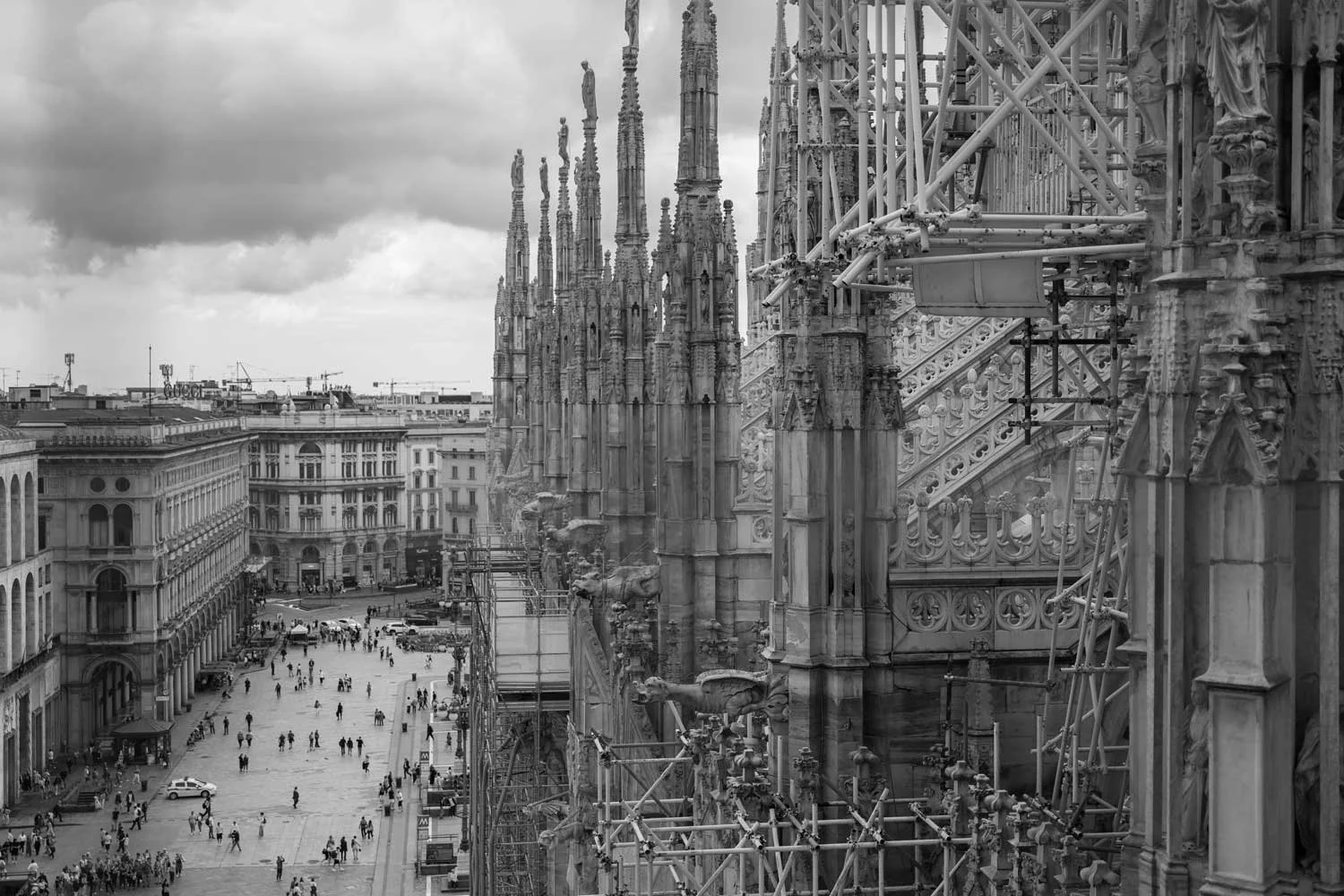
“They say that the Cathedral of Milan is second only to St. Peter's at Rome. I cannot understand how it can be second to anything made by human hands.” - Mark Twain
Exploring the Front Facade and Portals of Duomo di Milano
The portals on the Duomo's front facade are among the most captivating elements, showcasing centuries of craftsmanship. Best of all, admiring them up close doesn't require Milan Duomo tickets—it's free, though you'll want to time your visit to avoid peak crowds. Aim for early morning or late evening when the doors are closed, allowing a clear view of the intricate sculptures without obstruction.
Construction of the Duomo began in 1386 under the patronage of Gian Galeazzo Visconti, and remarkably, the final details on the last portal weren't completed until 1965. This 579-year timeline underscores the cathedral's enduring legacy as a living project.
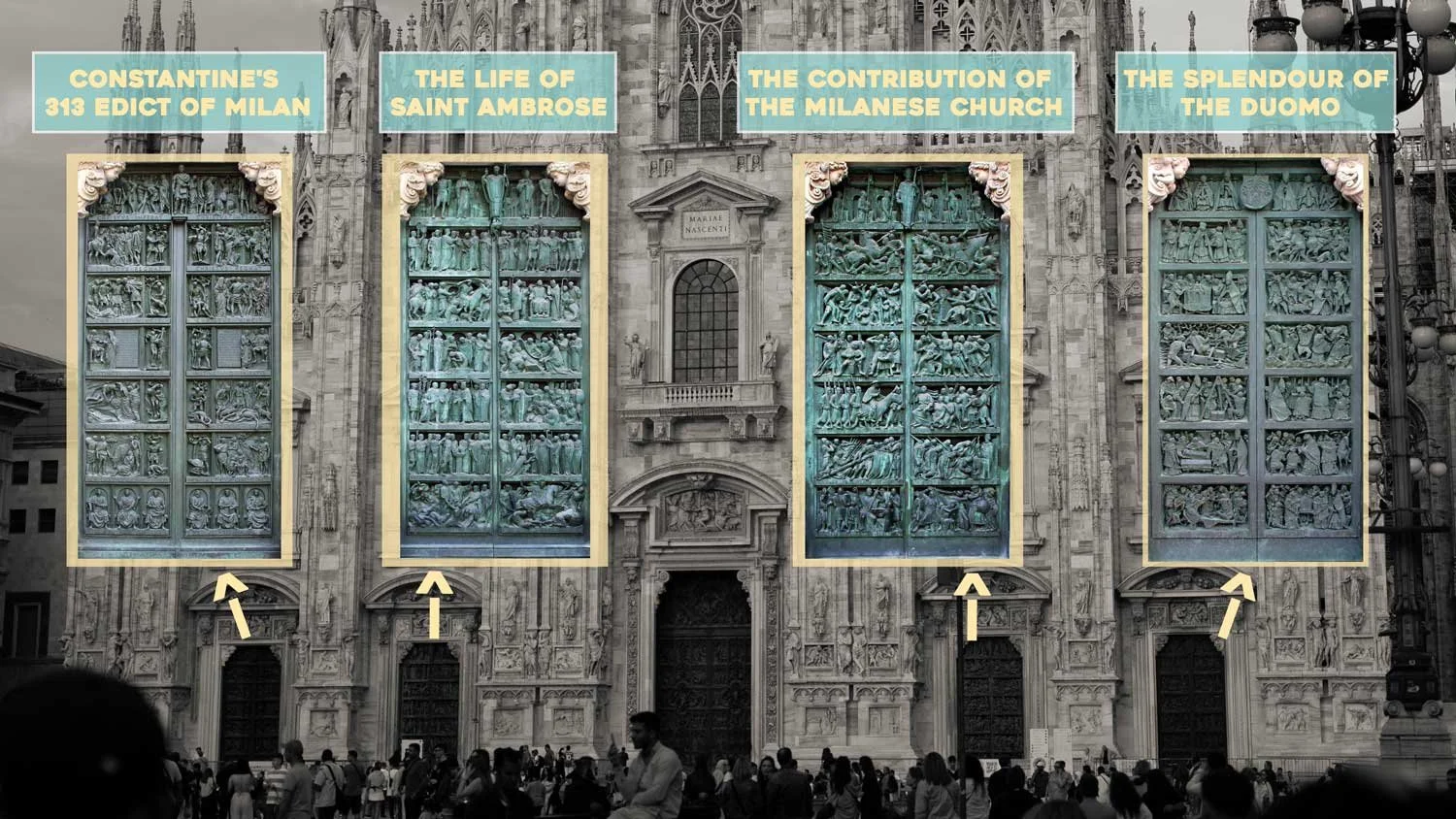
The facade features five main portal doors, each adorned with reliefs that narrate key stories from Milanese history. Starting from the left, the minor doors depict:
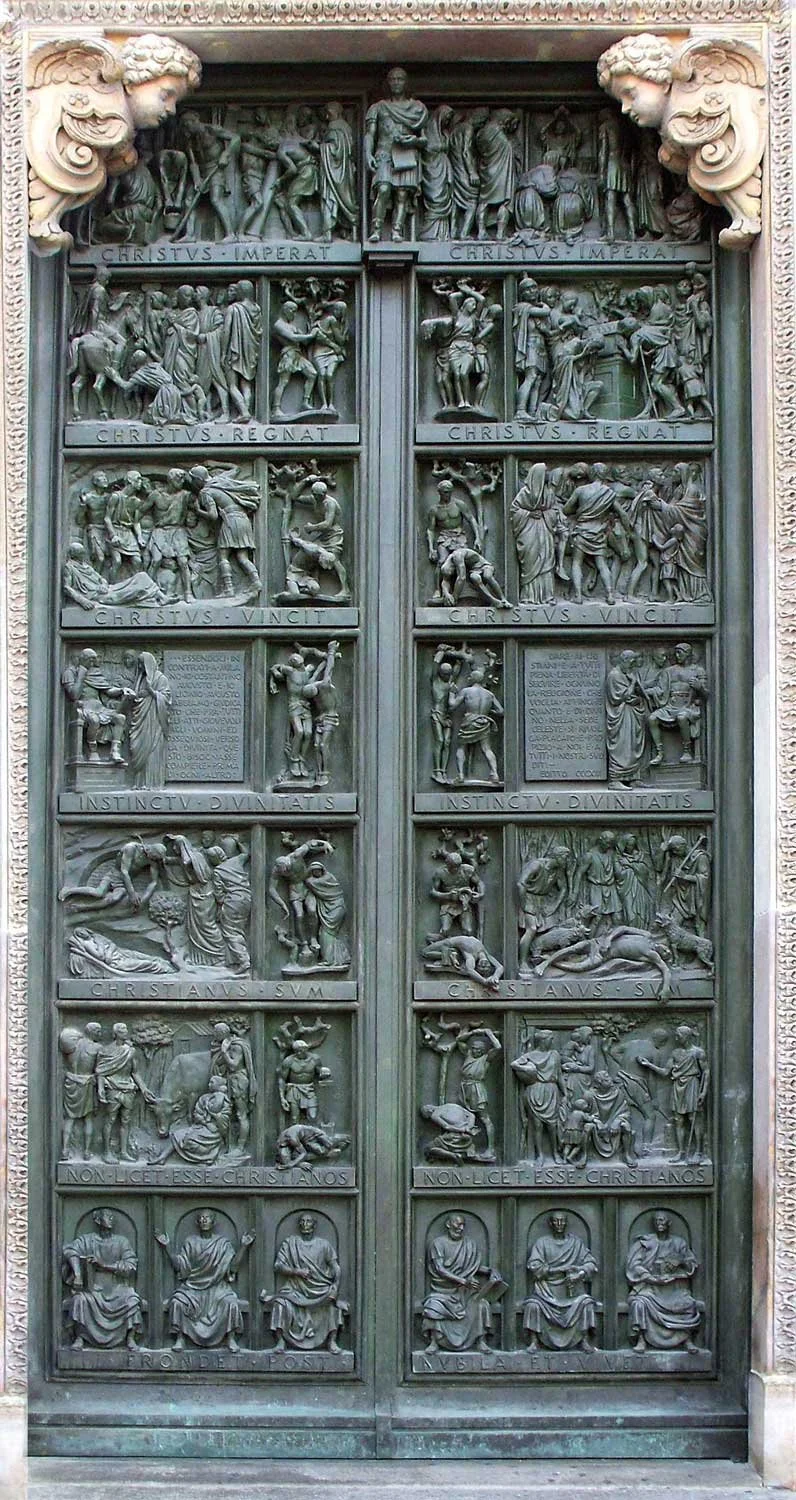
The Edict of Milan
Constantine's Edict of Milan in 313 AD, which granted religious tolerance and marked a pivotal moment for Christianity;
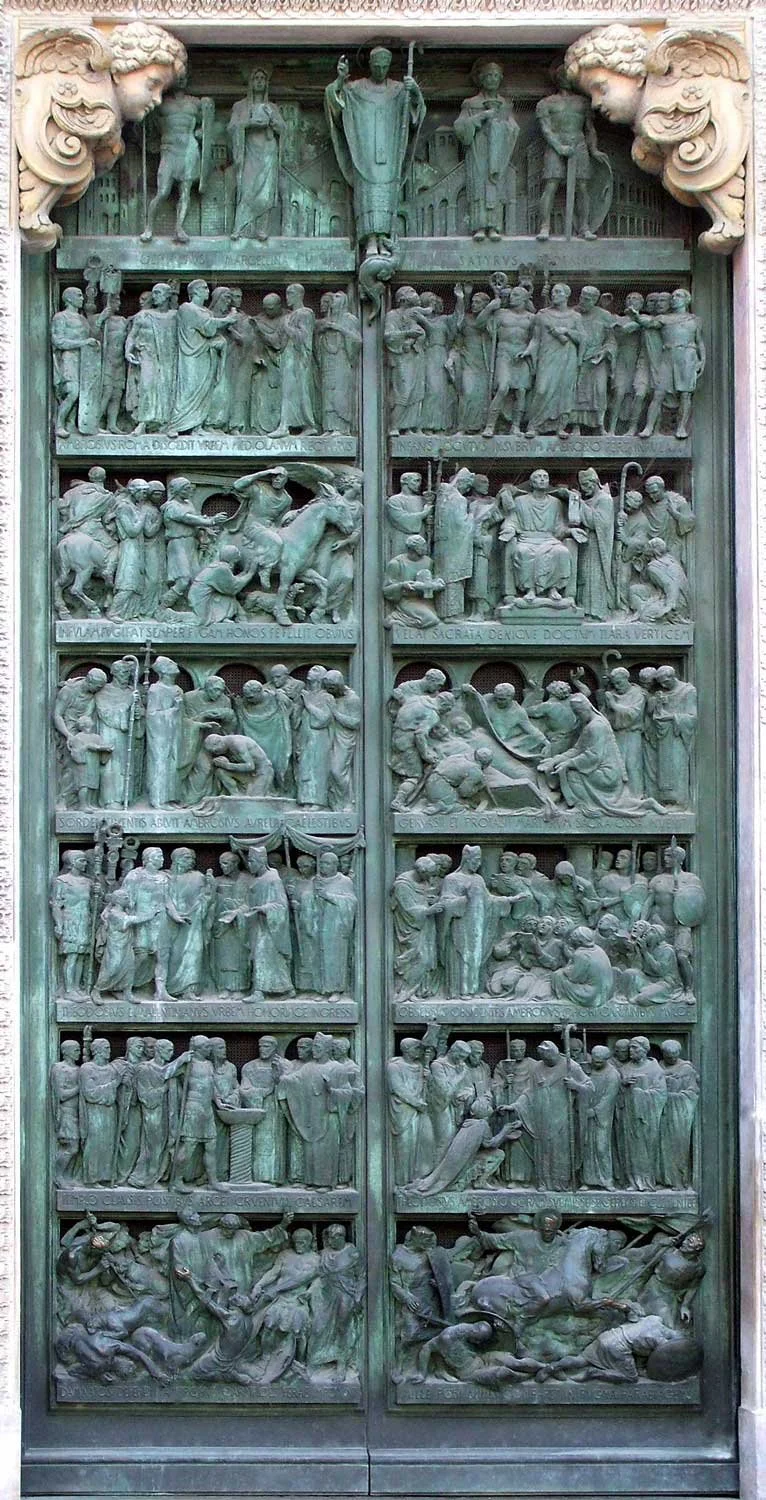
The Life of Saint Ambrose
The Life of Saint Ambrose, Milan's patron saint and a towering figure in early Church history;
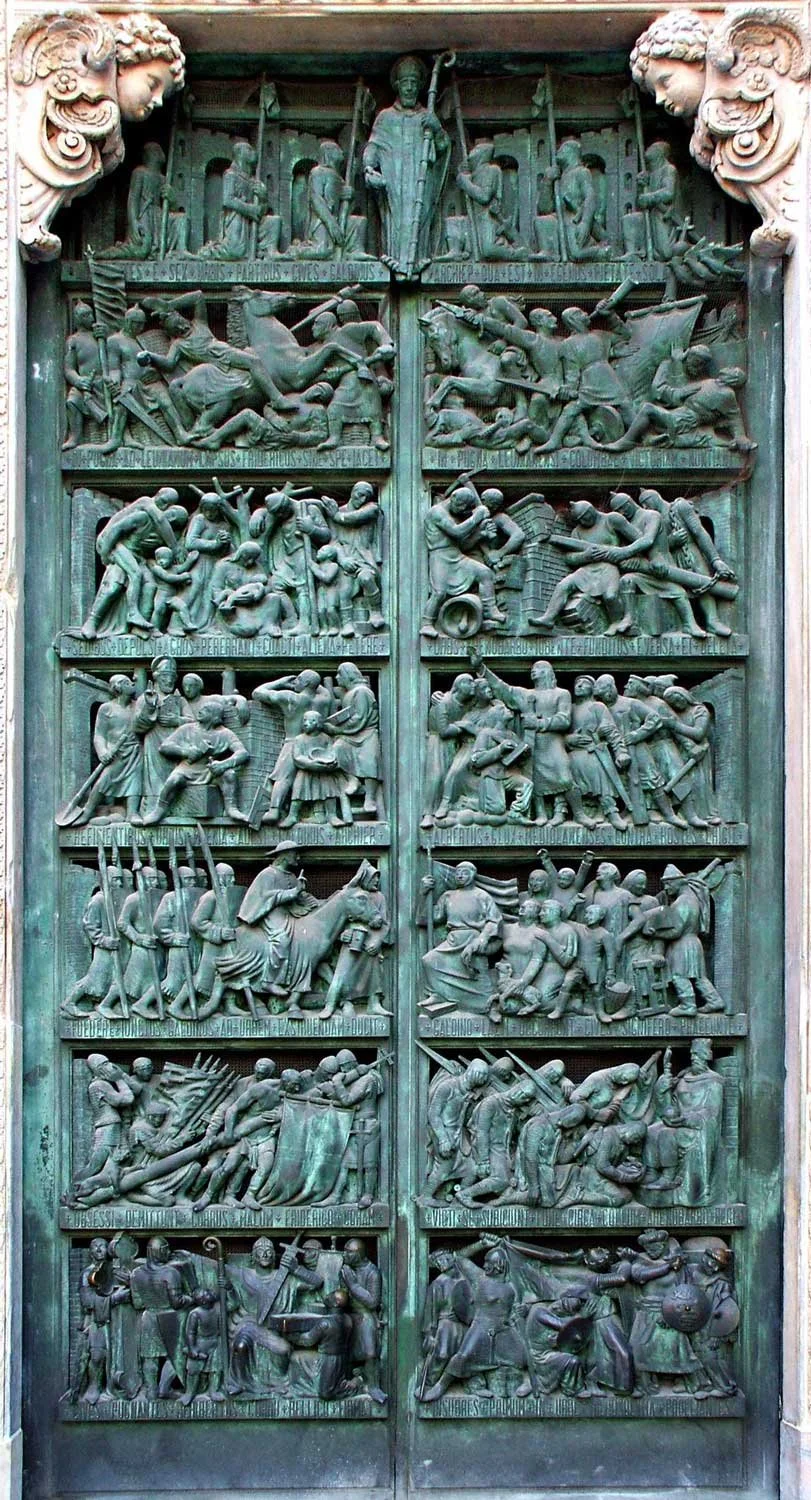
The Contribution of the Milanese Church
The Contribution of the Milanese Church, highlighting the local clergy's role in shaping the region;
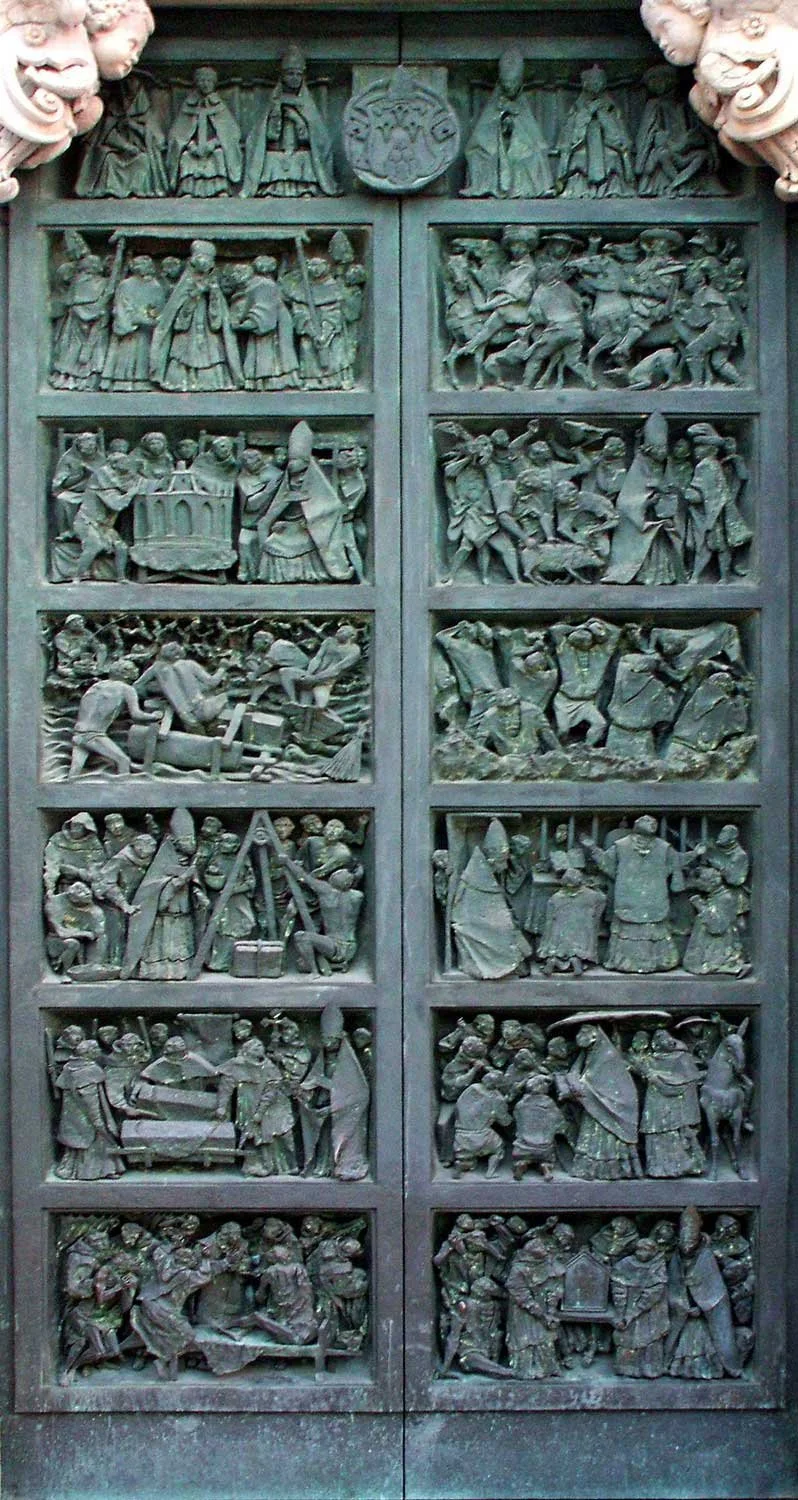
The Splendour of the Duomo
The Splendour of the Duomo itself, celebrating the cathedral's grandeur.
The central portal stands out as the most elaborate, dedicated to “The Joy and Sorrow of the Virgin Mary,” reflecting the Duomo's consecration to the Madonna. The right door captures Mary's joys, with scenes of her motherhood and an infant Jesus, culminating in a centerpiece where angels uphold Mary cradling the baby. In contrast, the left door portrays her sorrows, focusing on Christ's passion and crucifixion, with Mary and angels supporting his lifeless body in the central relief.
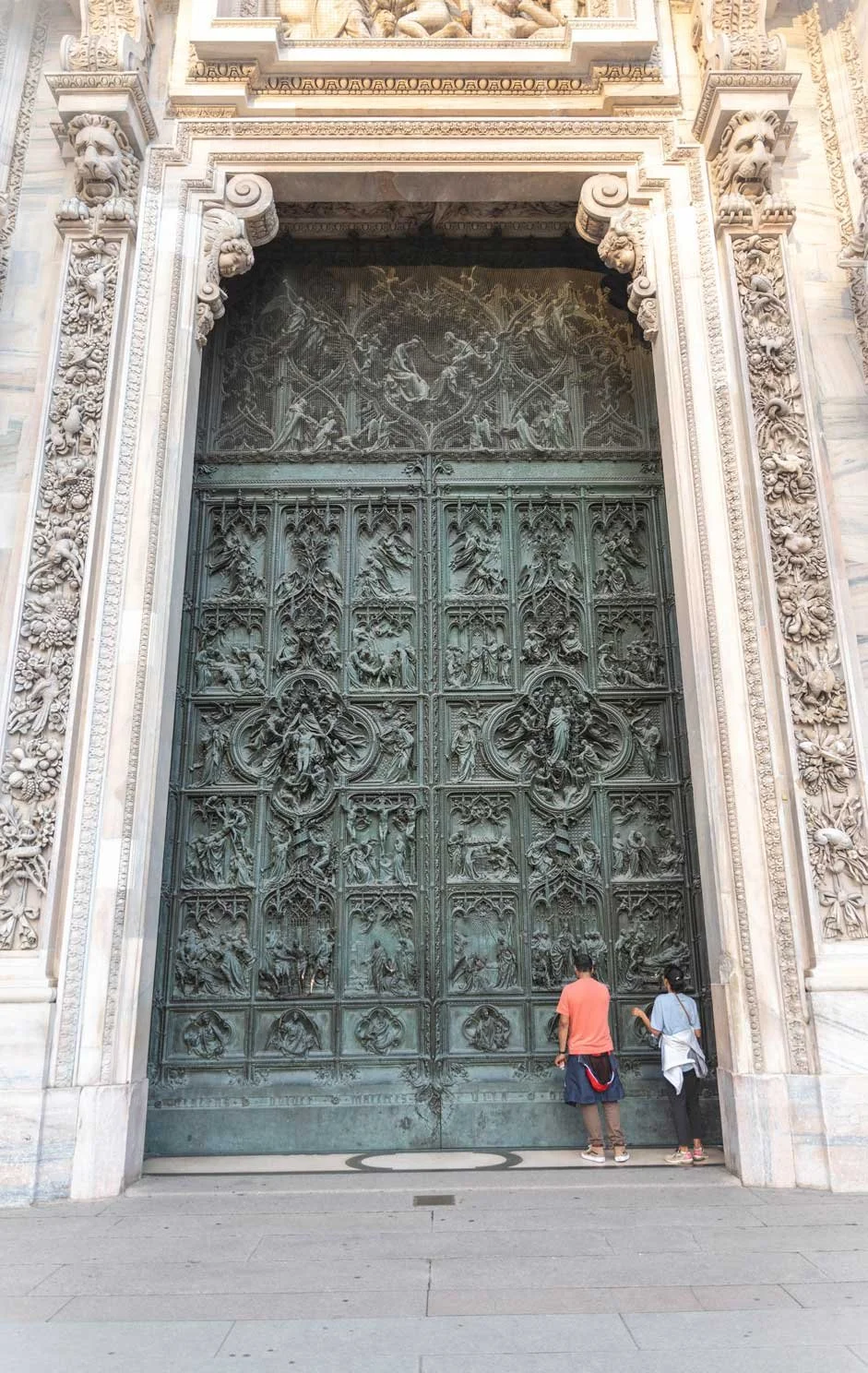
These lower reliefs hold special cultural significance, worn smooth from generations of visitors touching them for blessings. Popular spots include the infant Jesus in the manger, Jesus clasping Mary's hand, and his leg as he's led to the cross—tactile reminders of the Duomo's role as a spiritual touchstone.
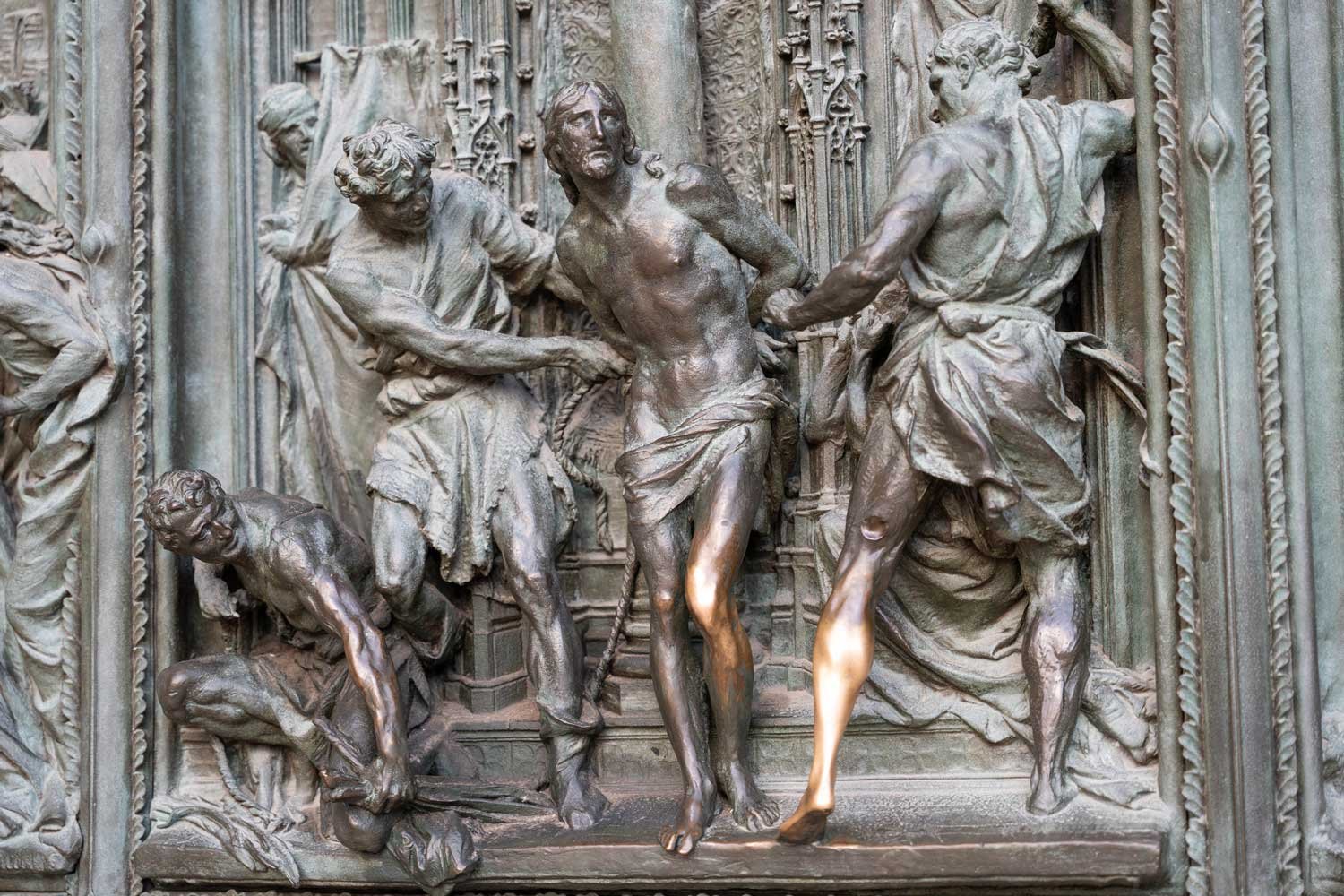
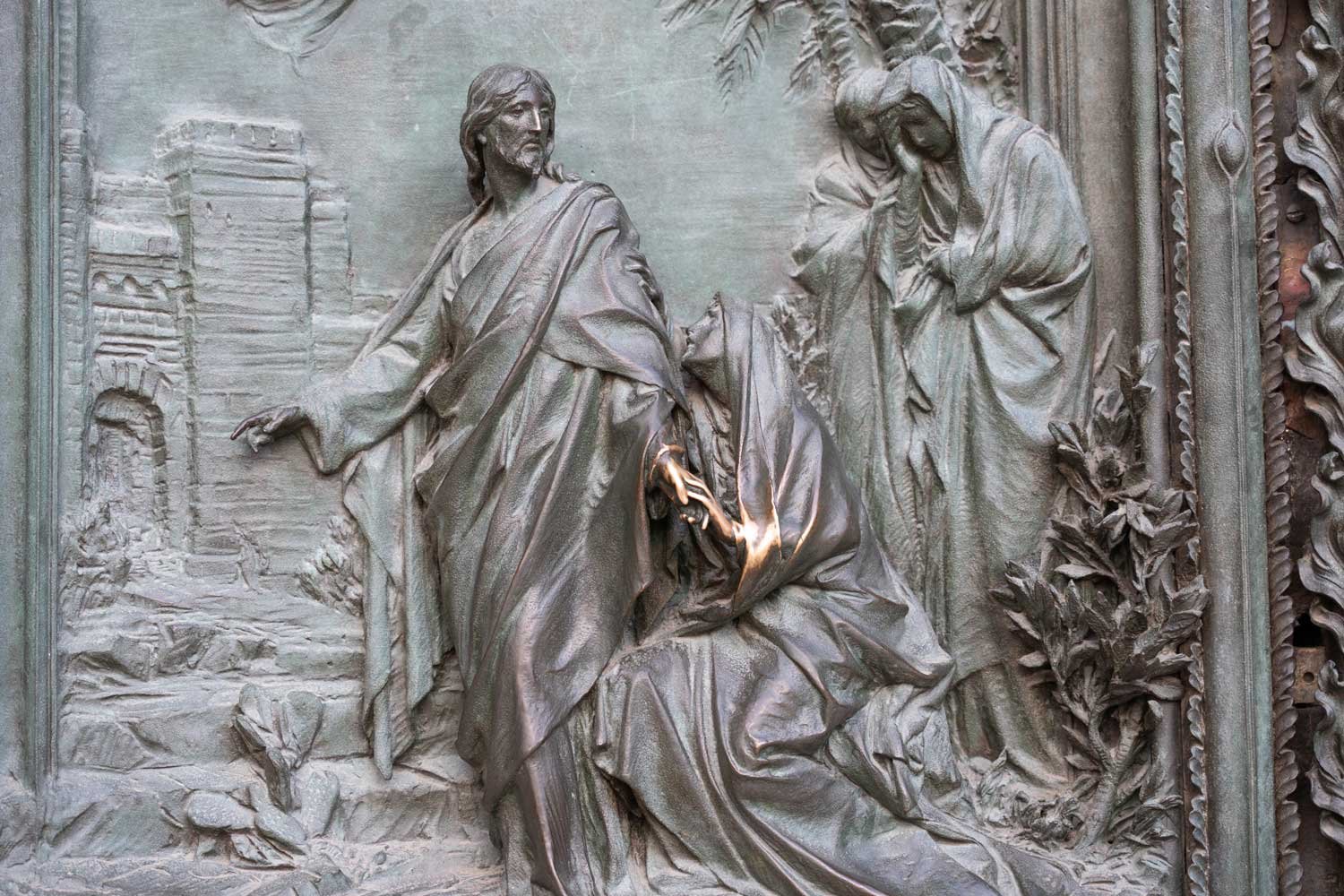
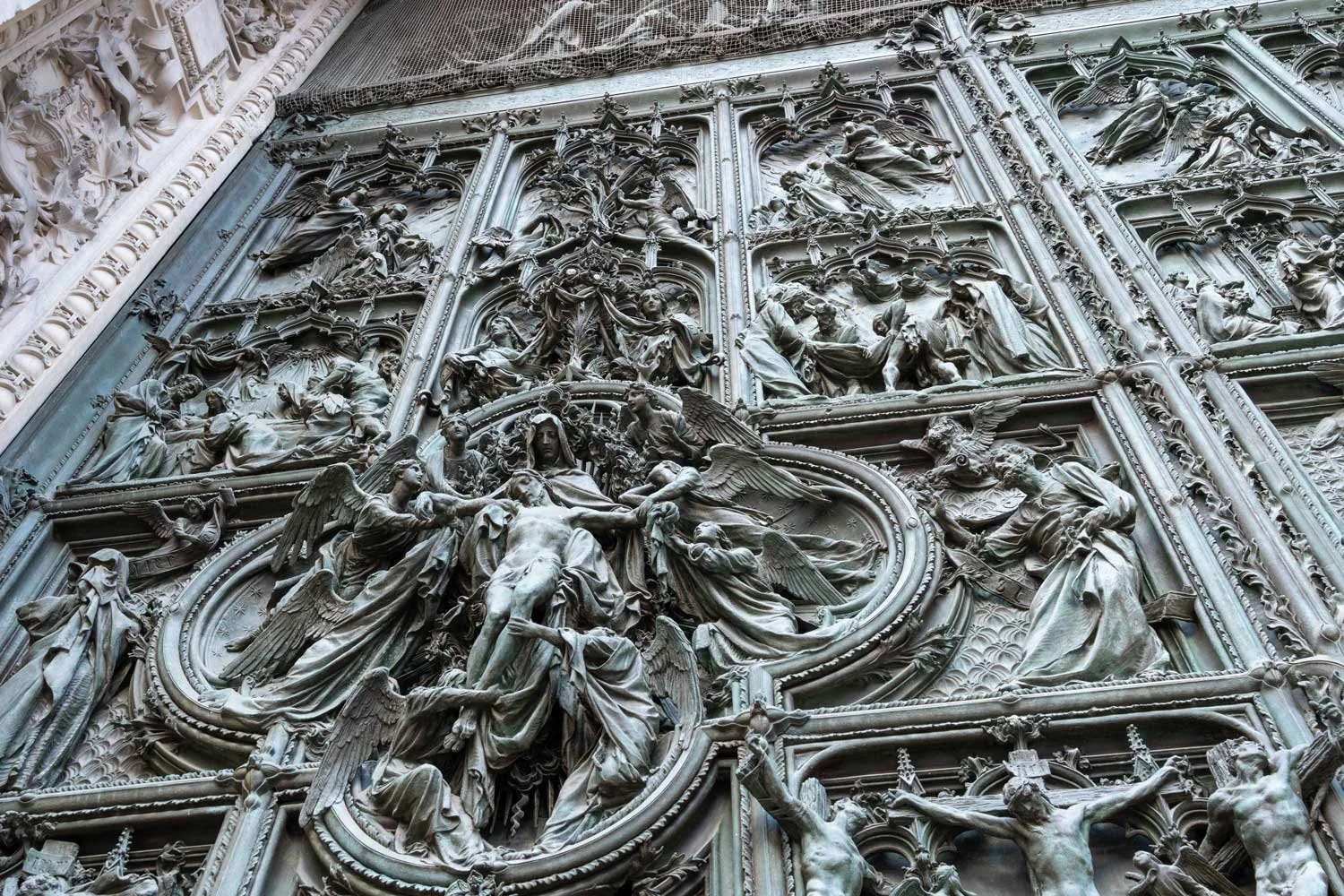
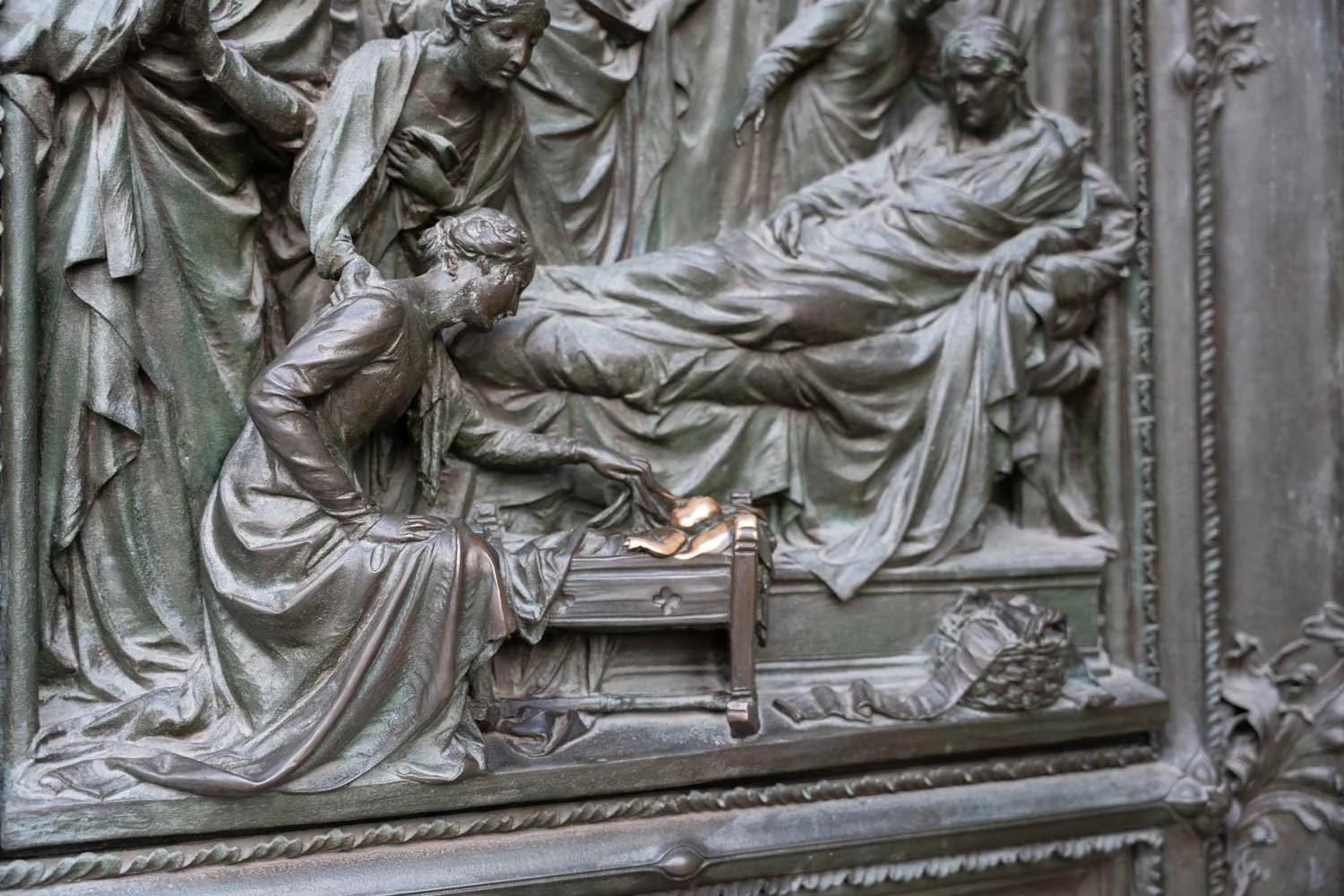
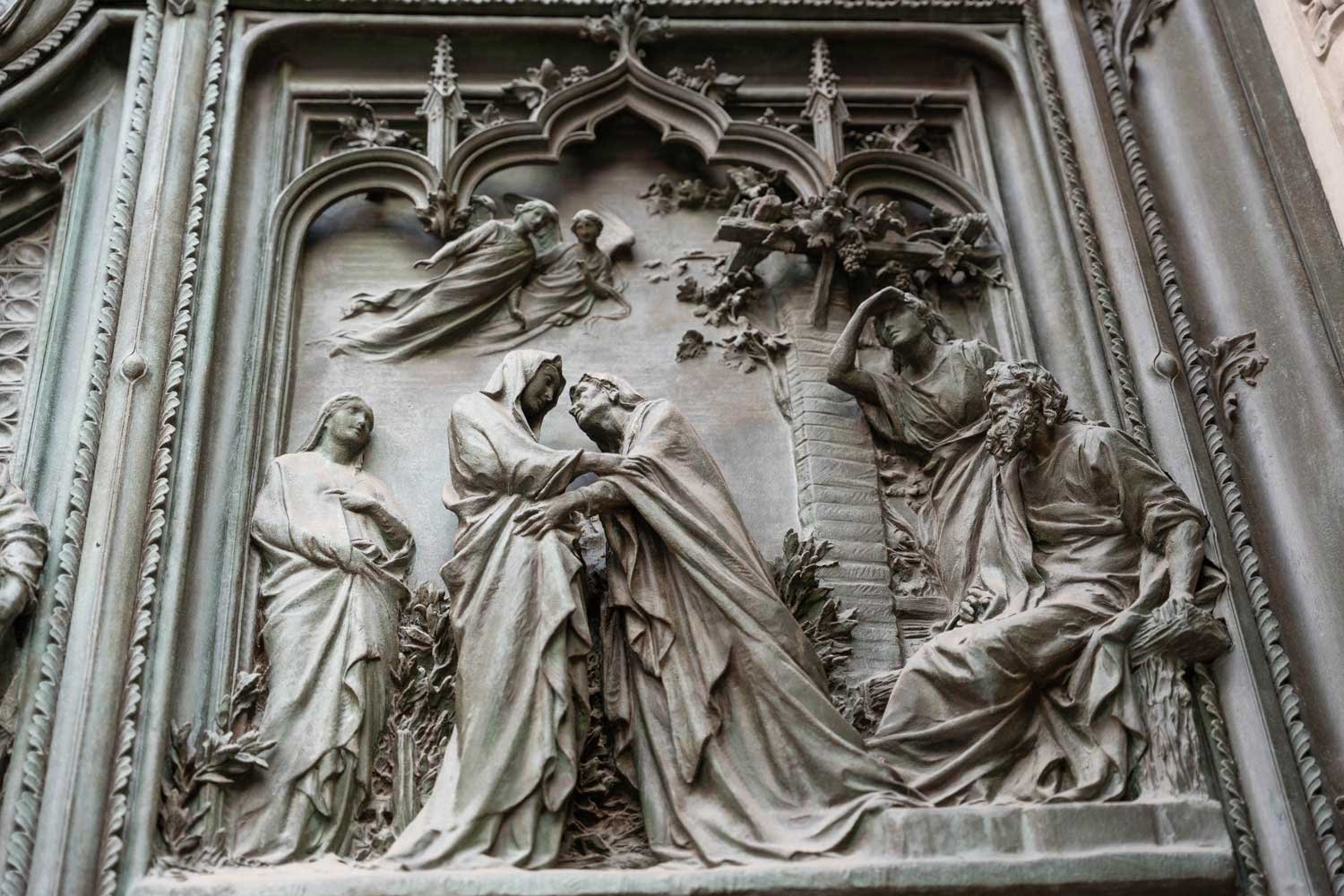
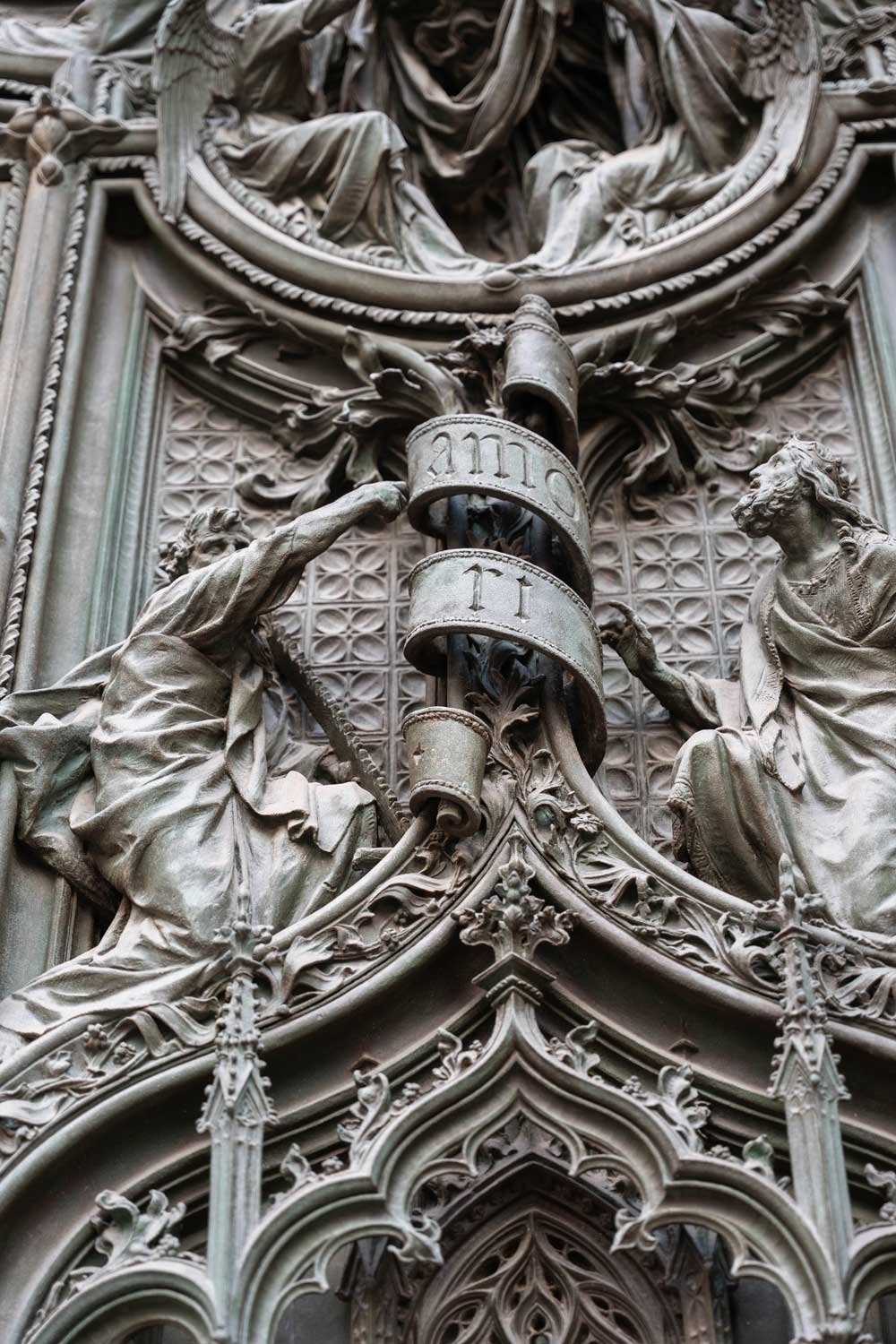
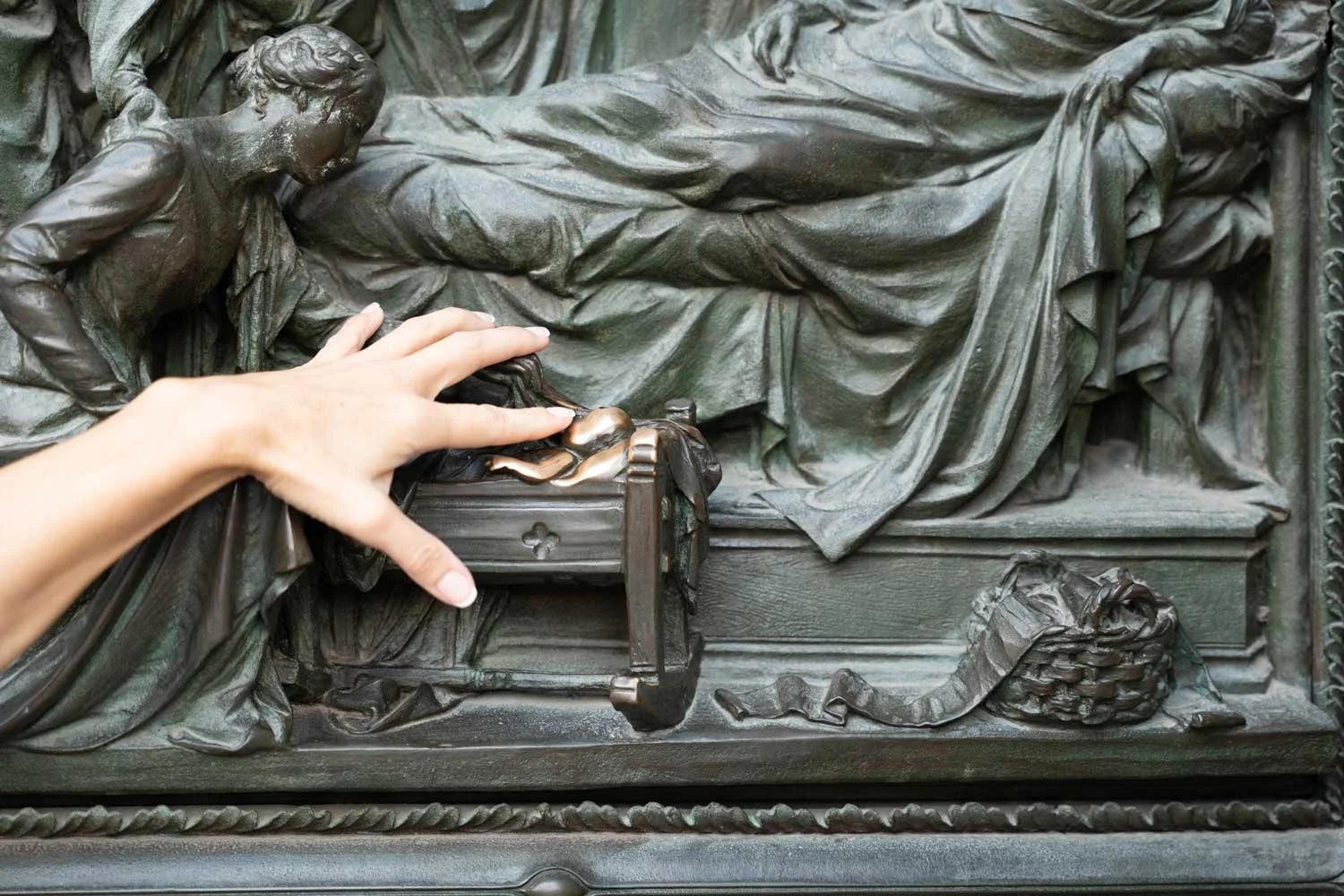
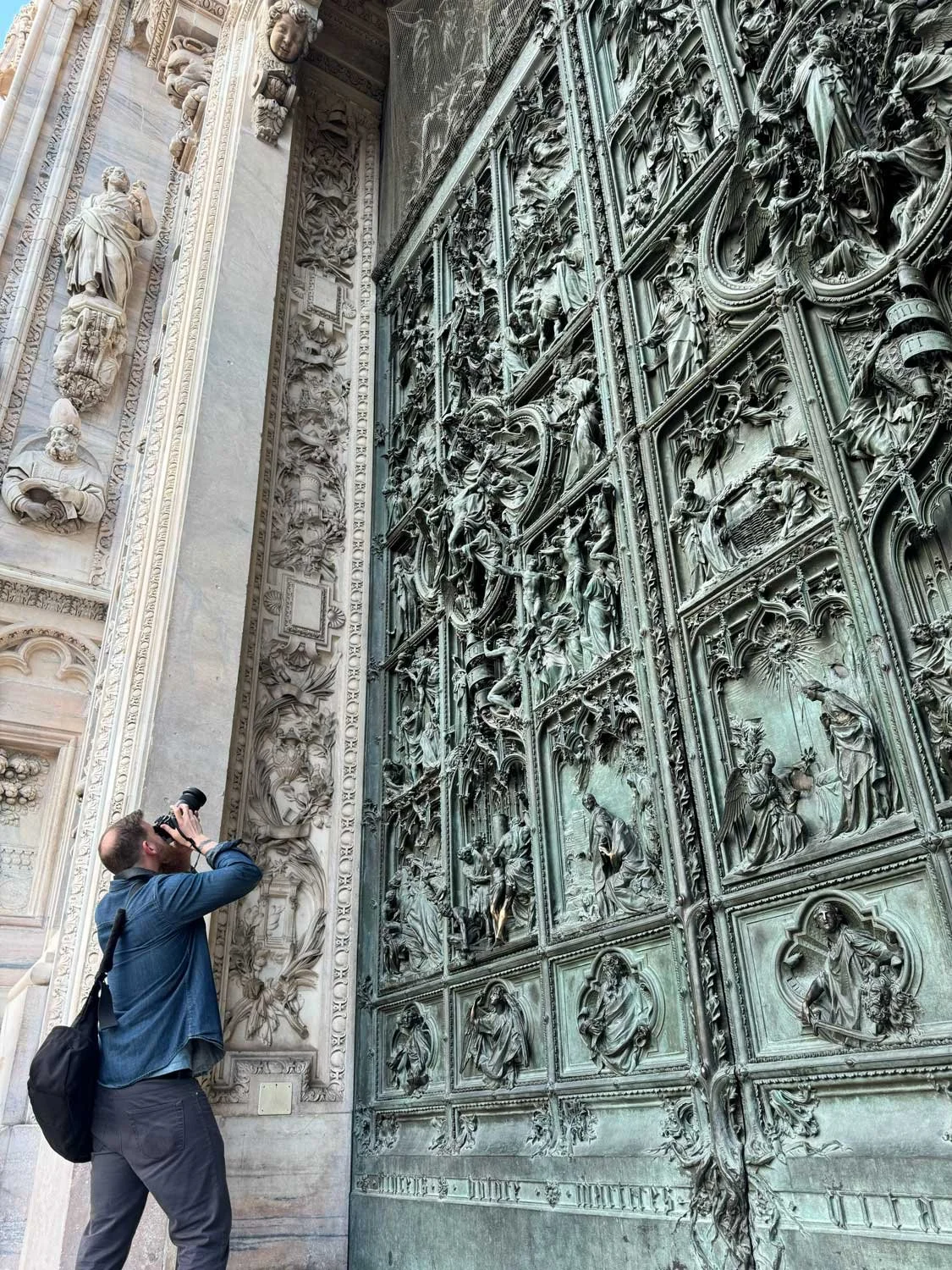
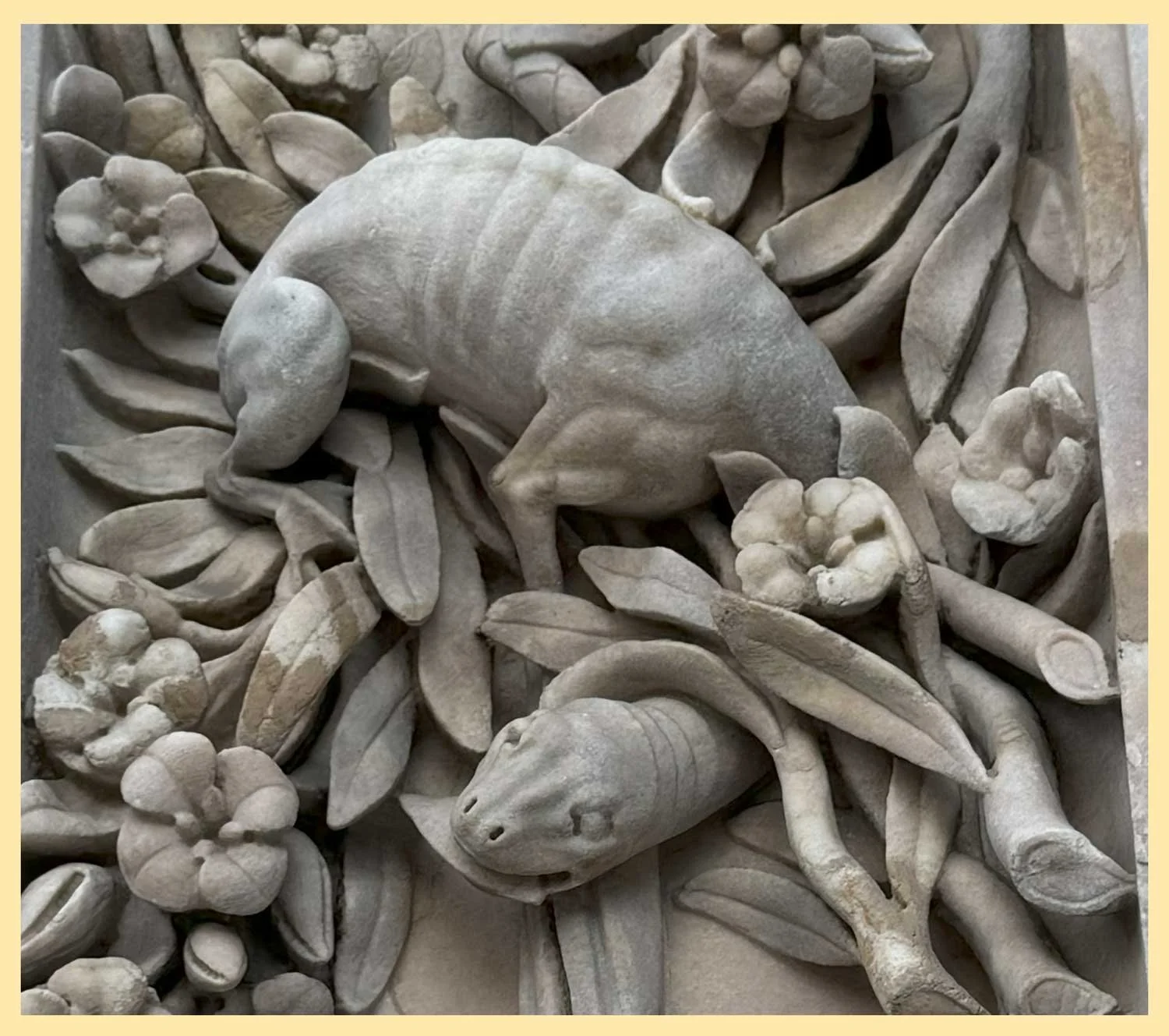
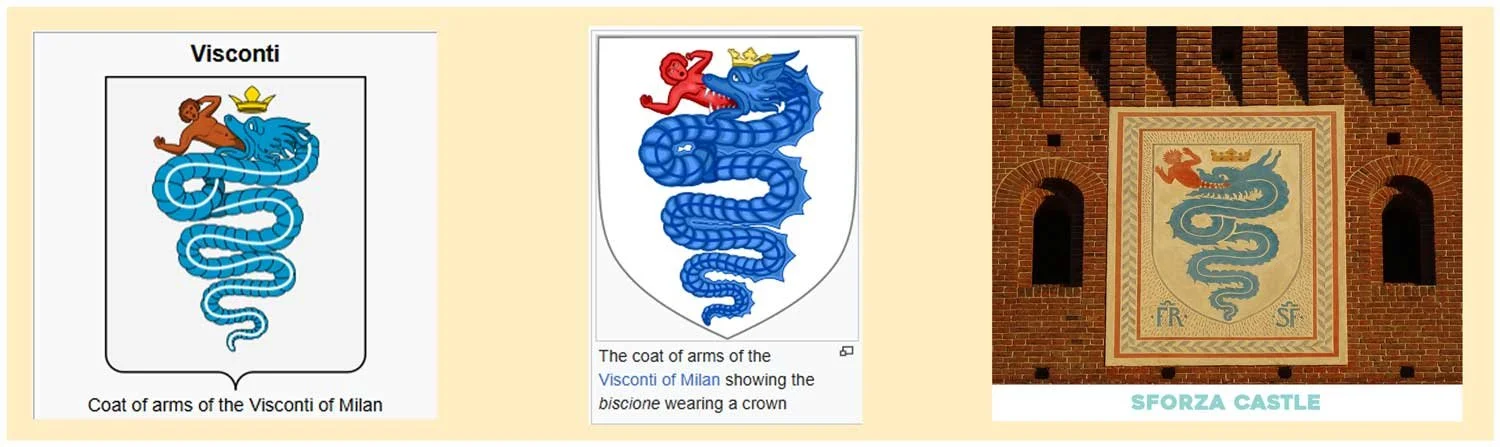
Just to the right of the central portal, a whimsical sculpture catches the eye: the legendary Tarantasio Dragon. This mythical beast reportedly terrorized the Po Valley in the 12th and 13th centuries, claiming numerous lives. According to legend, Umberto Visconti slayed it and incorporated the creature into his family crest as the “Biscione,” or “big grass snake”—often shown as a serpent devouring a human. This symbol has become emblematic of Milan's power, appearing on ancient pottery in the archaeological area and modern icons like the logos of Inter Milan football club and Alfa Romeo cars. It's a fascinating blend of folklore and civic pride embedded in the Duomo's stone.
Inside the Duomo: Pillars, Monuments, and Hidden Gems
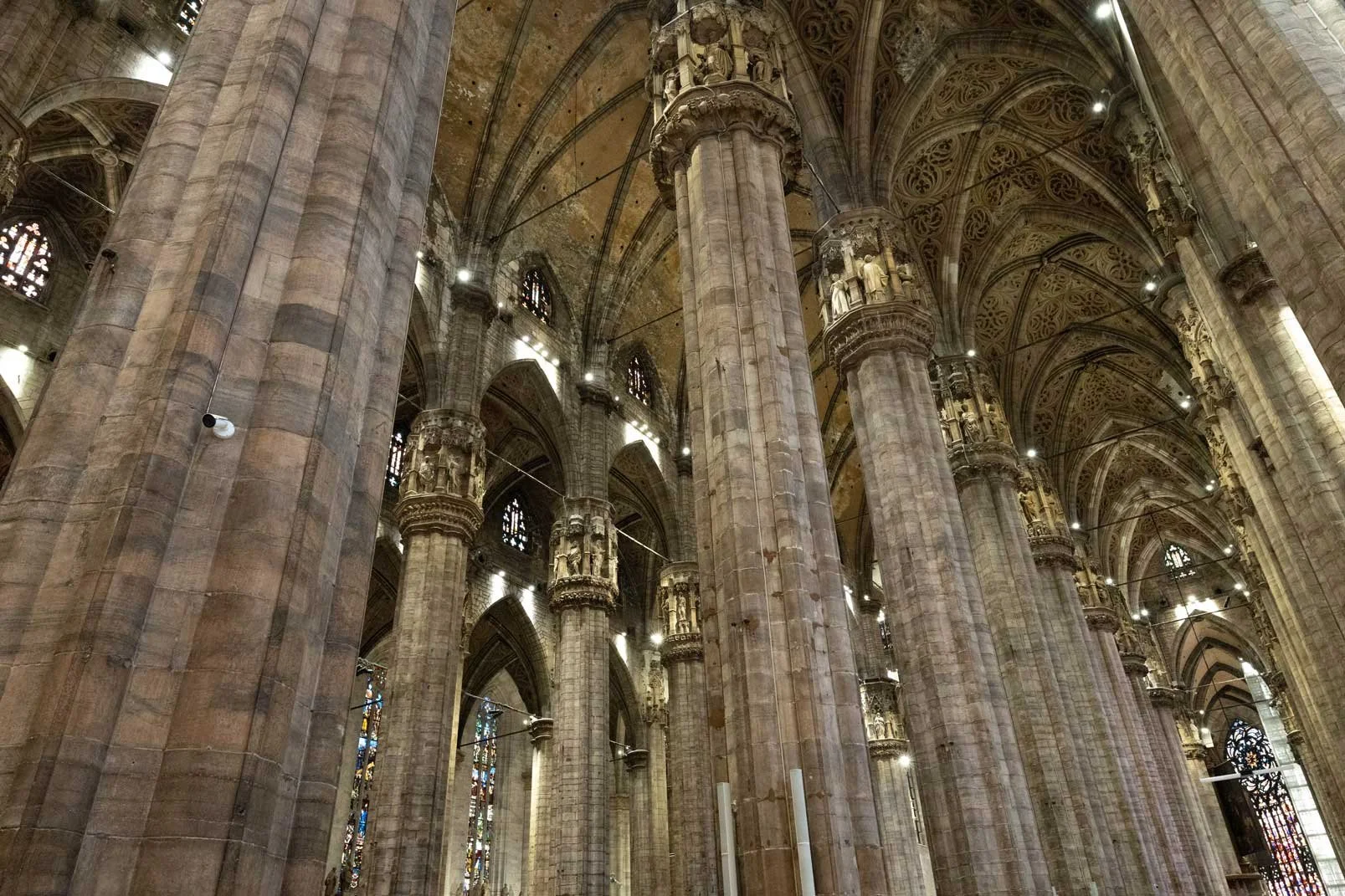
Stepping inside the Duomo di Milano is like entering another world, where massive pillars—some of the largest you'll ever encounter—rise dramatically, each capped with elaborate sculptures. These columns, crafted from brick and Candoglia marble (sourced from a dedicated quarry), support the vaulted ceiling and frame an expansive mosaic marble floor that tells its own stories through patterns and symbols.
The sheer scale can be overwhelming, so take your time to explore the aisles, where extraordinary artworks await. For those wondering about Milan Duomo tickets, entry to the cathedral interior starts at around €5–10, depending on inclusions, but it's worth every cent for the immersive experience.
Stained Glass Windows: Illuminating Stories
As your eyes adjust, the stained glass windows demand attention. These vibrant panels, some dating back centuries, flood the interior with colored light. For instance, above the monument to Saint John the Good (a former Archbishop of Milan), three windows vividly narrate his life, from his virtuous deeds to his legacy. These windows aren't just decorative—they complement the monuments below, creating a cohesive storytelling experience through light and stone.
Key Monuments: Saint John the Good and Gian Giacomo Medici
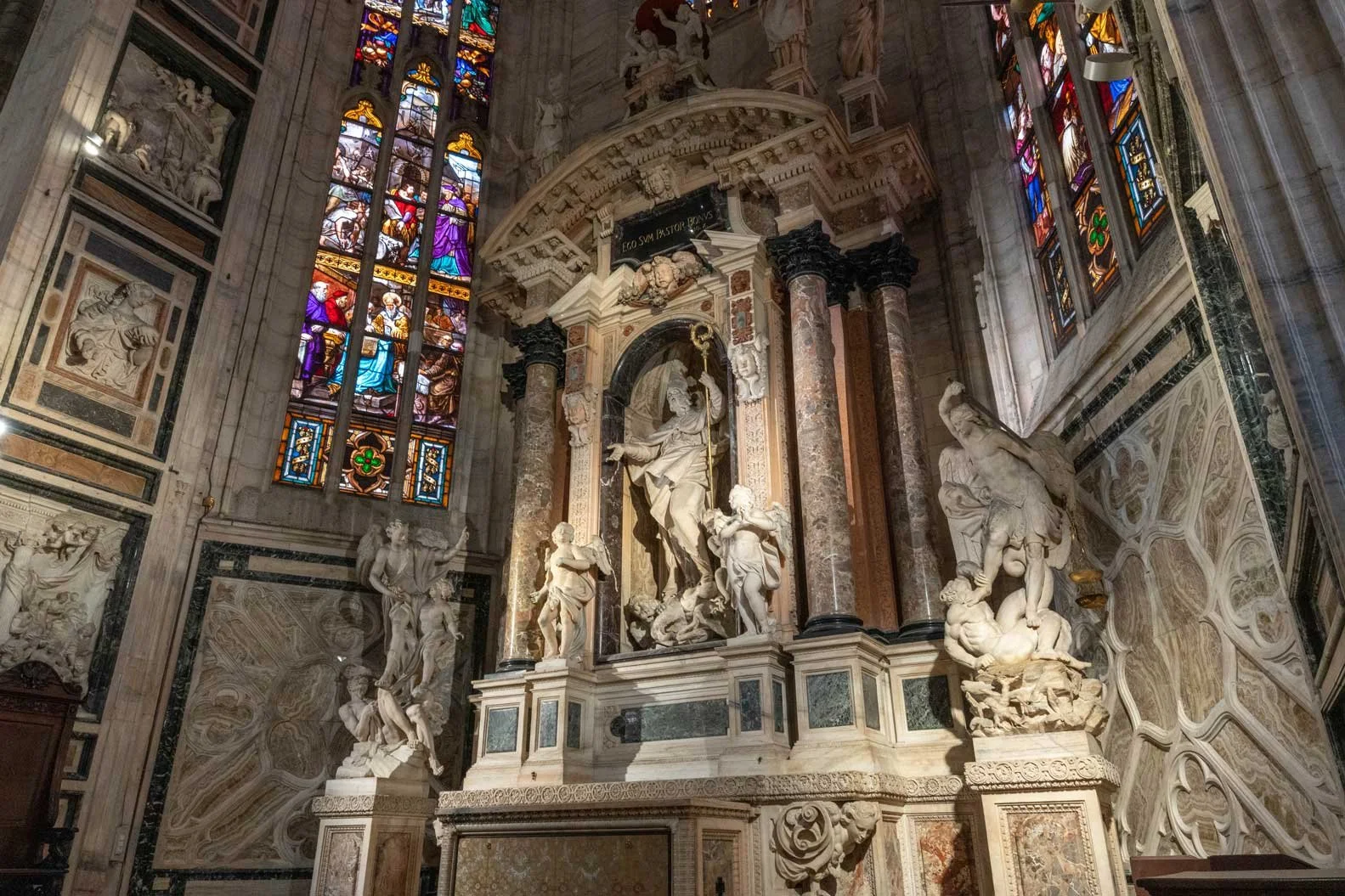
The monument to Saint John the Good features the Latin inscription "Ego Sum Pastor Bonus" ("I am the Good Shepherd"). At its center, Saint John triumphs over the Devil, crushing him underfoot. Flanking him are the Archangel Michael slaying Lucifer on the right and an angel guiding a child while stepping on a demon on the left—symbolic of protection and victory over evil.
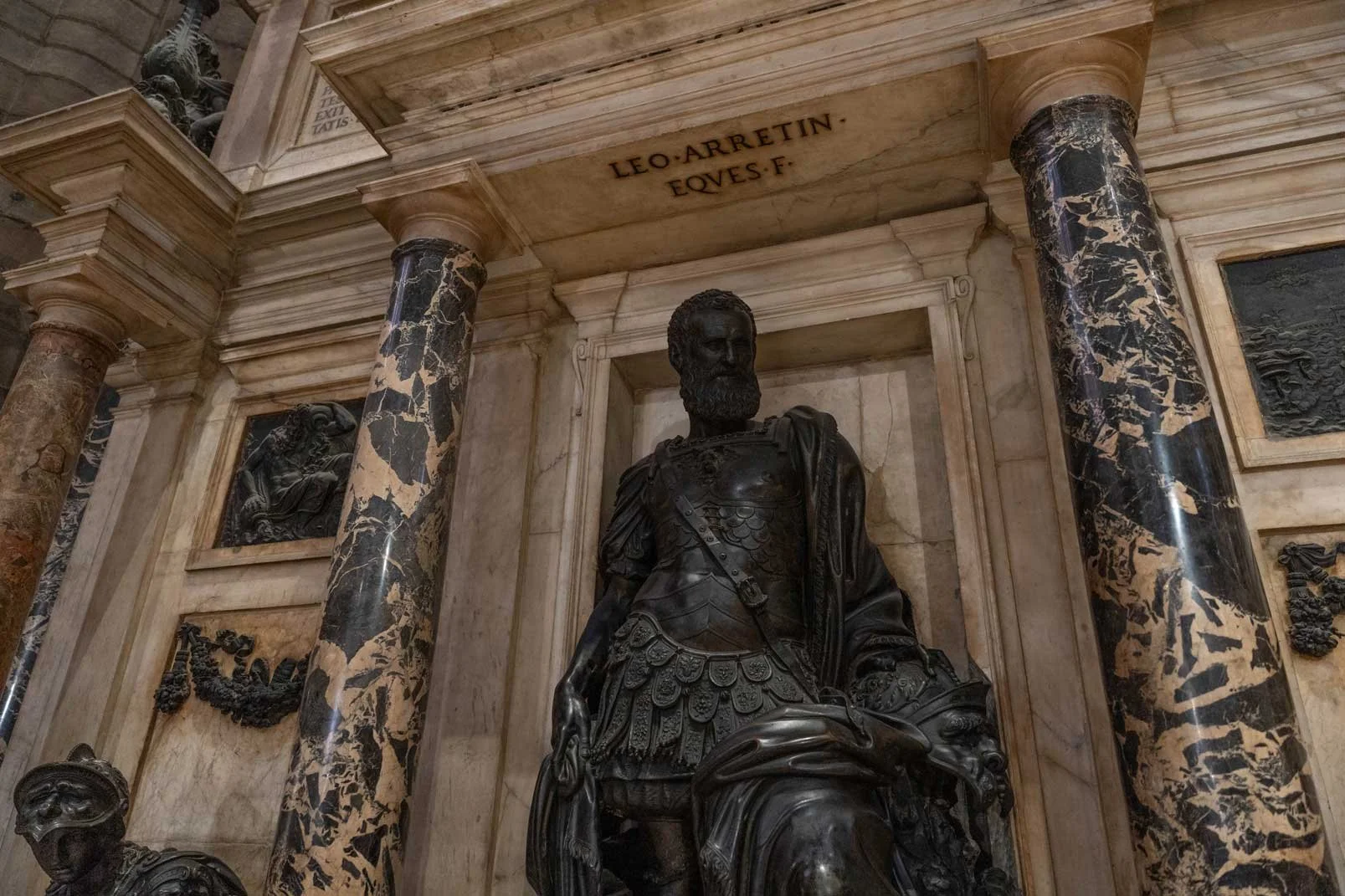
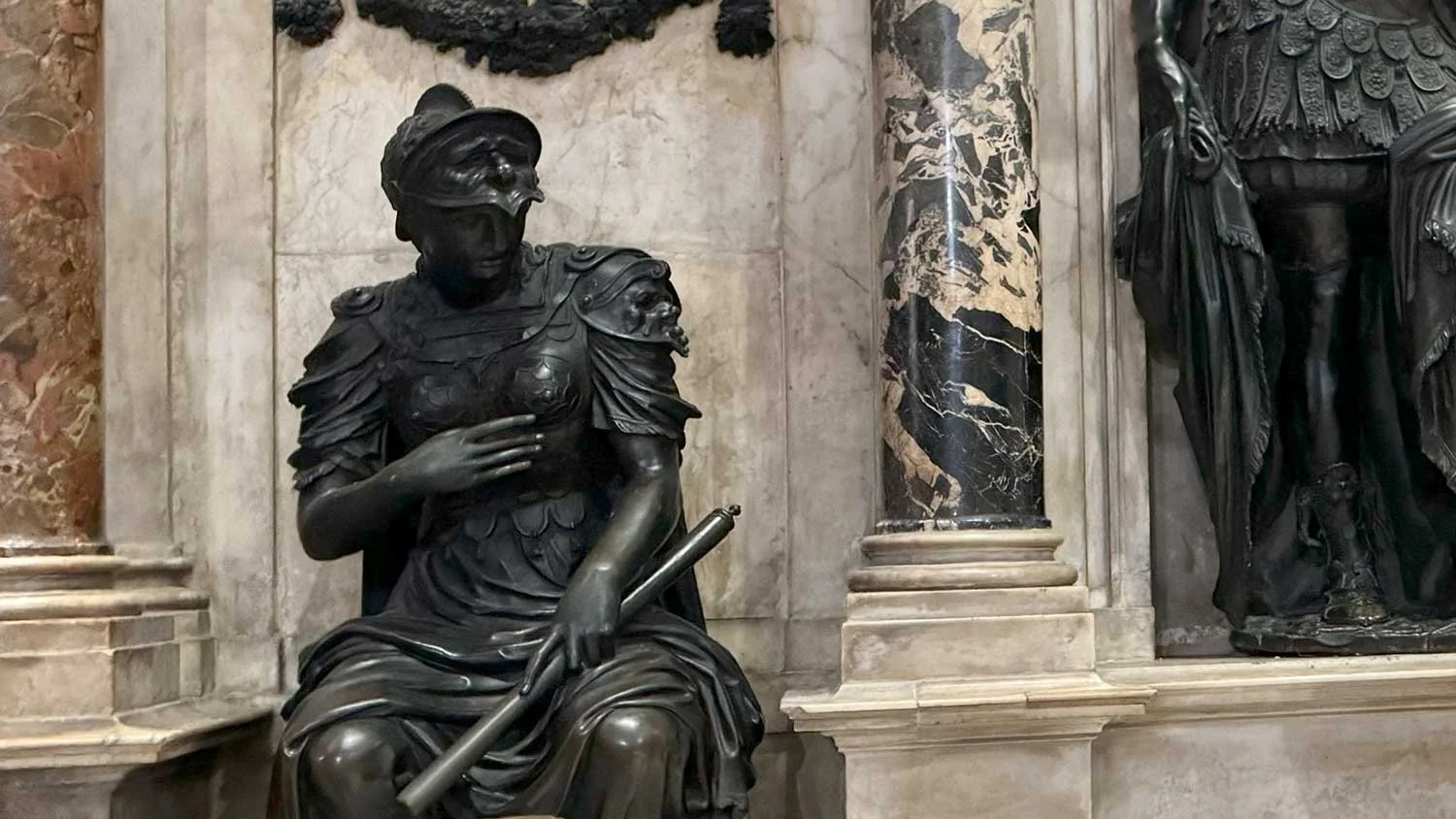
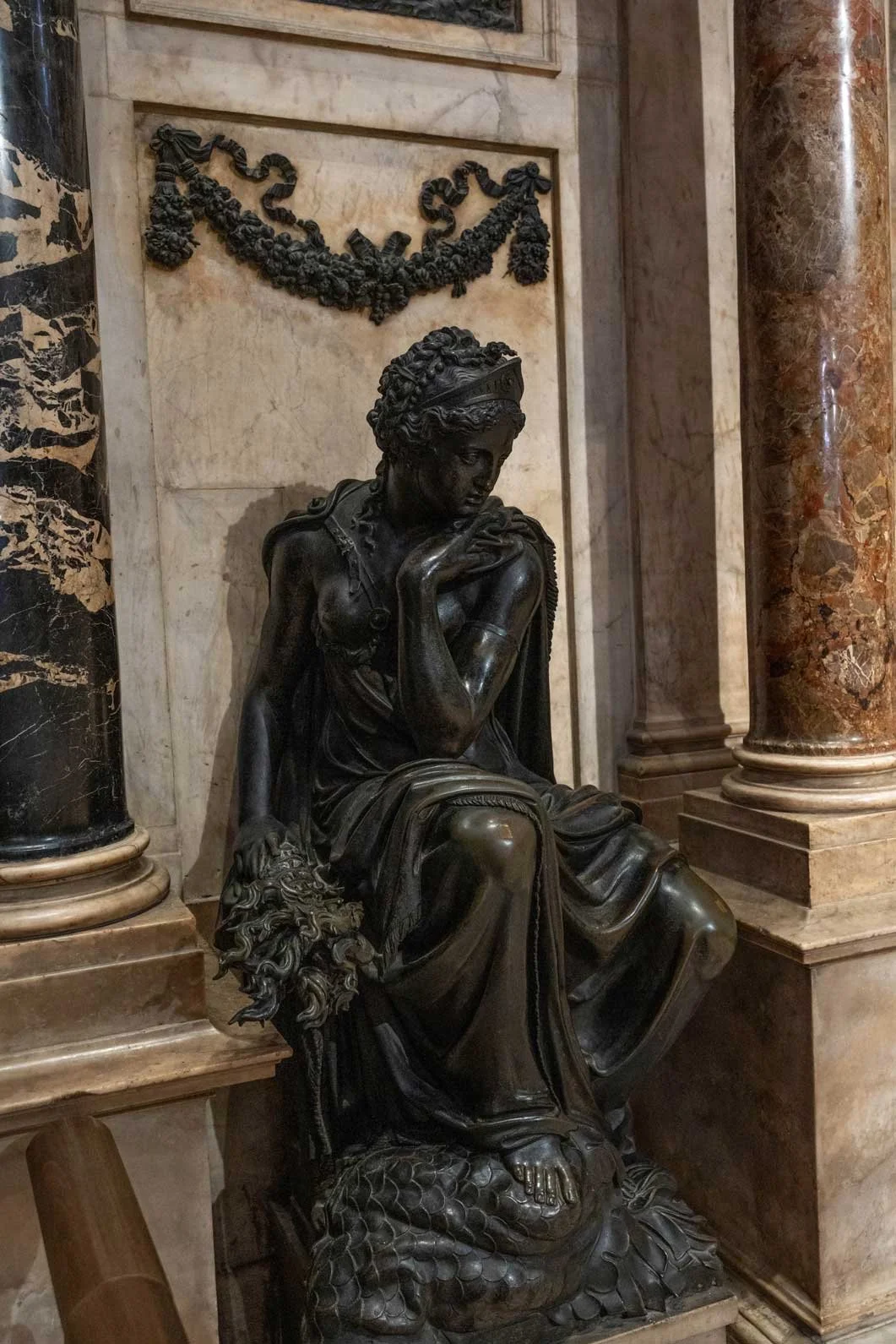
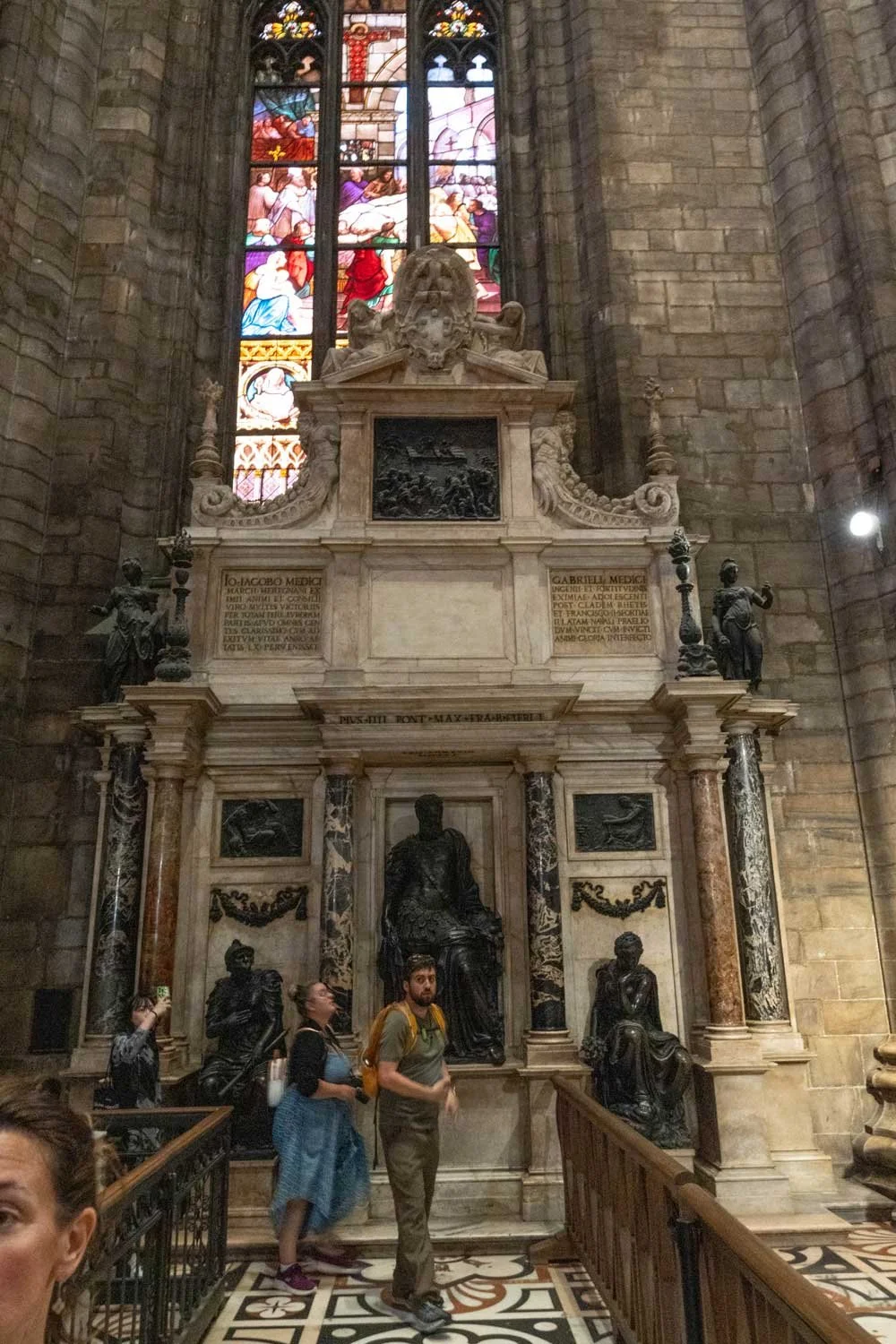
Another standout is the funerary monument to Gian Giacomo Medici, nicknamed “Medeghino” or “the Little Medici” due to his diminutive size. Despite his stature, he rose as a formidable mercenary leader. The statue shows him between allegories: Peace on the right, holding an olive branch, and Militia on the left, armed for battle. This reflects the turbulent era of Renaissance Italy, where power blended faith and warfare.
Sarcophagi of Influential Leaders
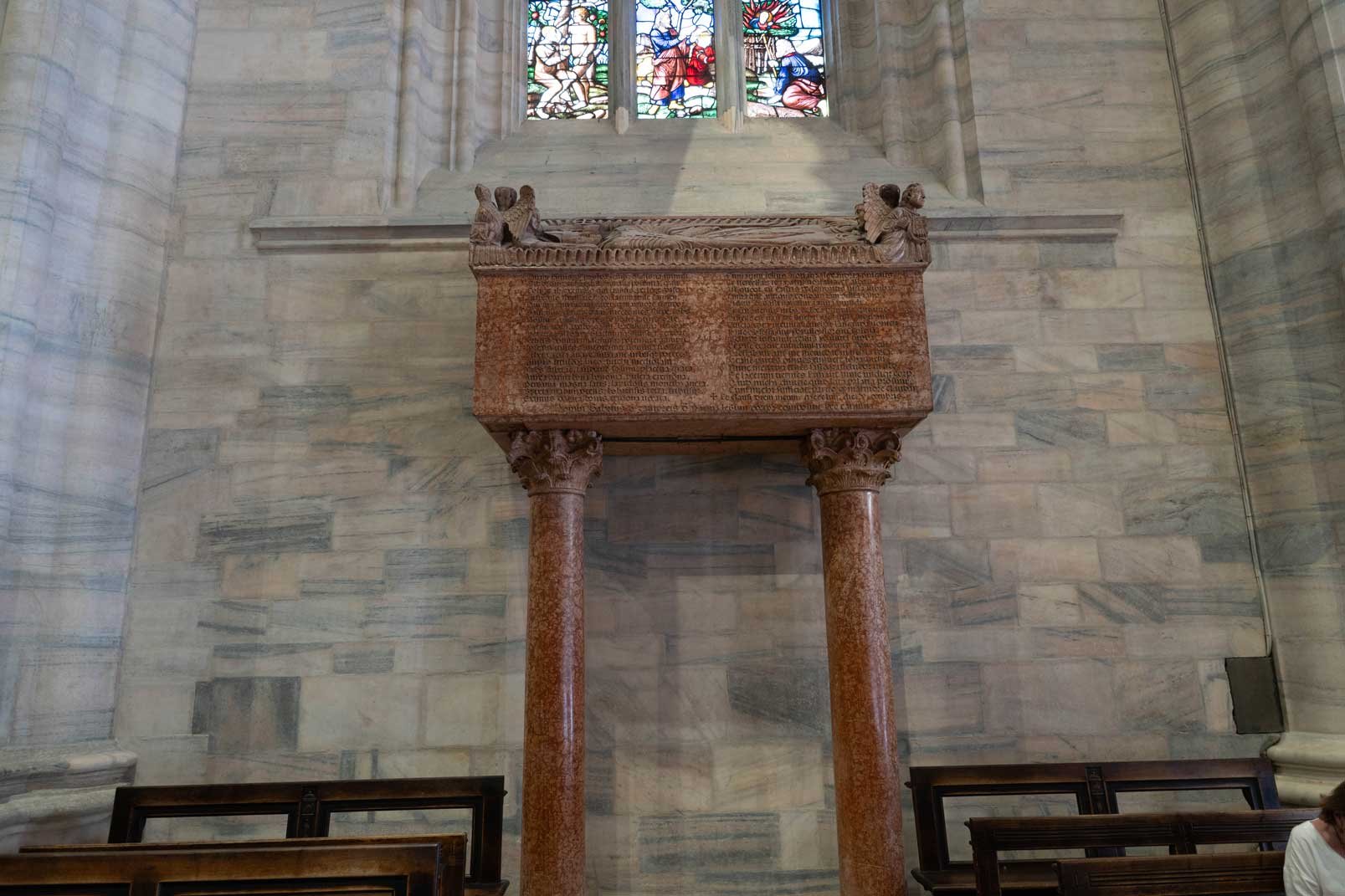
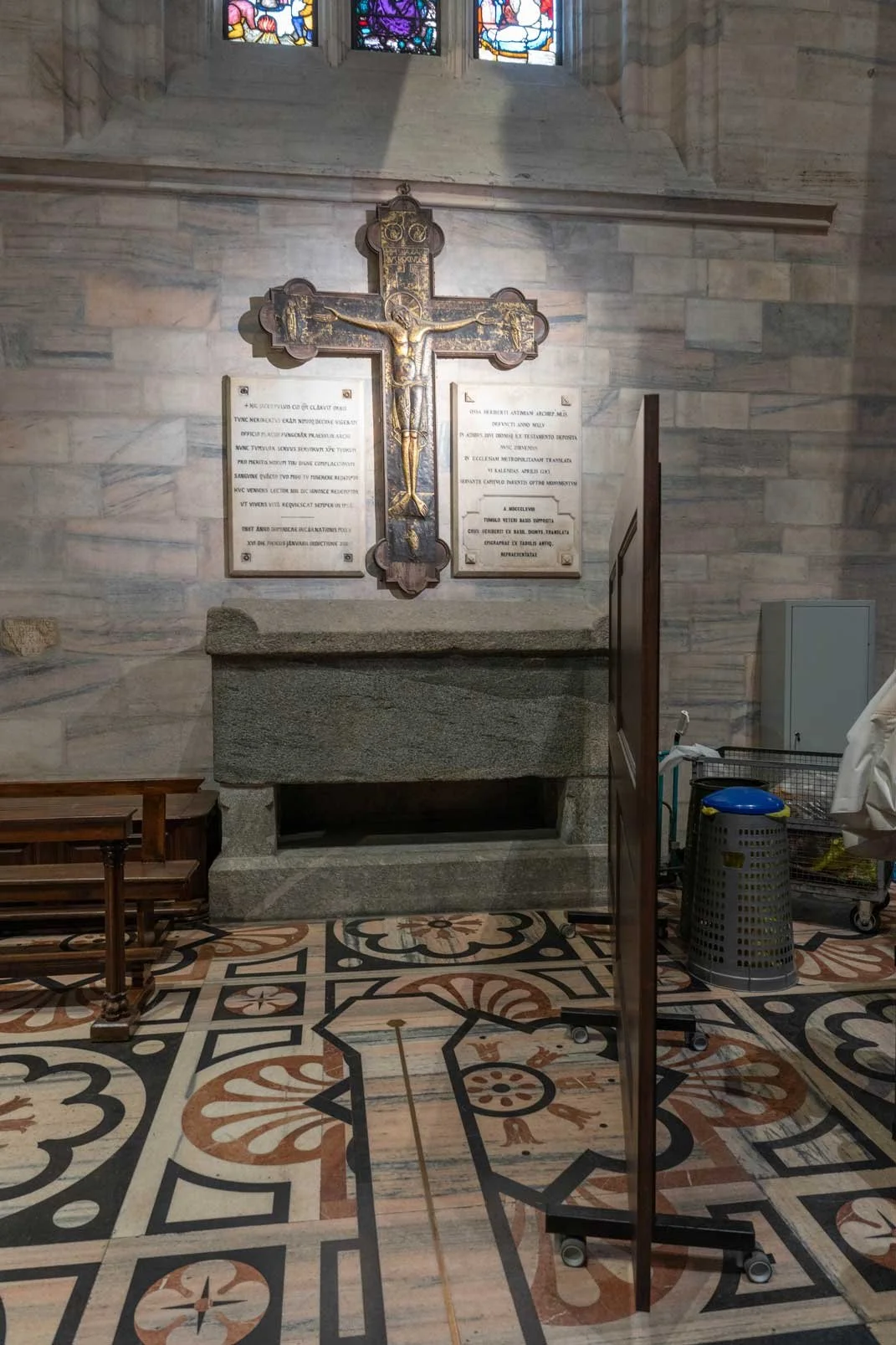
The Duomo's political-religious importance is evident in its sarcophagi honoring Milan's elite. Archbishops Ottone and Giovanni Visconti, from the powerful Visconti family that ruled Milan and Lombardy from 1277 to 1447, rest here. Their tombs highlight the family's dominance, blending ecclesiastical and secular authority. Nearby, the sarcophagus of Archbishop Alberto da Intimiano features a copy of the Cross of Aribert above it—a relic tied to medieval Milanese history.
The Meridian Line: A Scientific Marvel
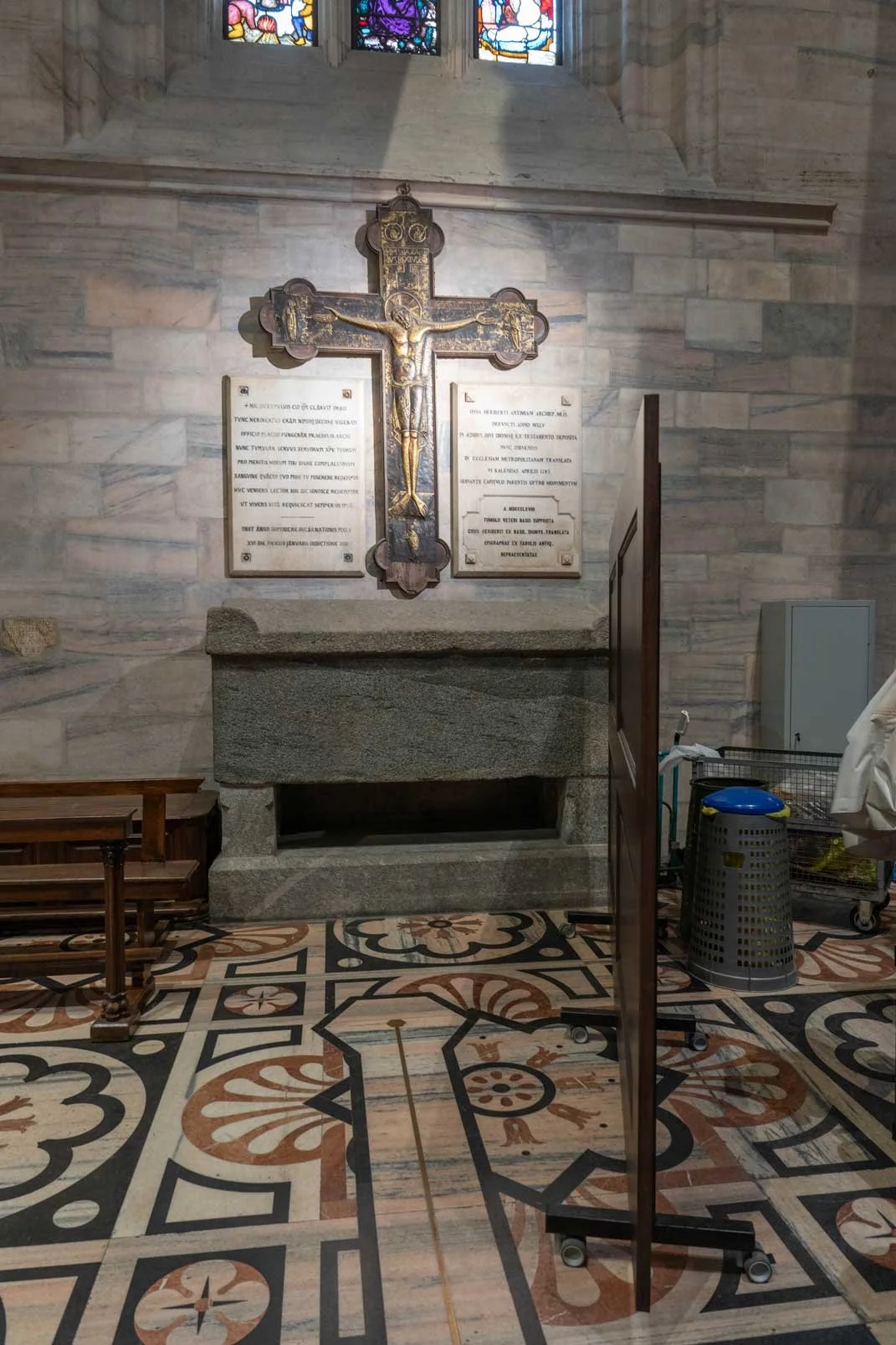
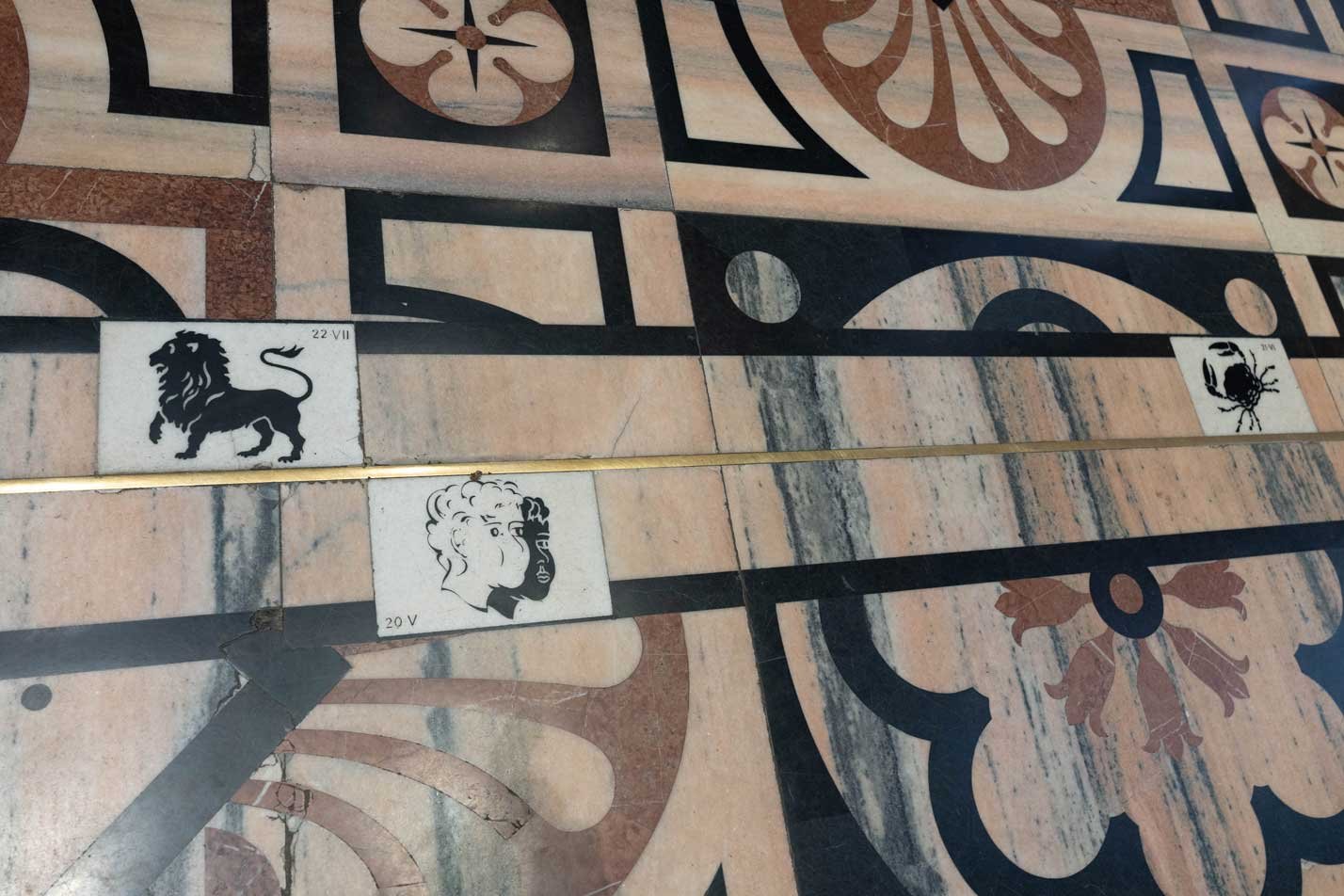
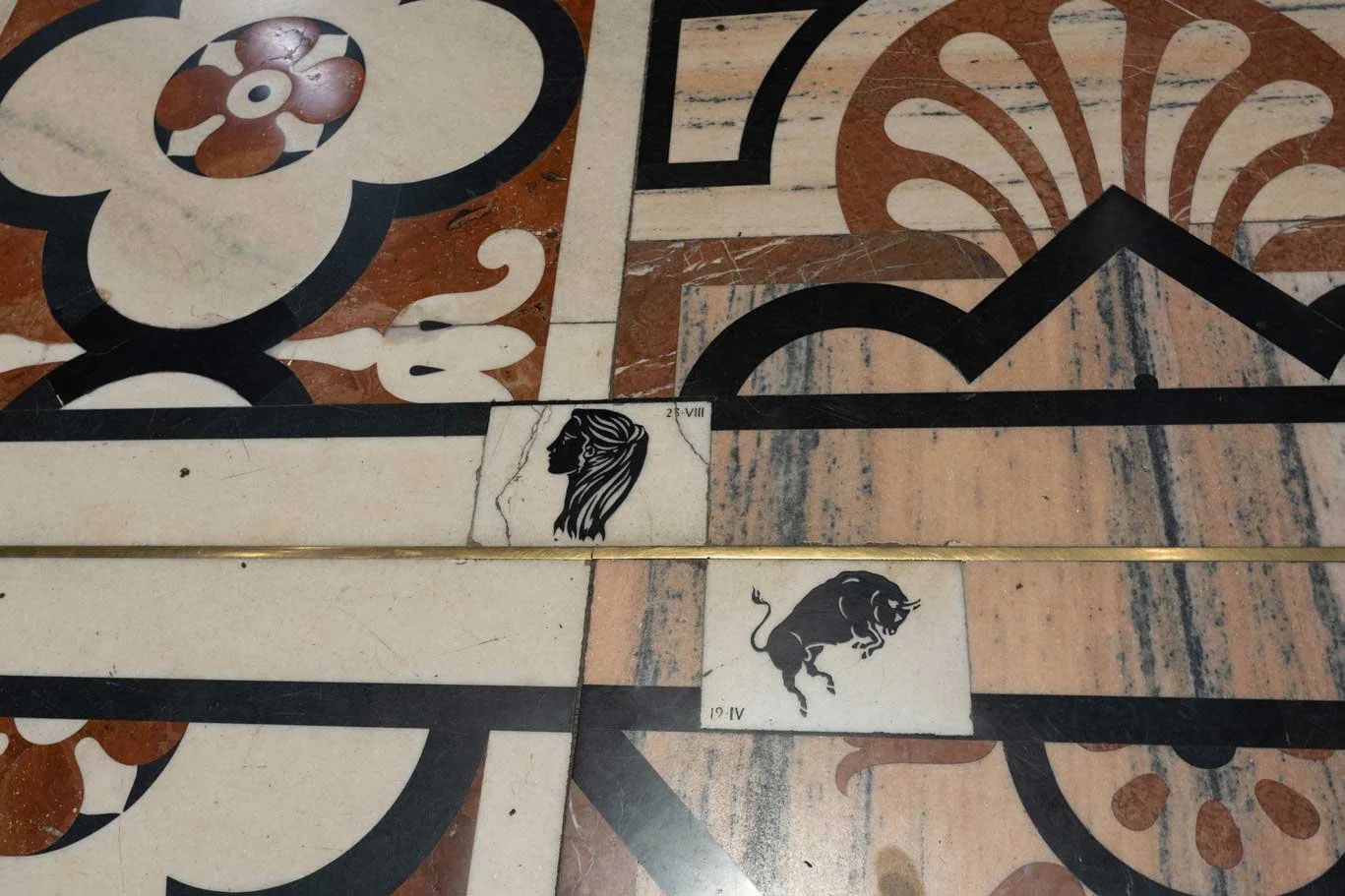
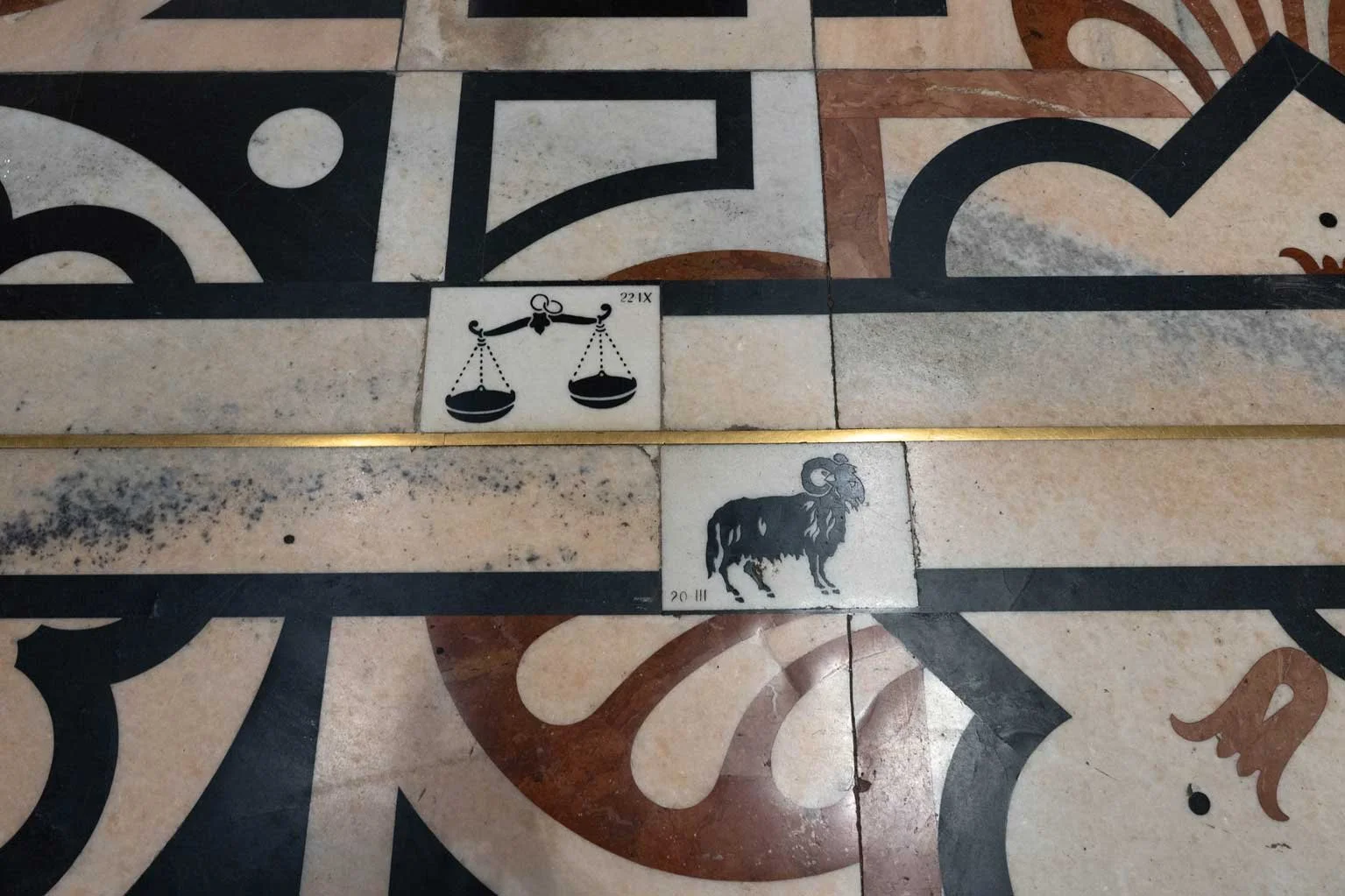
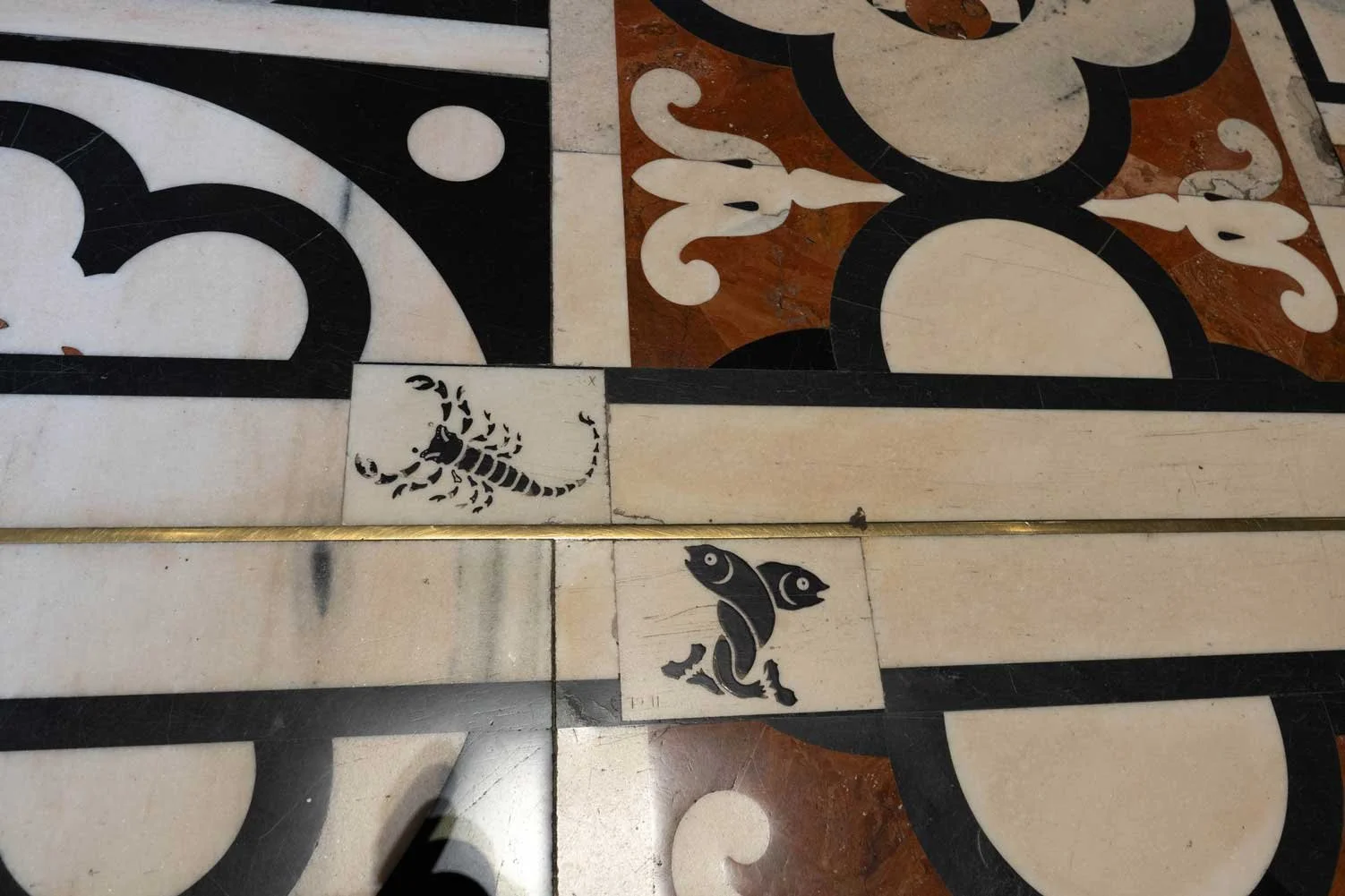
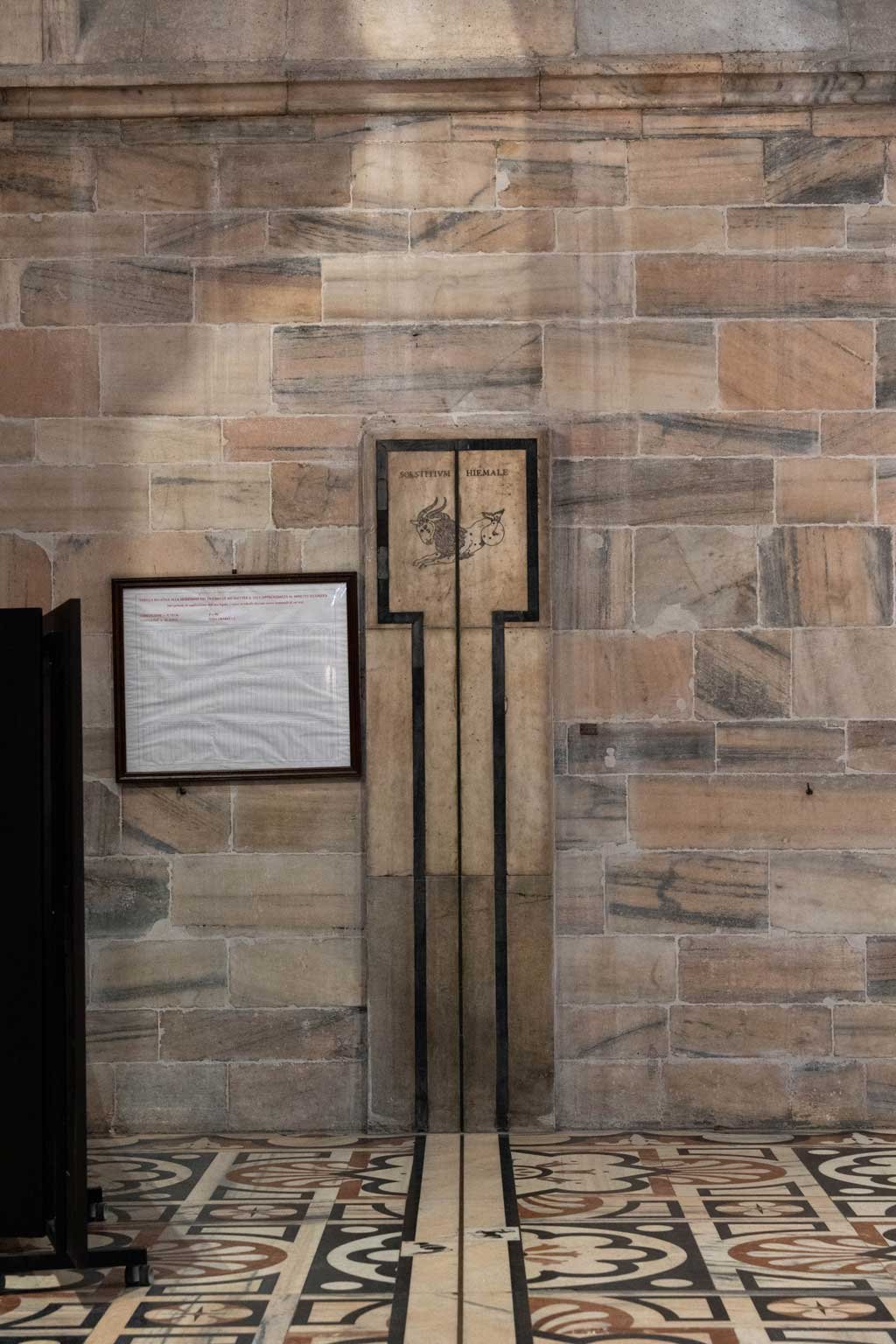
Directly below Alberto's sarcophagus, a brass strip runs across the floor and up the opposite wall: the Duomo's meridian line. This ingenious 18th-century device uses a small hole in the roof to project sunlight onto the floor, marking solar noon precisely when the beam crosses the line. It also indicates seasons based on the crossing point—for example, aligning with Gemini signals the start of that zodiac period. Incredibly accurate (within 2 seconds as observed in 1976), it once synchronized all of Milan's clocks, blending astronomy with daily life.
Red Porphyry Baptismal Font and Symbolic Painting
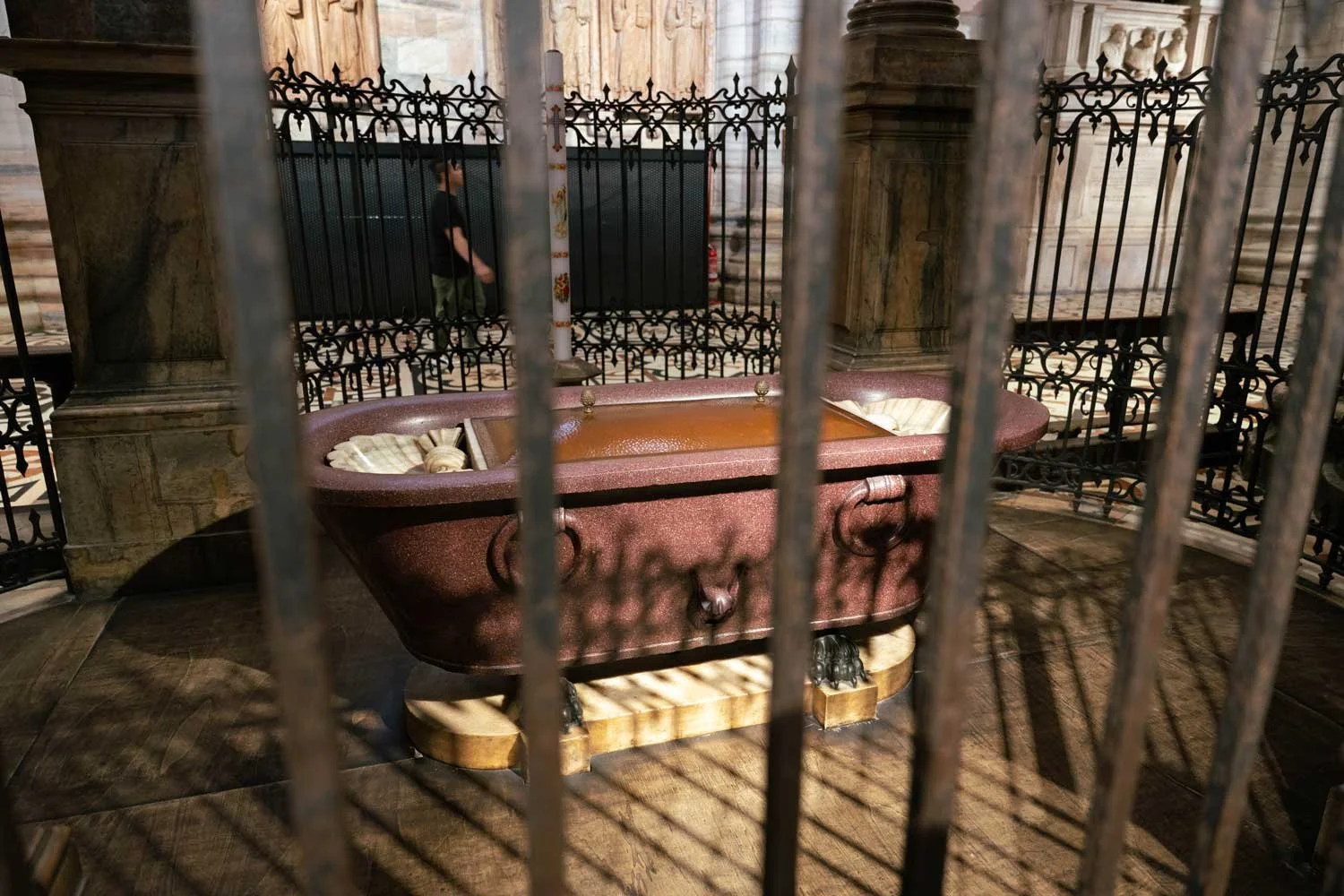
In the north aisle, a striking baptismal font carved from red porphyry—a luxurious purple rock from Egypt associated with royalty—serves as a reminder of ancient opulence. Quarrying and transporting this stone was exorbitantly costly, reserved for emperors and sacred sites.
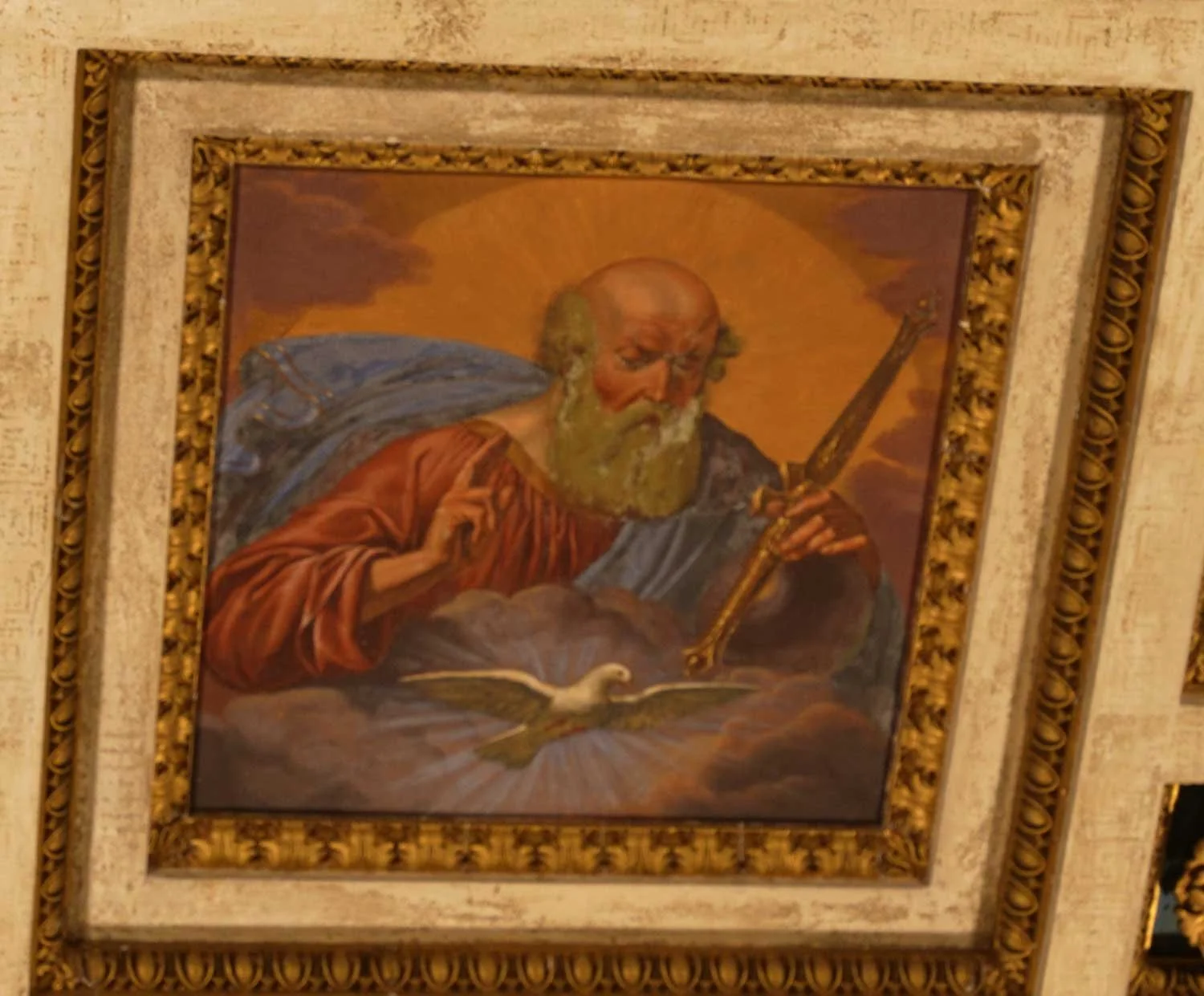
Above it hangs a mysterious painting that, despite extensive research, lacks clear documentation. Drawing on Catholic iconography, it features a figure with a golden scepter symbolizing authority and divine blessing. The right hand forms the "Hand of Benediction," evoking the Trinity (Father, Son, Holy Spirit). The red and blue tunic represents flesh and spirit, motifs echoed in works like Leonardo da Vinci's The Last Supper. Positioned over the font, it likely depicts Christ's baptism as described in Matthew 3:16-17: Jesus emerging from the water, the Spirit descending as a dove, and God's voice proclaiming, “This is My beloved Son, in whom I am well-pleased.”
Votive Table and Acts of Devotion
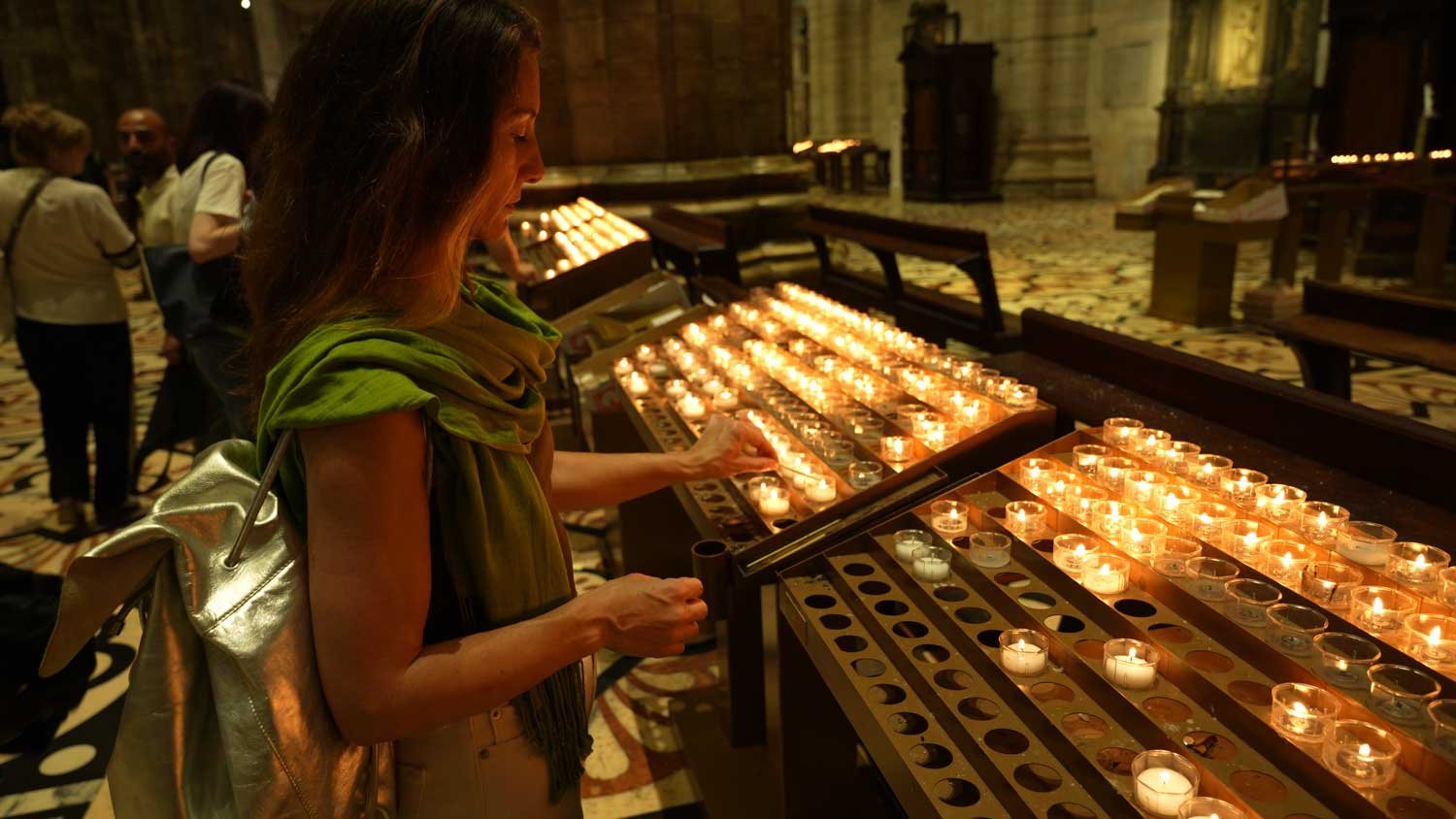
Adjacent to the font, a votive table invites visitors to light candles—an ancient practice of prayer, devotion, and seeking intercession for oneself or loved ones. It's a quiet moment of reflection amid the grandeur.
Italy's Largest Pipe Organ
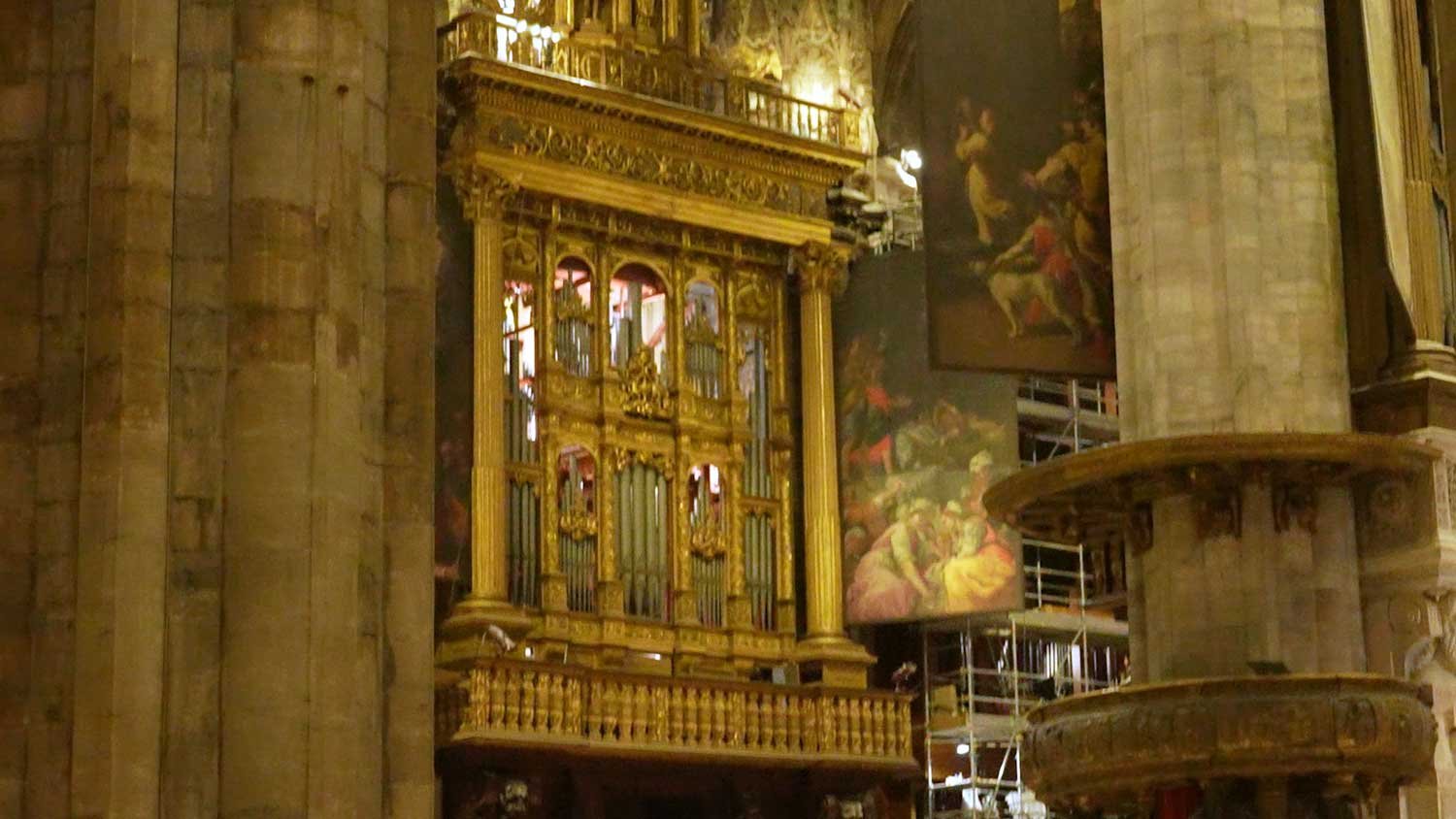
The Duomo houses Italy's biggest pipe organ, boasting 15,800 pipes and constructed in 1938 under Mussolini's directive. A matching organ sits on the opposite side of the altar, ready for majestic performances that fill the space with sound.
Santo Chiodo: The Holy Nail Relic
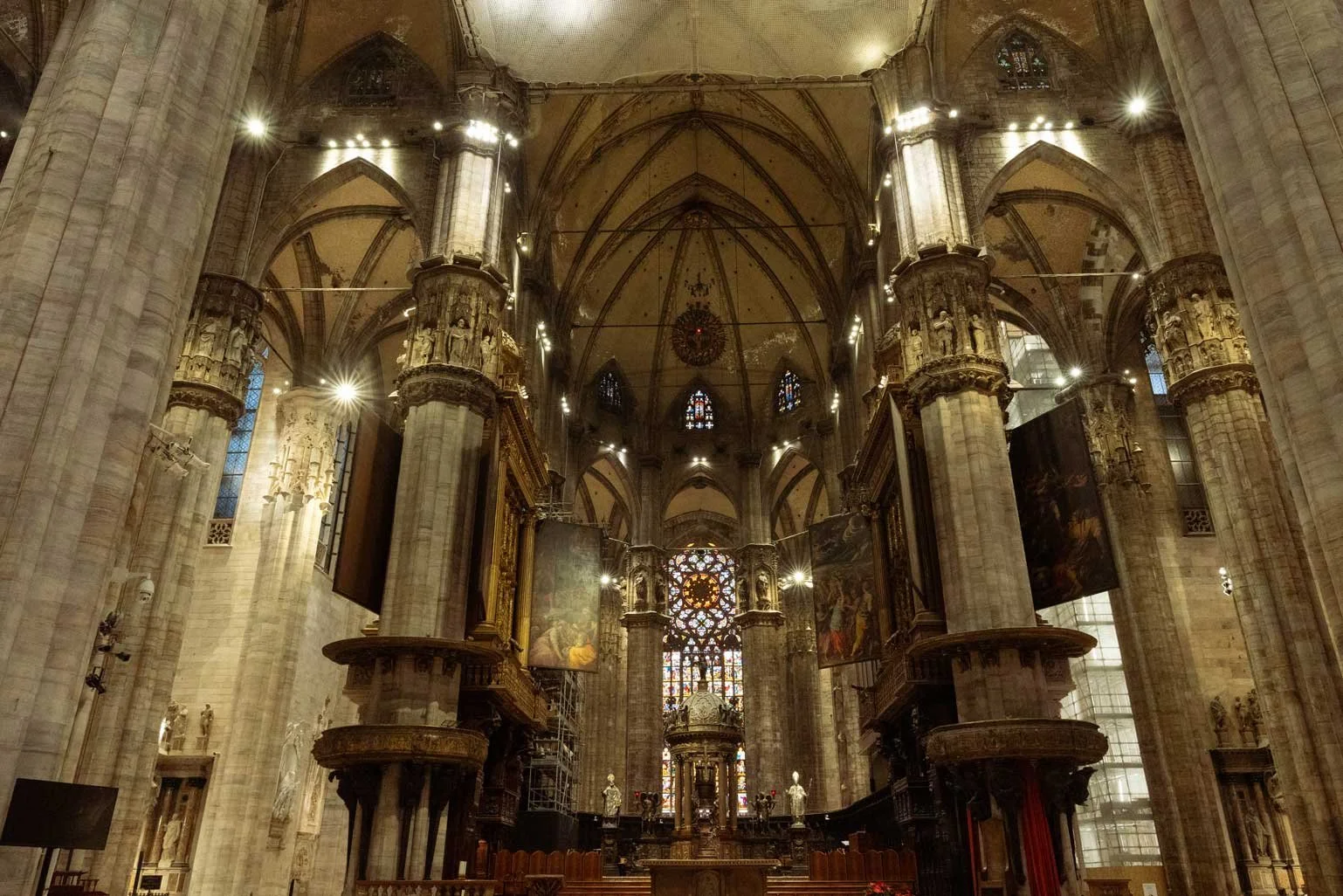
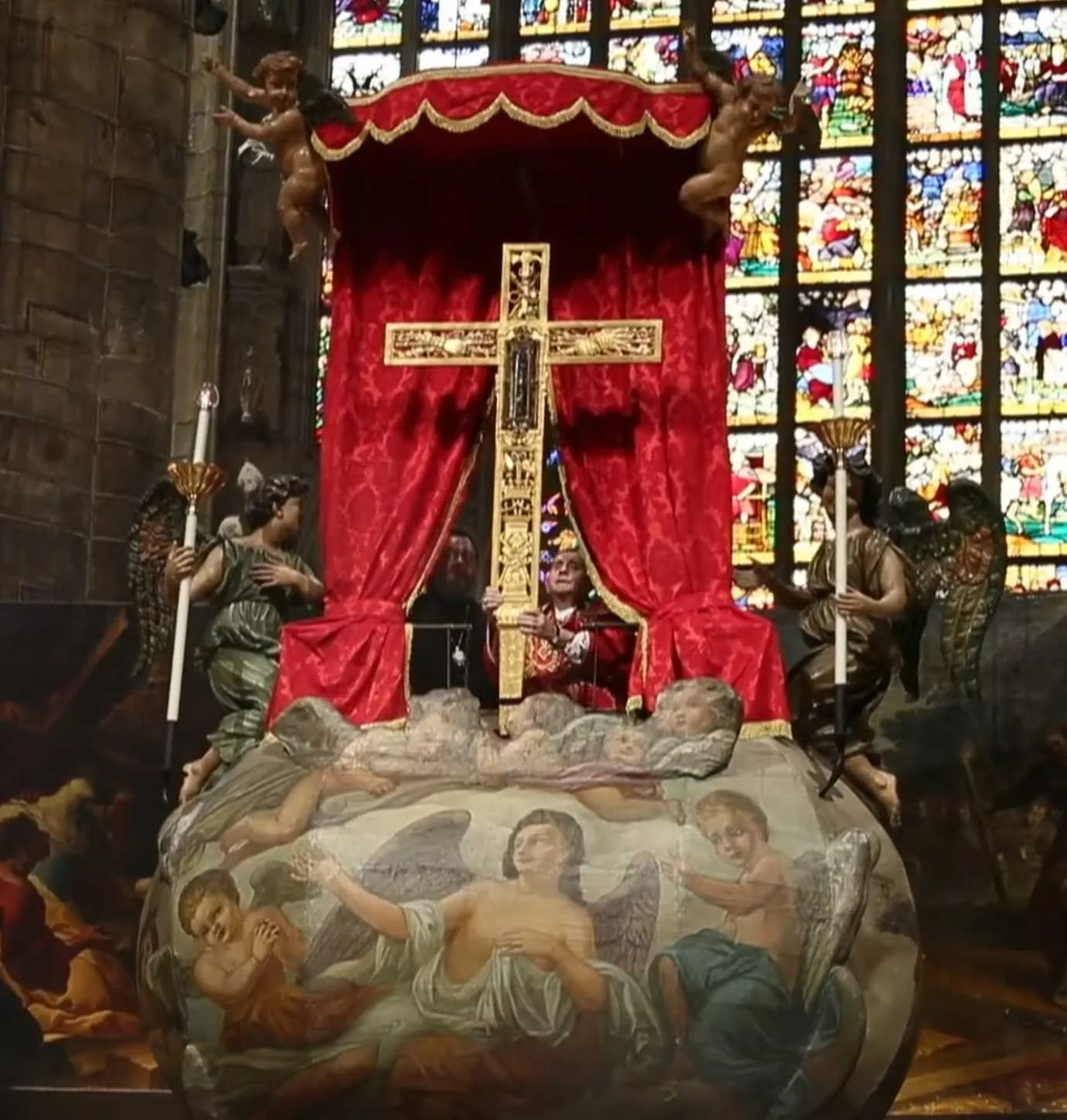
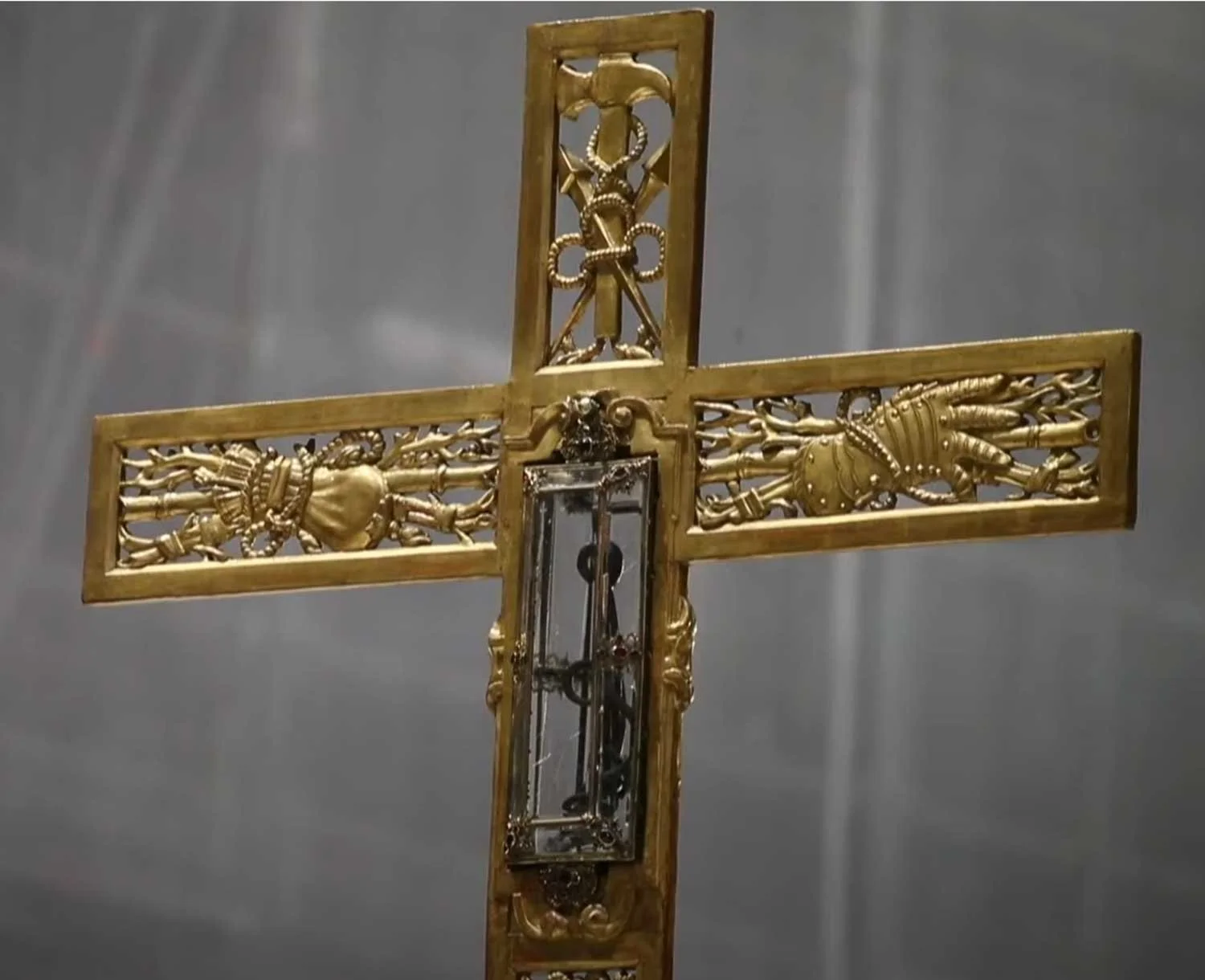
While gazing at the ornate altar and apse, look up to spot a red light illuminating a cross-shaped case in the dome. This holds the Santo Chiodo, or Holy Nail—one of the nails purportedly from Christ's crucifixion, the Archdiocese of Milan's most revered relic. Annually, during the Rite of the Nivola (typically in September), the Archbishop ascends in a cloud-like lift to retrieve and display it for public veneration—a ritual blending faith, history, and spectacle.
Saint Bartholomew Flayed: A Disturbing Masterpiece


San Bartolomeo Flayed. Statue by Marco D'Agrate. Duomo, Milano (1562) courtesy of Wikipedia Commons
One of the Duomo's most famous—and unsettling—statues is Marco d'Agrate's Saint Bartholomew Flayed (1562). Depicting the apostle after his martyrdom, he holds his own skin like a cloak, with astonishing anatomical precision that rivals Michelangelo's works. Originally placed outside, it was relocated indoors due to its disturbing realism, which has unnerved visitors for centuries. During my own visit, its intensity made me hesitate to capture it on camera, a reaction shared by many.
Duomo Rooftop Tips: Ascending to the Terraces
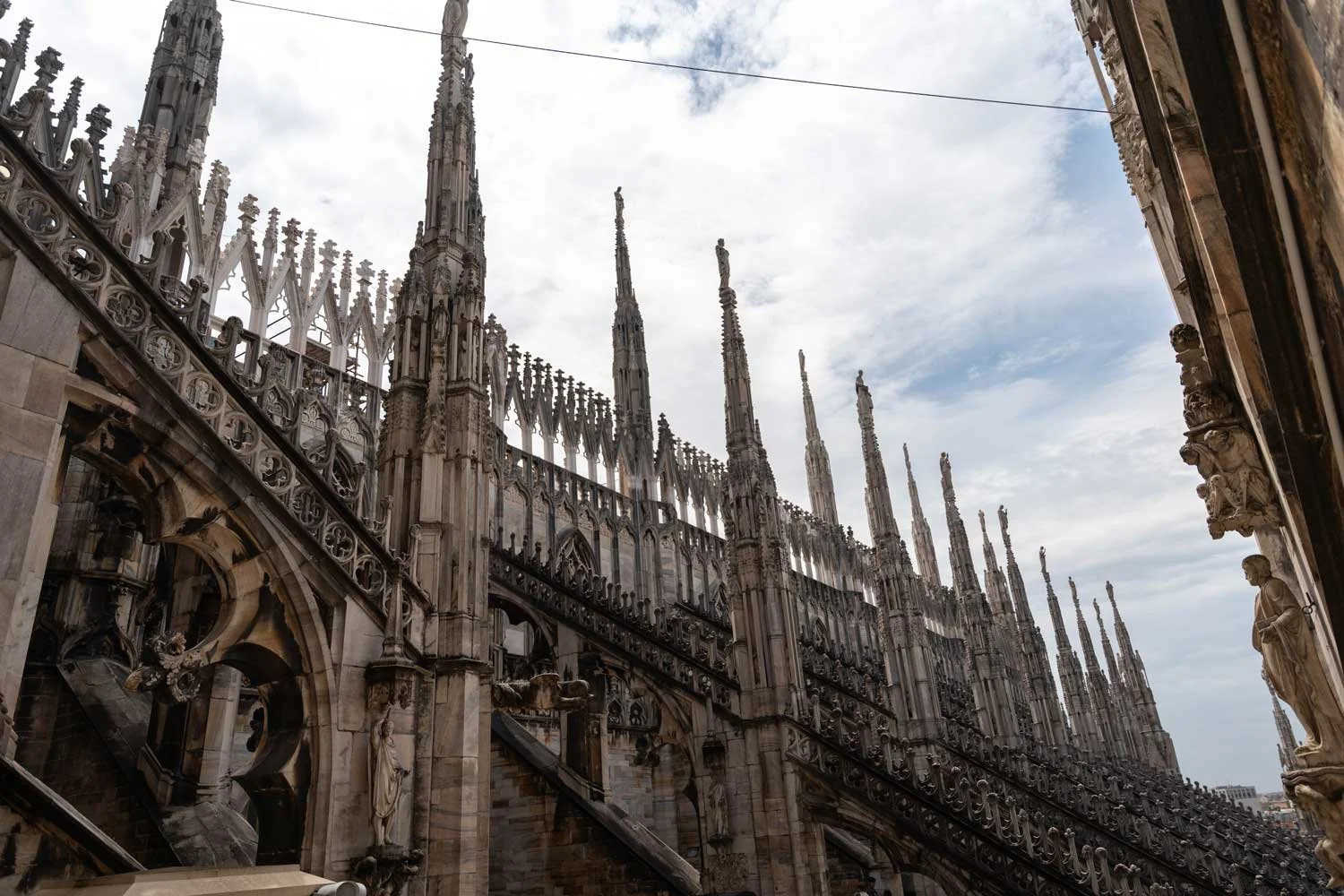
For many, the highlight is the Duomo terraces—accessible via Milan Duomo tickets that include rooftop entry (stairs ~€16–22, elevator ~€18–26). Duomo rooftop tips: Opt for the stairs if you're fit (about 250 steps in a coiled staircase) for a more immersive ascent; the elevator is ideal for accessibility or ease.
Emerging onto the first level feels like stepping into a "forest of stone." The Duomo crowns itself with 135 ornate spires, each pointing heavenward as symbols of aspiration toward the divine, topped by statues of saints and figures in eternal communion.
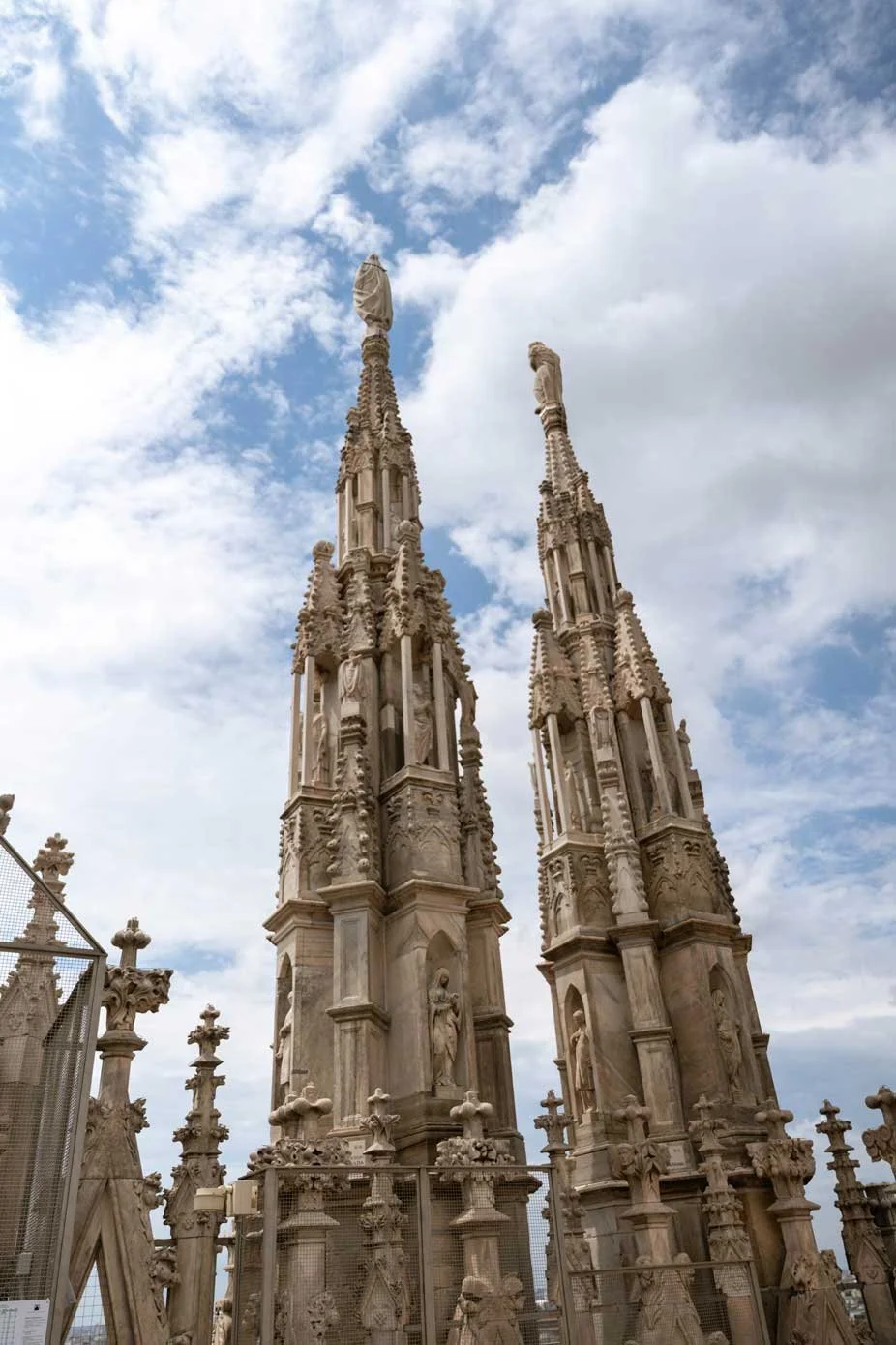
Up close, these spires reveal over 3,400 statues—the most on any building worldwide. What's striking is their individuality; thousands of anonymous sculptors across generations poured intricate details into works that few would see from the ground. This selfless artistry contributes to the Duomo's status as a pinnacle of human achievement.
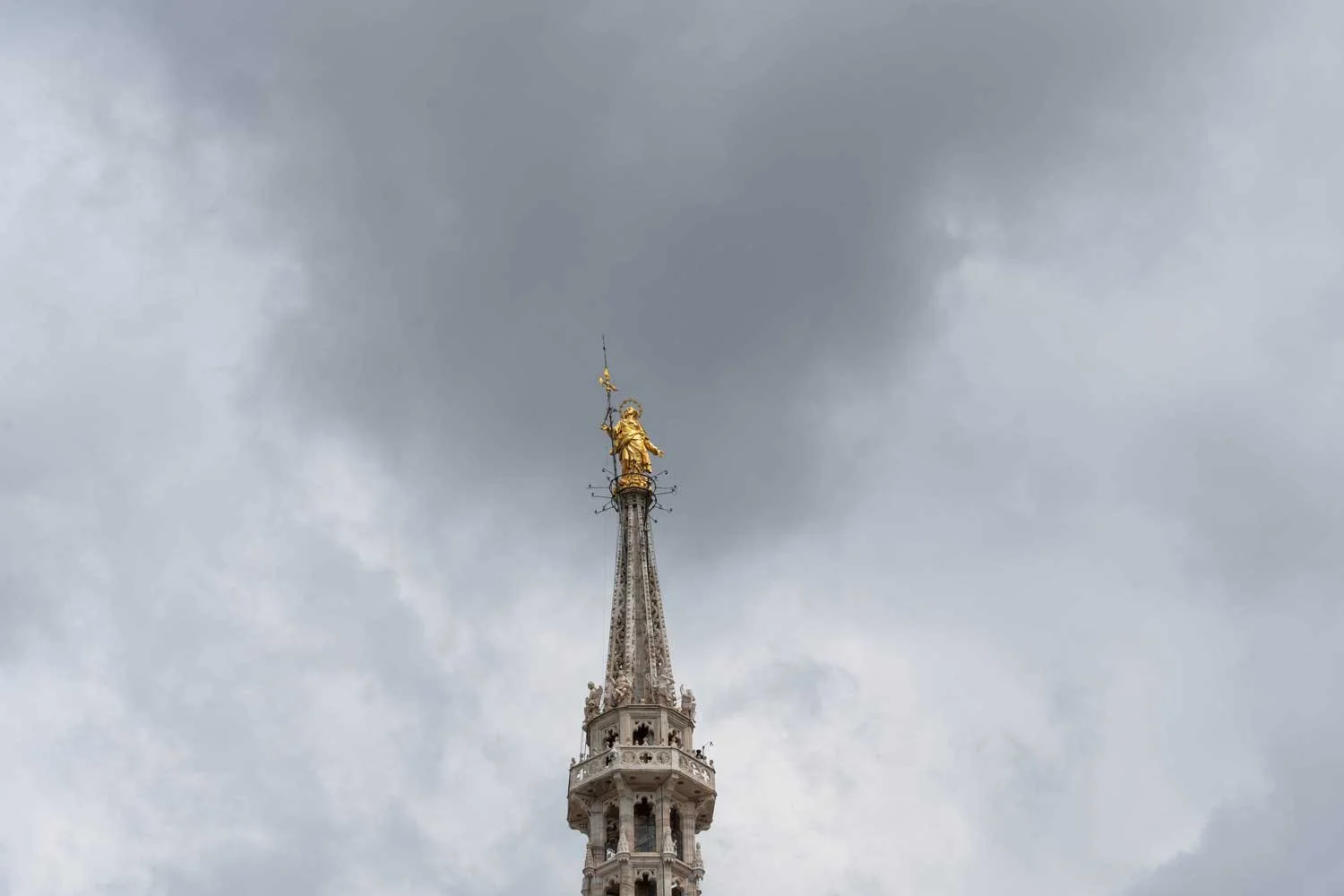
Wander under the north side's flying buttresses to stairs leading to the second level, offering prime views of the Madonnina—a 13-foot (4-meter) copper statue gilded in gold, depicting the Assumption of the Virgin Mary. Perched on the tallest spire at 354 feet (108 meters), she serves as Milan's protective beacon. Local tradition mandates no building surpass her height; when skyscrapers like the Pirelli Tower exceed it, a replica Madonnina is added to their summit.
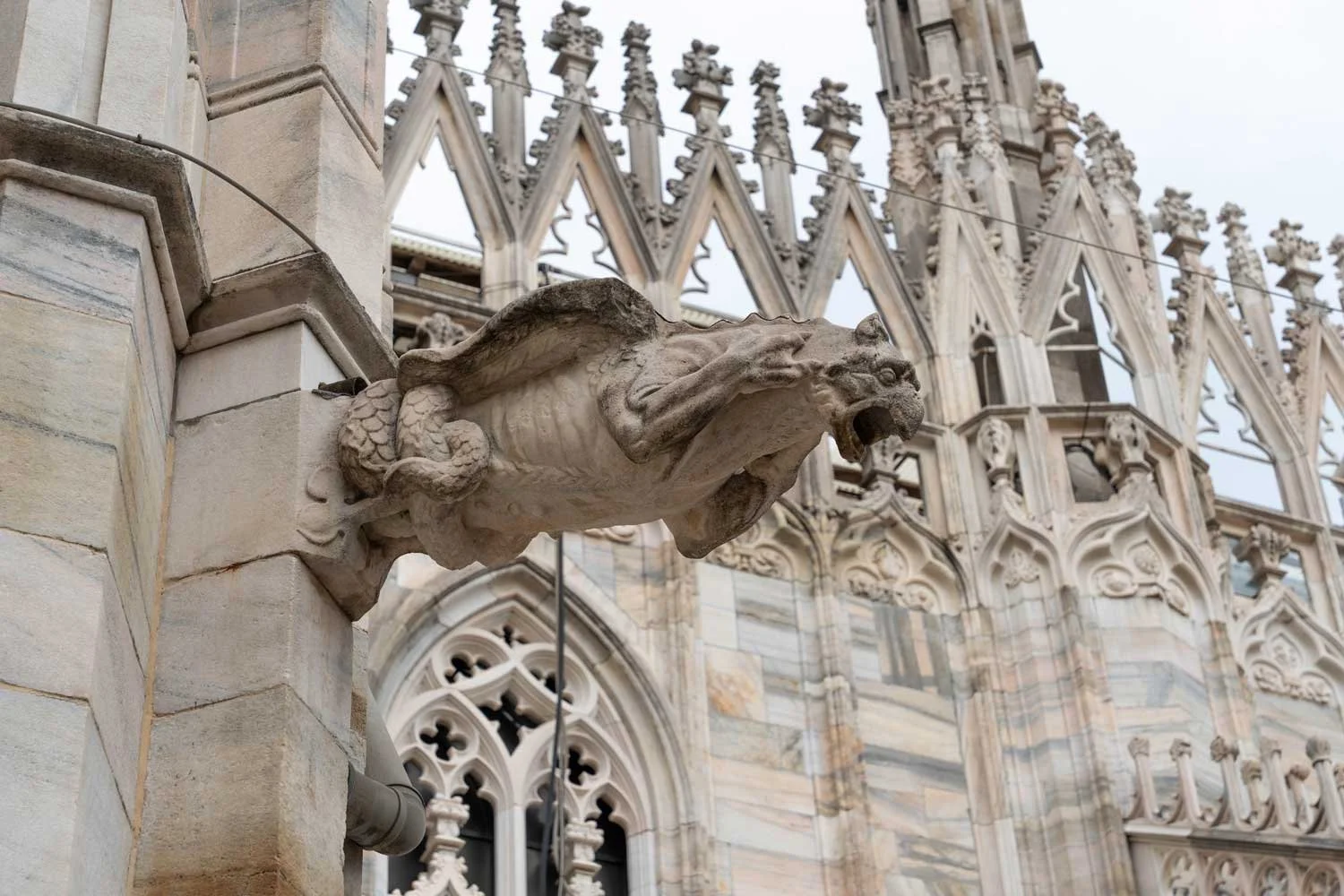
On the south terraces, encounter more monumental elements: 150 unique gargoyles (ornamental yet functional water spouts), giants showcasing strength by supporting spires, saints with books or gestures, and angels from cherubic putti to mighty archangels.
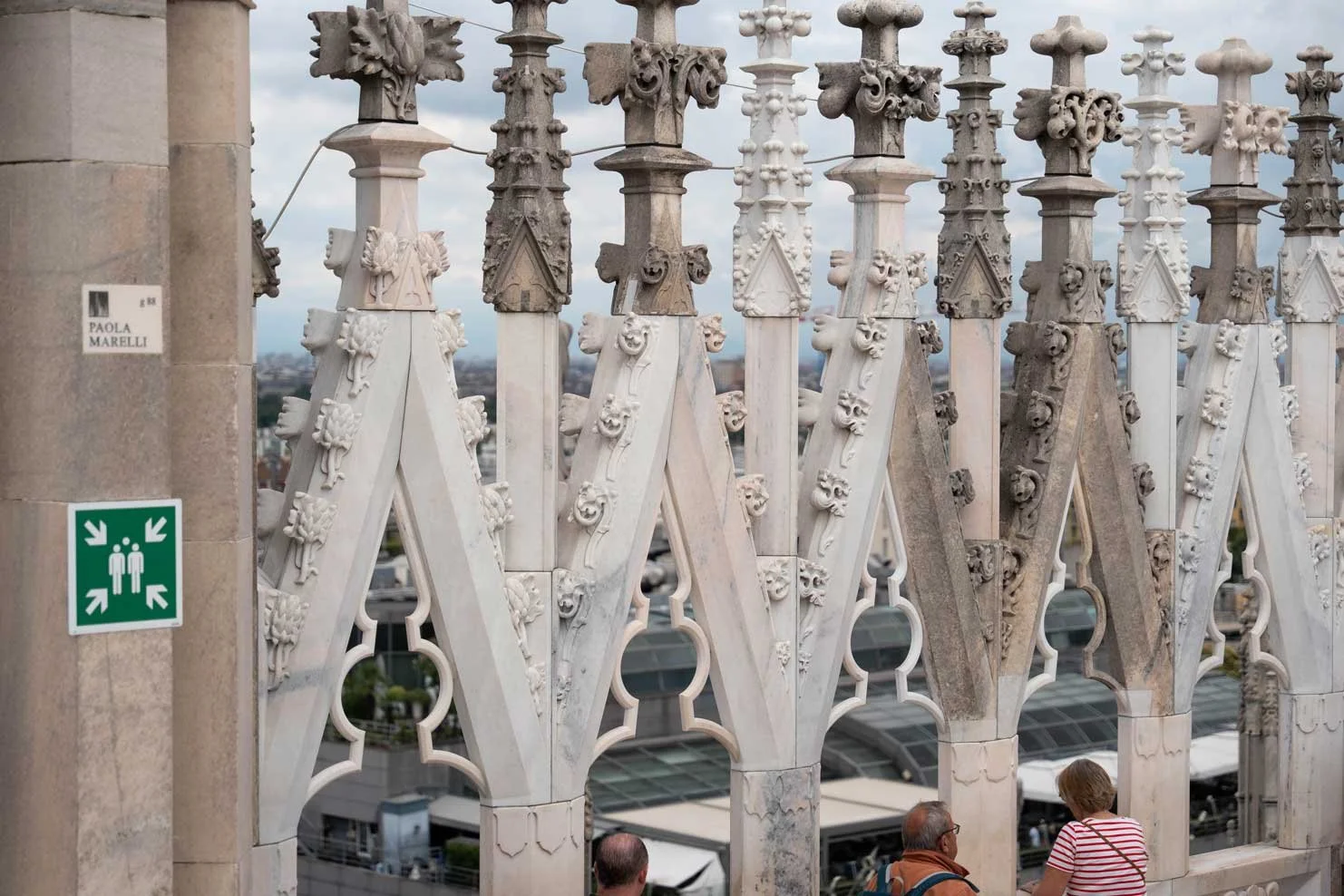
Observe ongoing maintenance: Corroded marble is replaced with fresh Candoglia stone, creating contrasts between weathered gray and pristine white-pink. It sparks wonder—did the Duomo ever shine entirely in flawless marble, gleaming like a distant lighthouse under the sun?
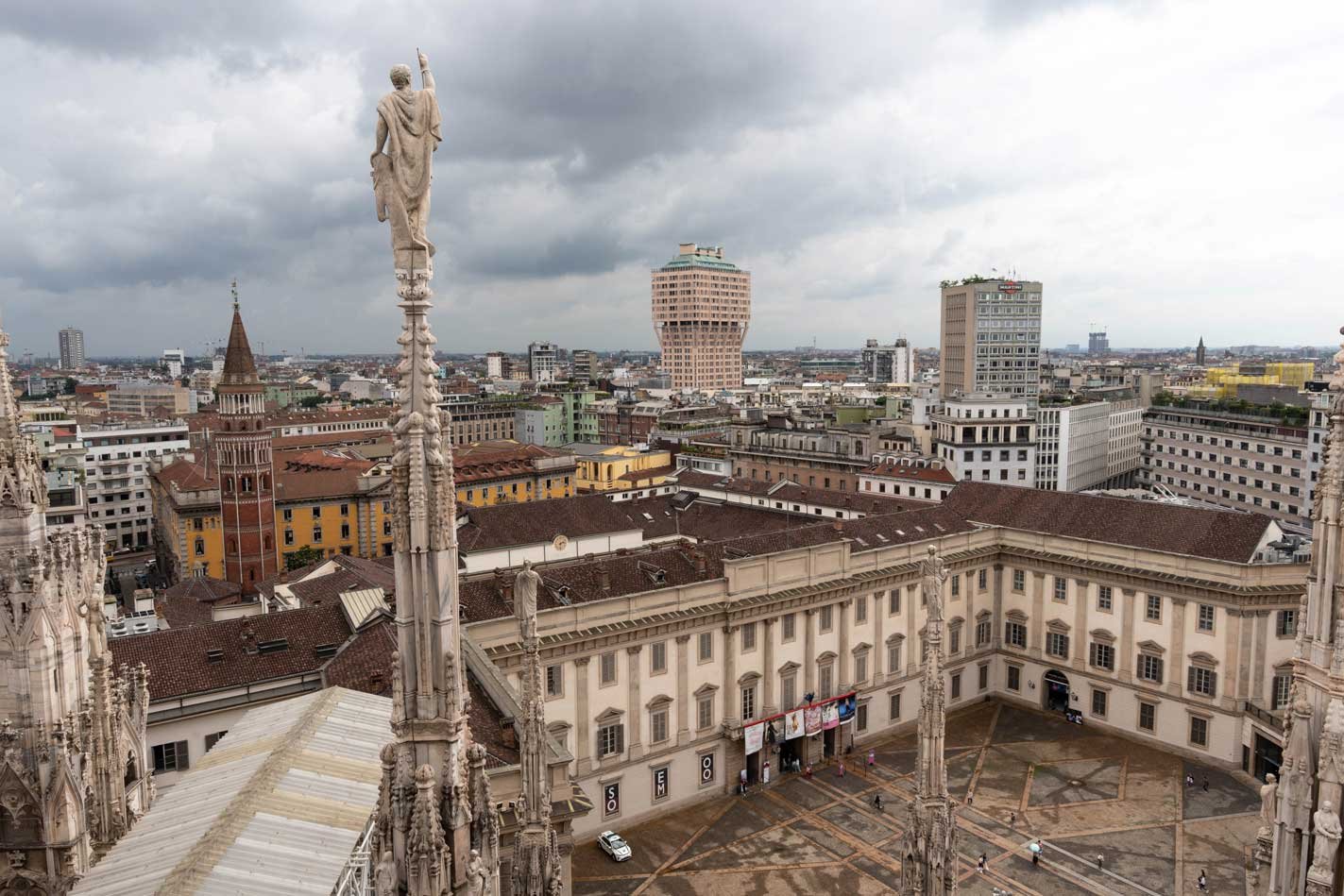
Duomo rooftop tips for the best experience: Visit on clear days for panoramic Milan views, wear comfortable shoes for the uneven surfaces, and allocate at least 45–60 minutes to explore fully.
Beneath the Duomo: The Archaeological Area
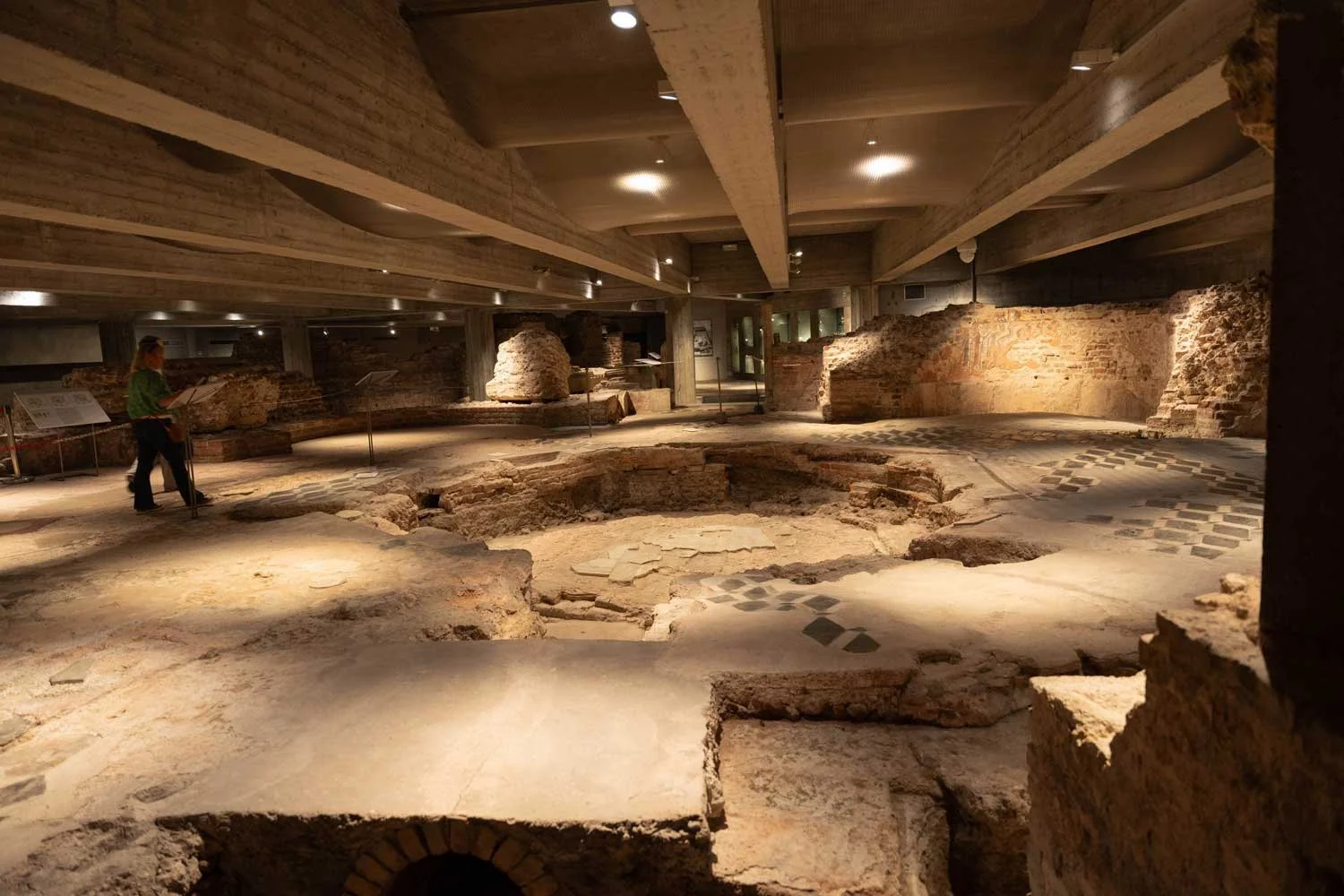
Delve underground with combo Milan Duomo tickets (often €15–20 including cathedral and museum) to the archaeological area beneath the parvis. Here lie remnants of predecessor structures: Basilica di Santa Tecla (completed around 355 AD) and Santa Maria Maggiore (built in 836 AD), demolished to make way for the current Duomo.
The star attraction is the octagonal Baptistery of San Giovanni alle Fonti, dating to the late 4th century. This is where Saint Ambrose baptized Saint Augustine in 387 AD, a momentous event in Christian history. The recessed pool, fed by inlets, features 6th-century black-and-white geometric tiles, mosaics, and marble panels.
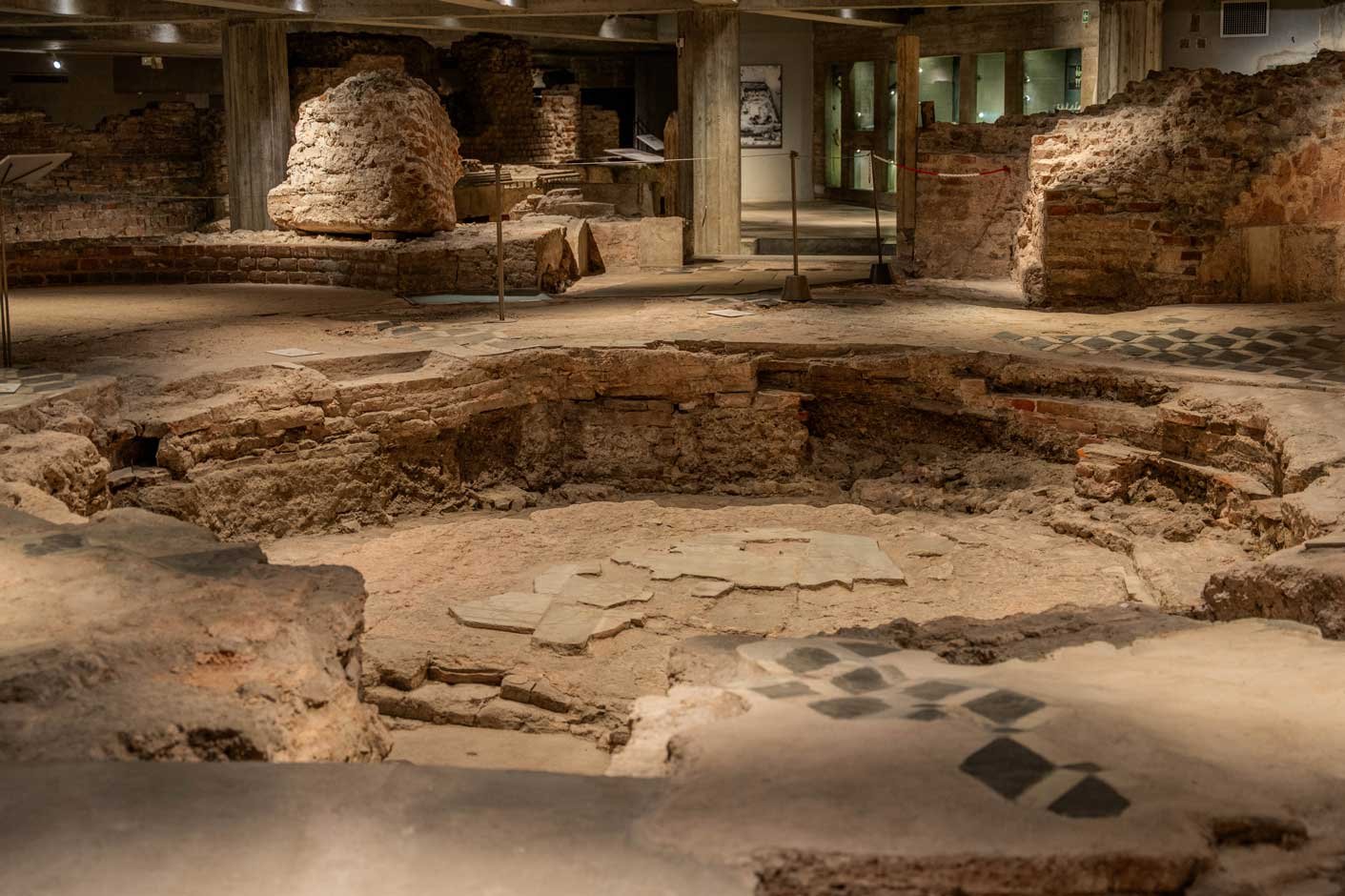
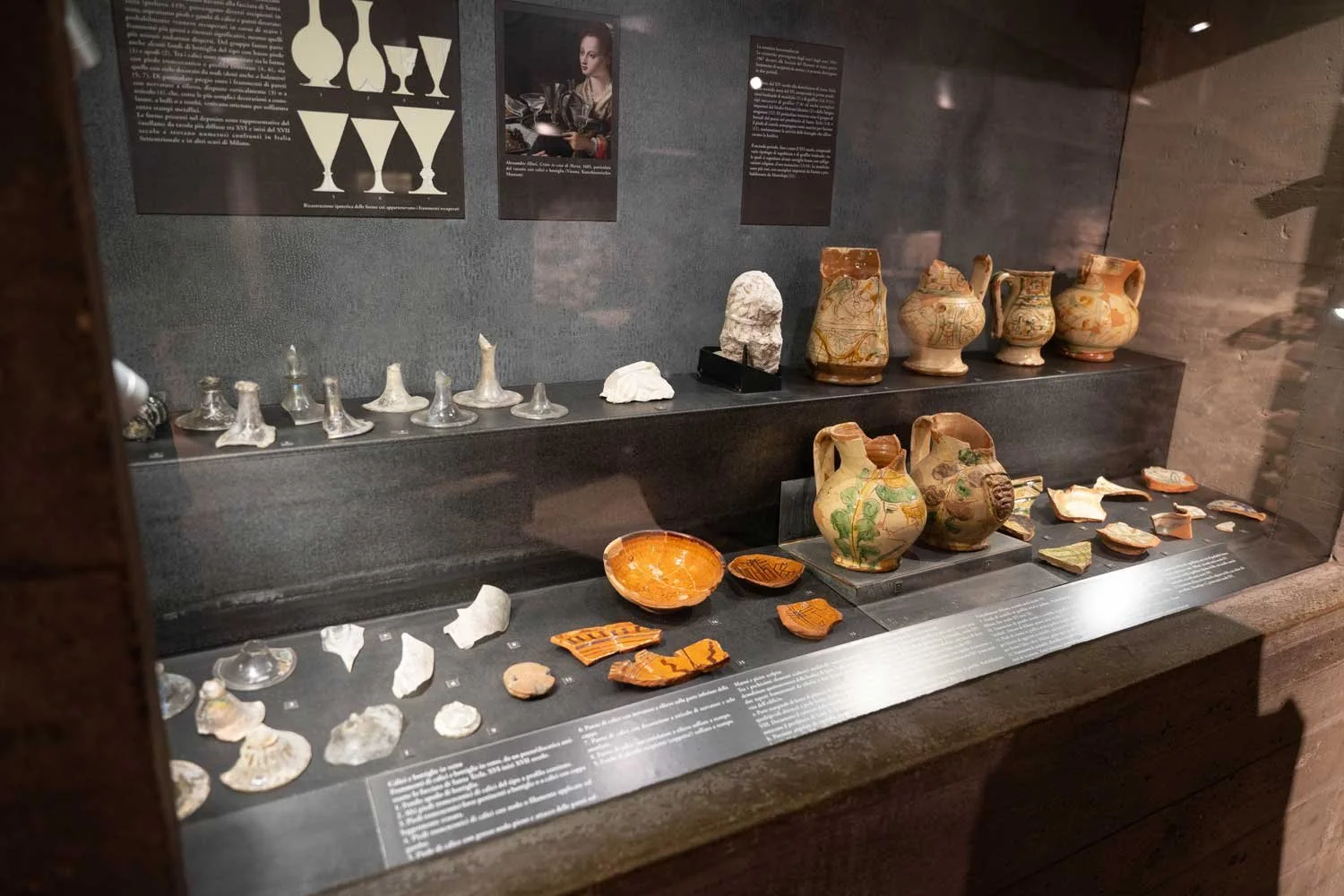
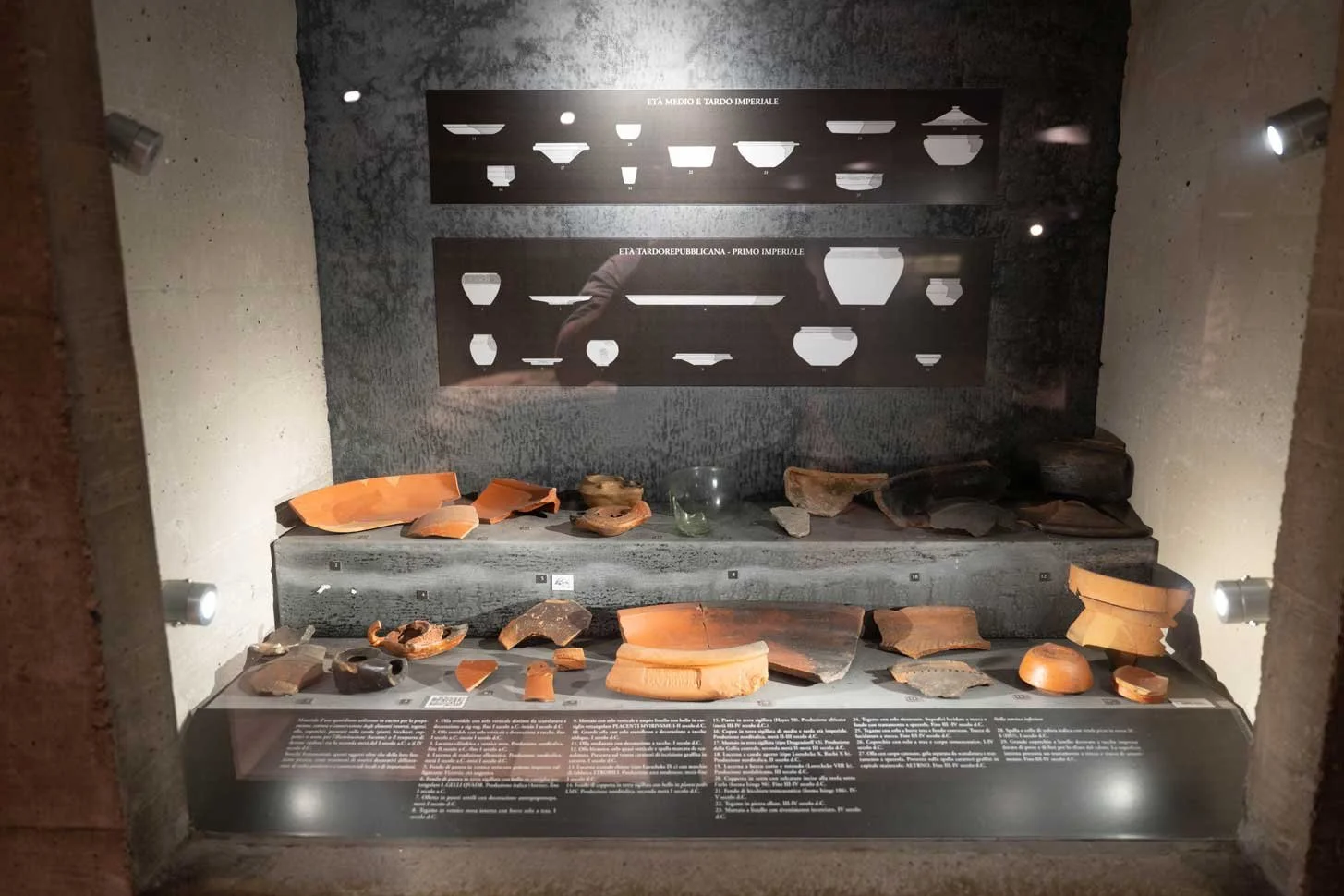
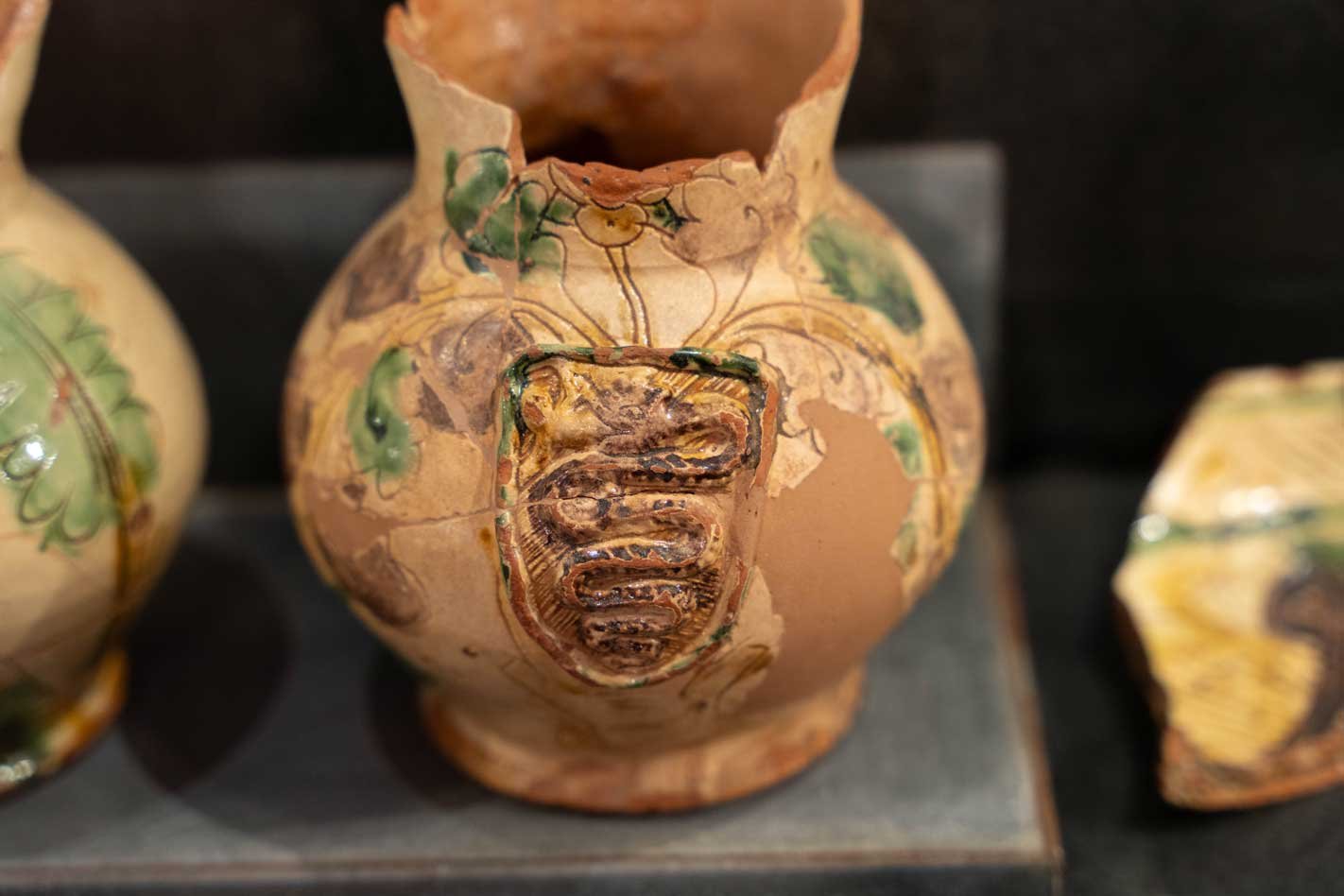
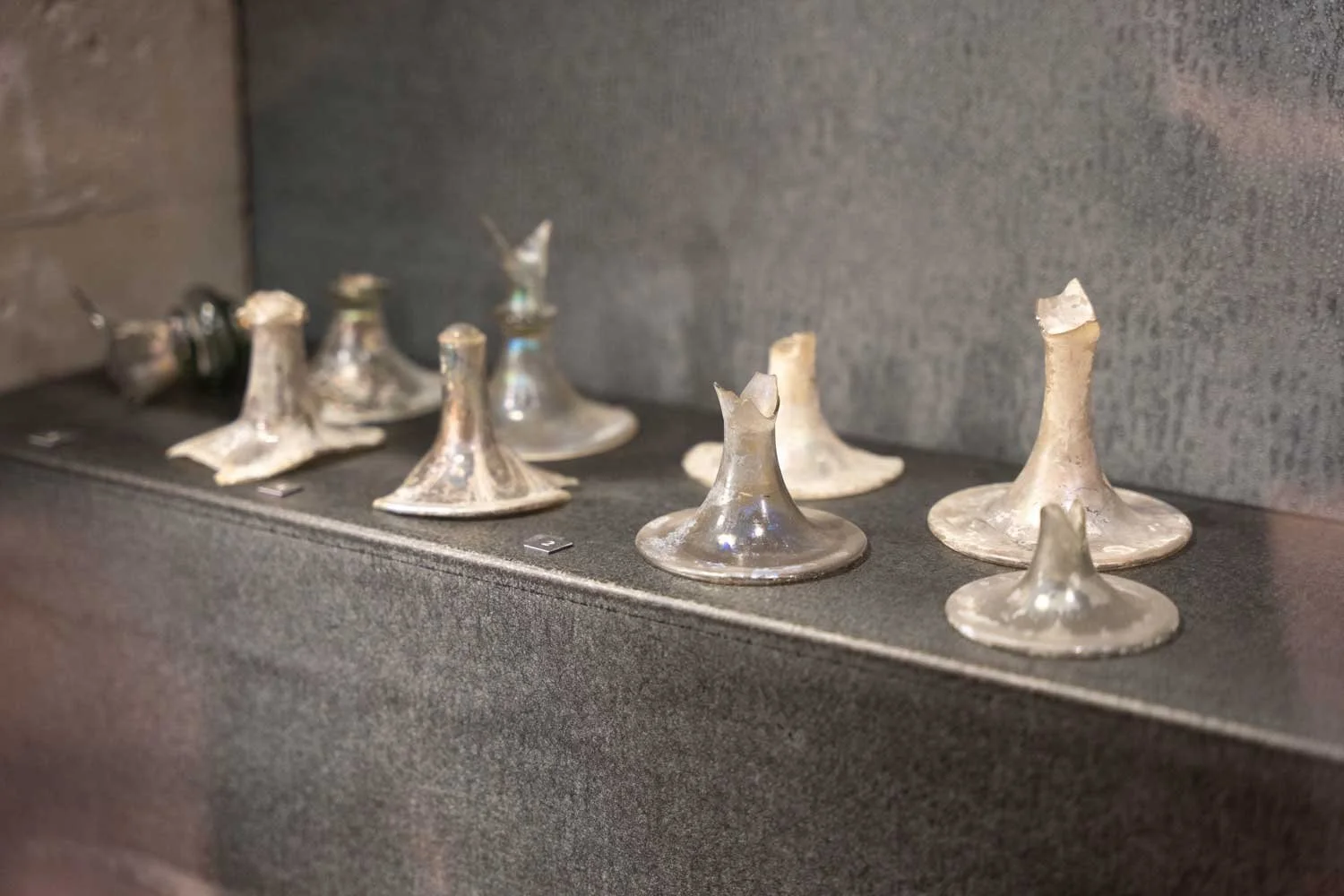
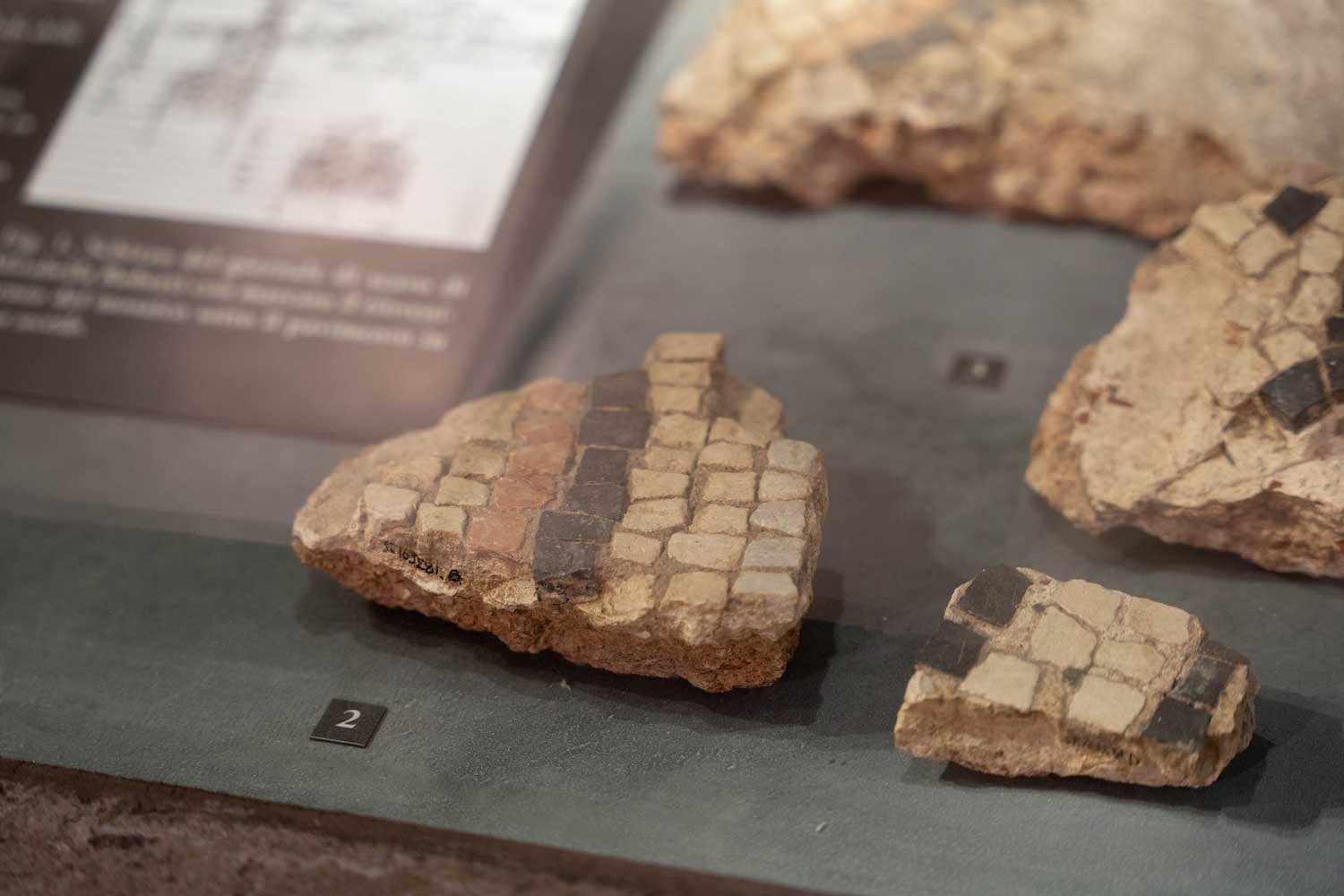
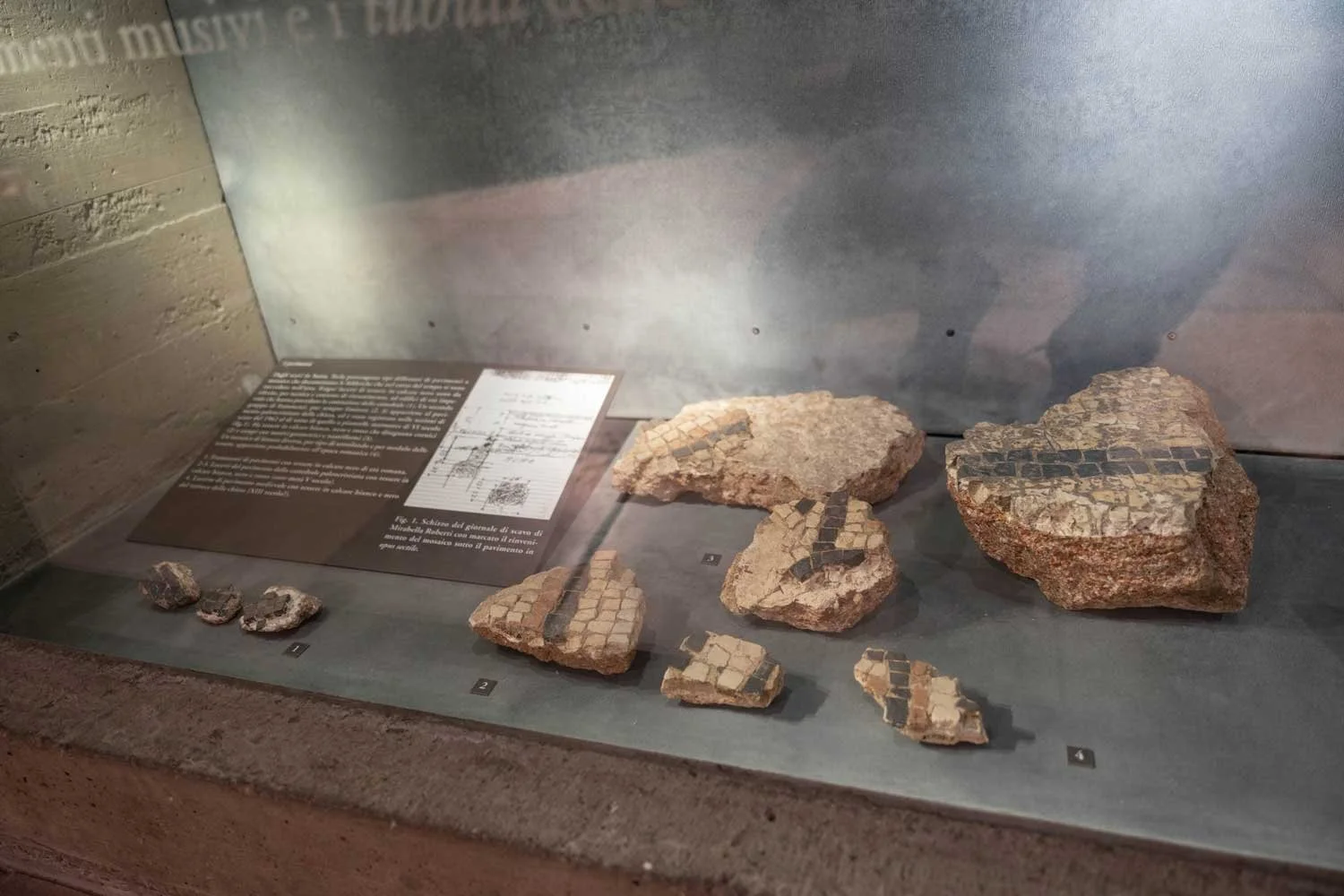
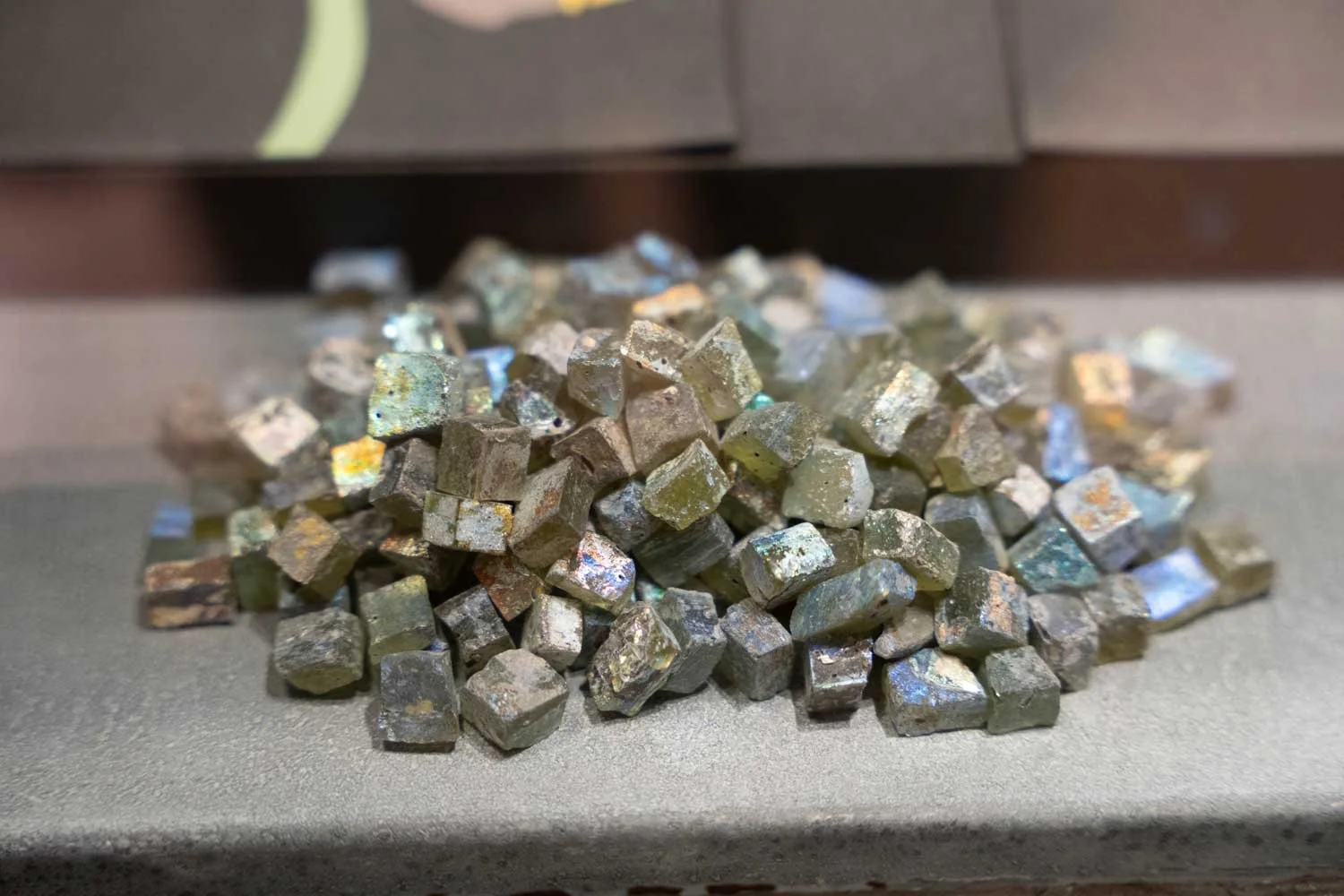
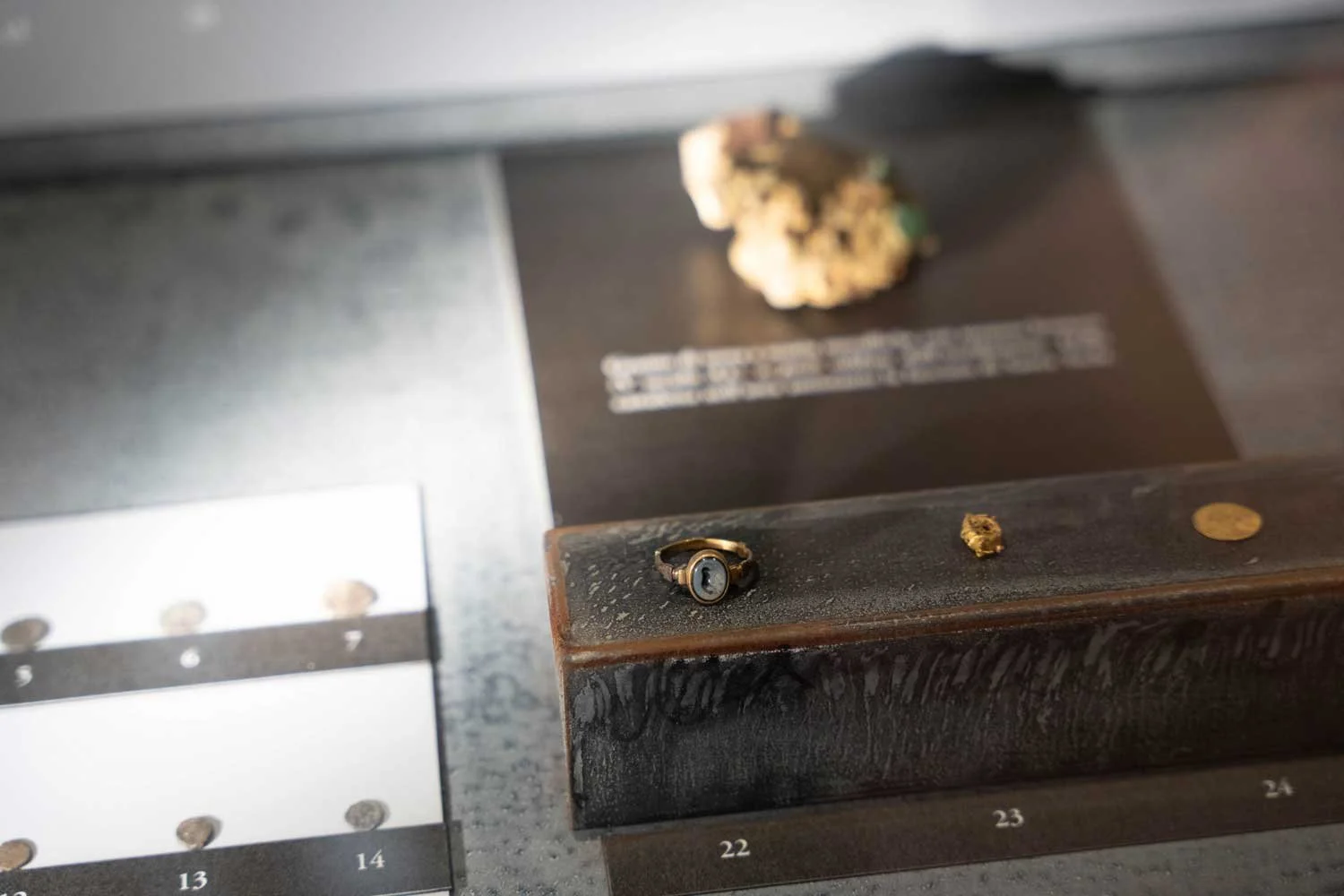
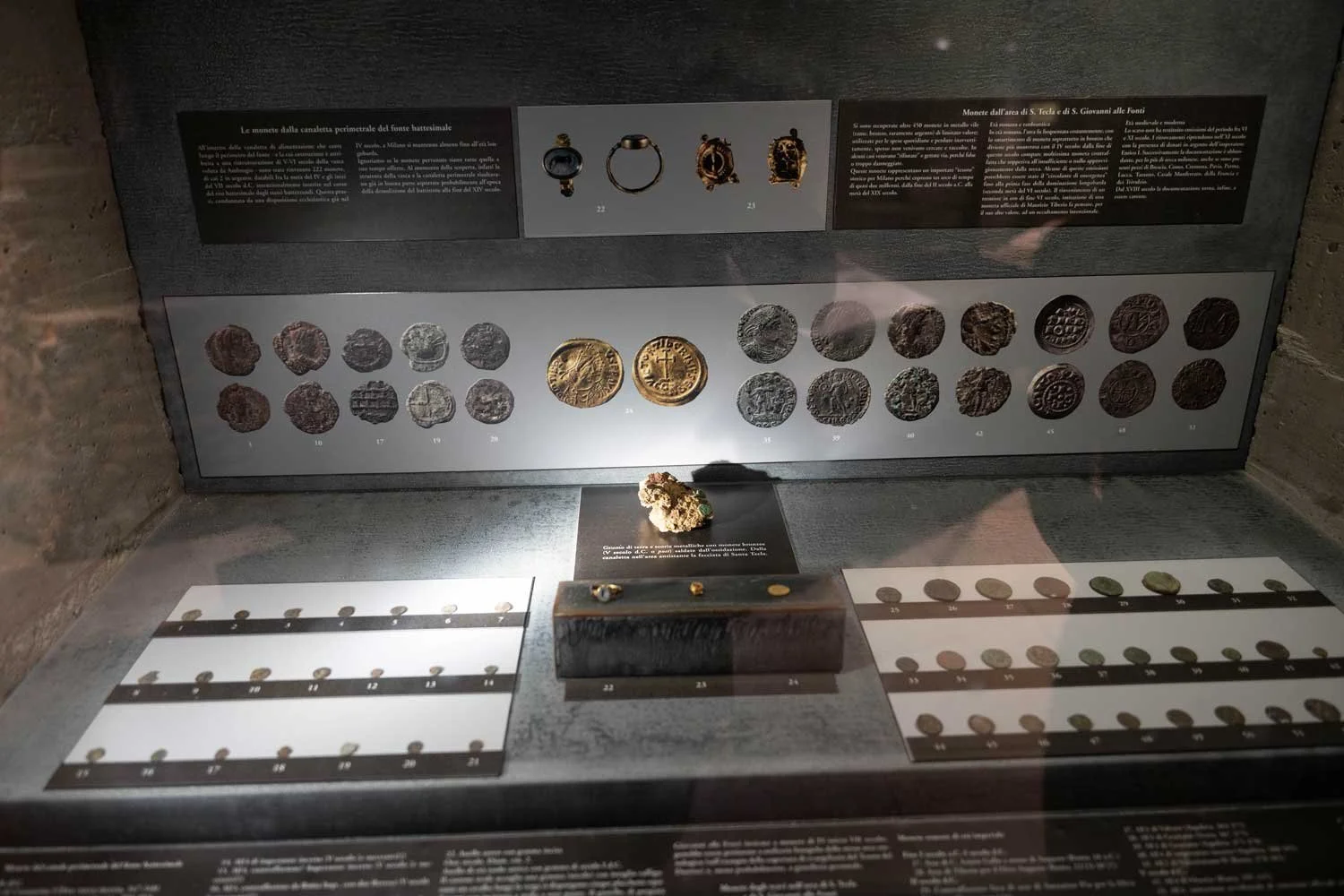
Display cases showcase unearthed artifacts: coins, goblets, jewelry, and pottery, many depicted in contemporary paintings for context. Tombs in Santa Tecla's apse suggest it served as a burial site for elites, including Visconti family members.
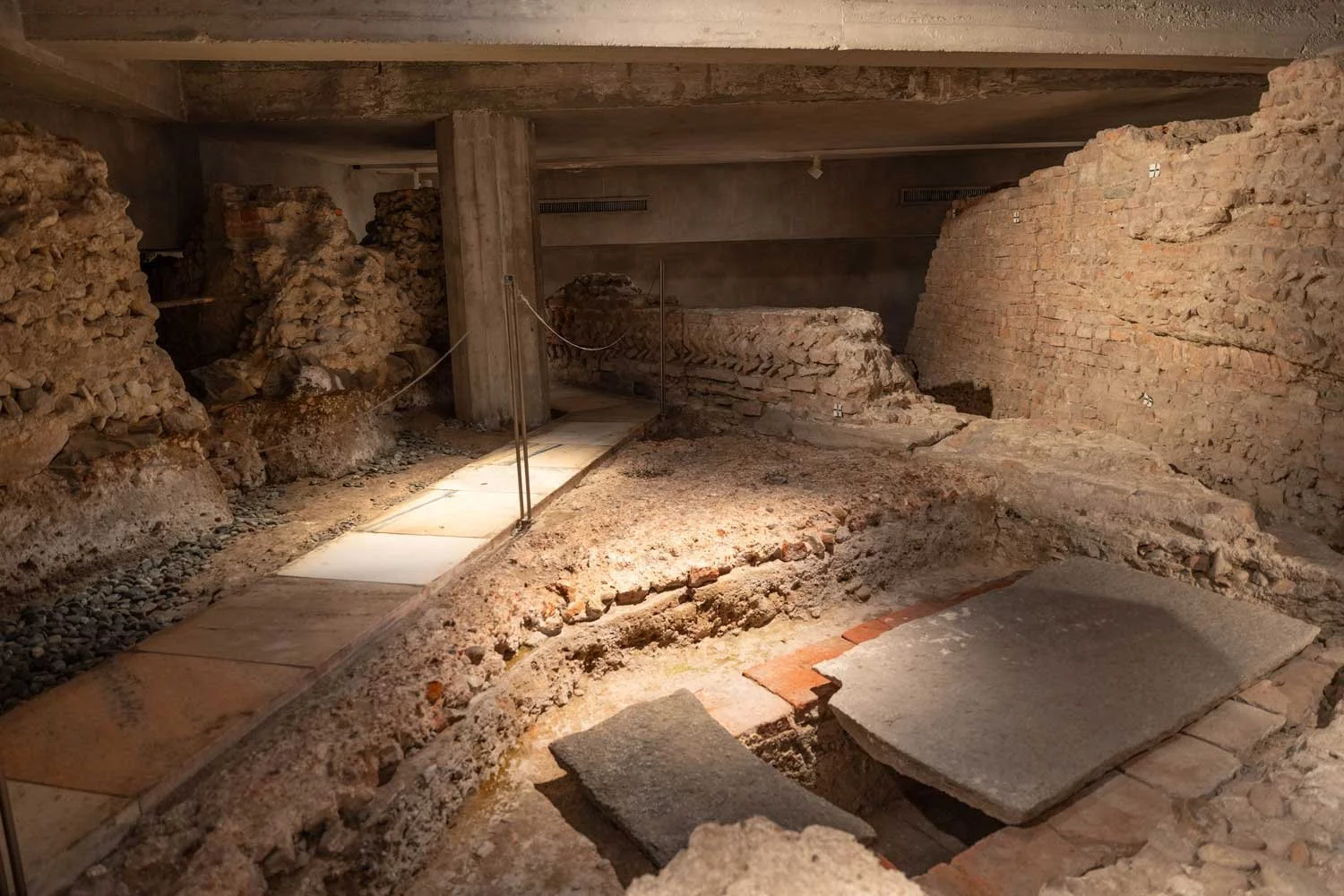
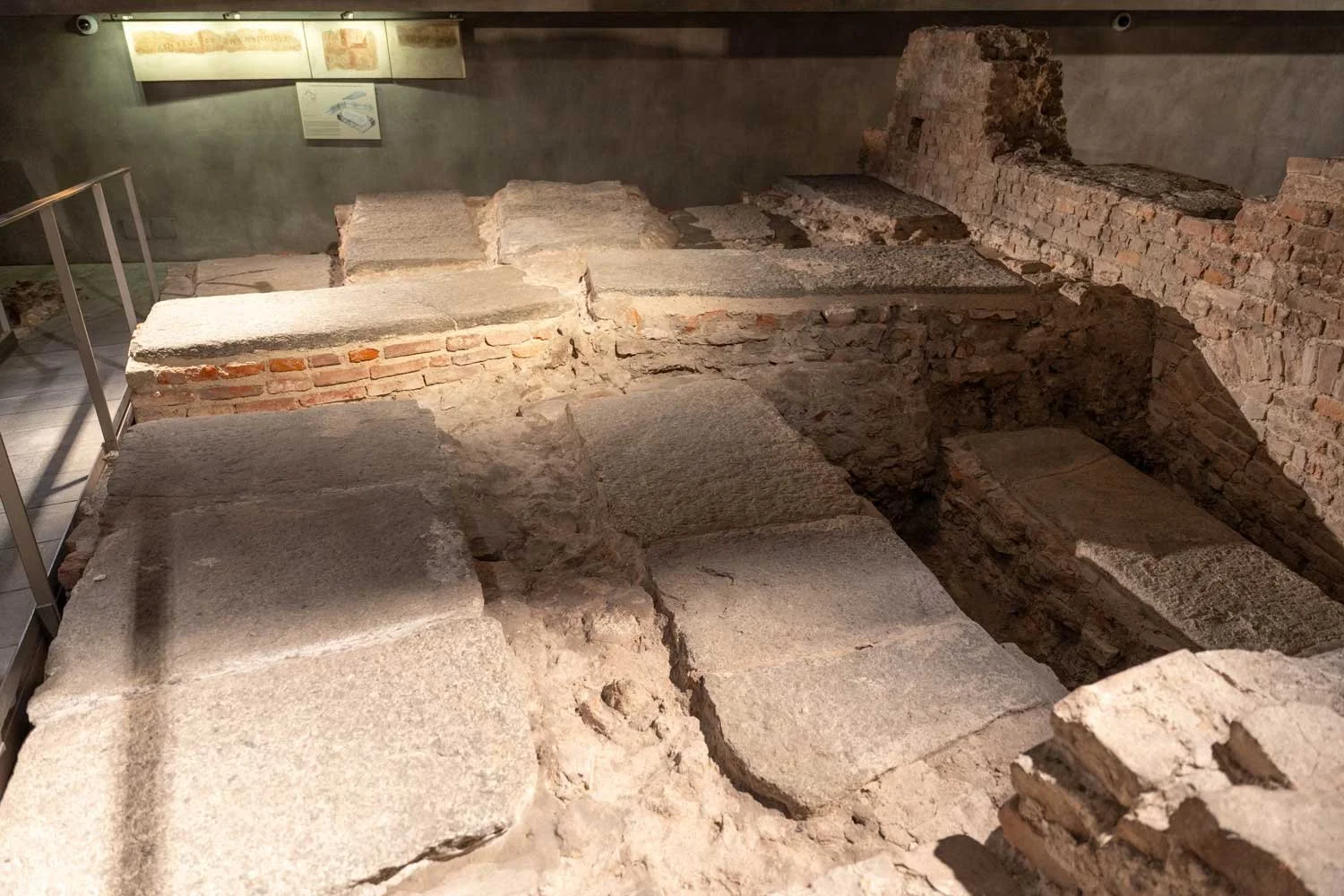
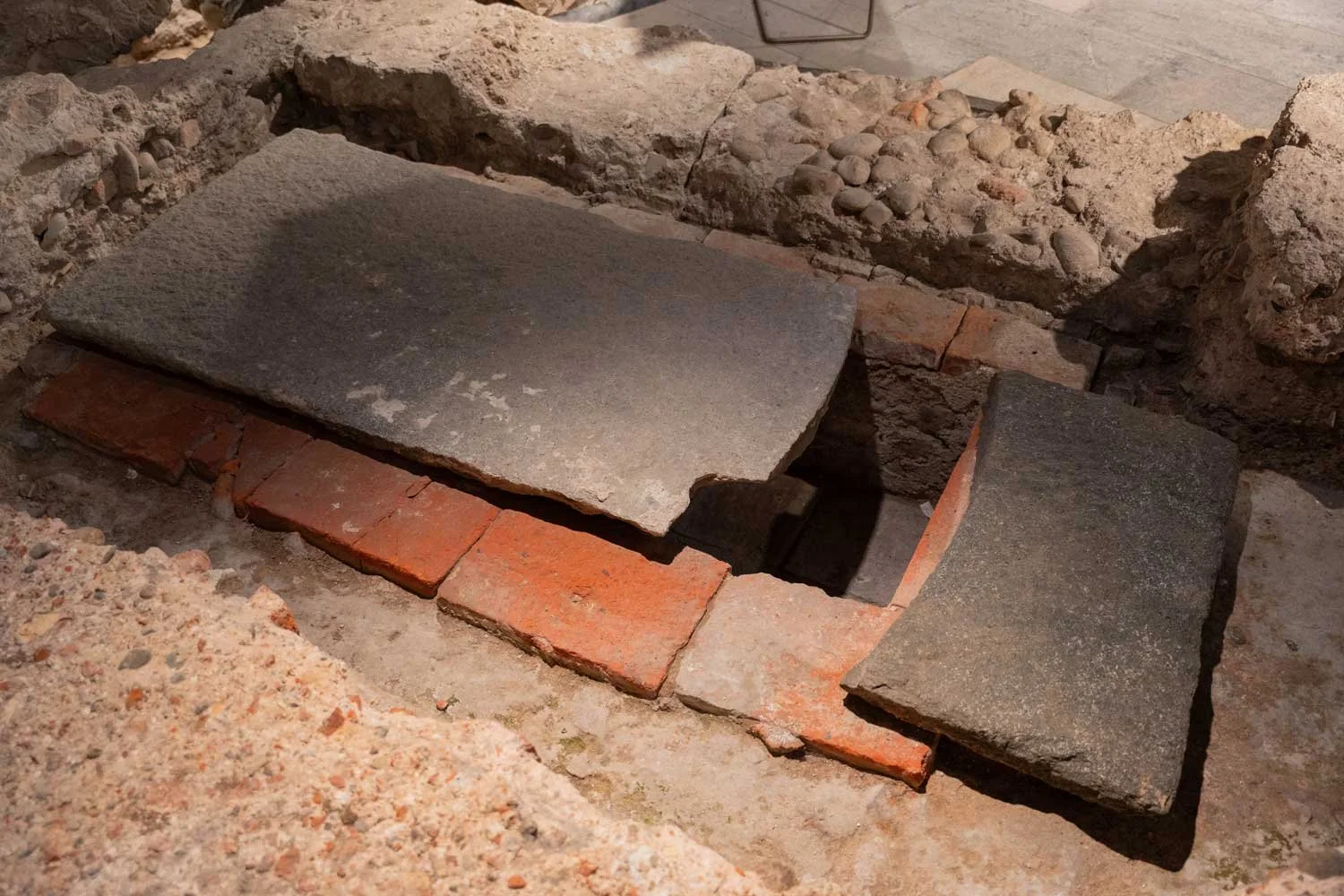
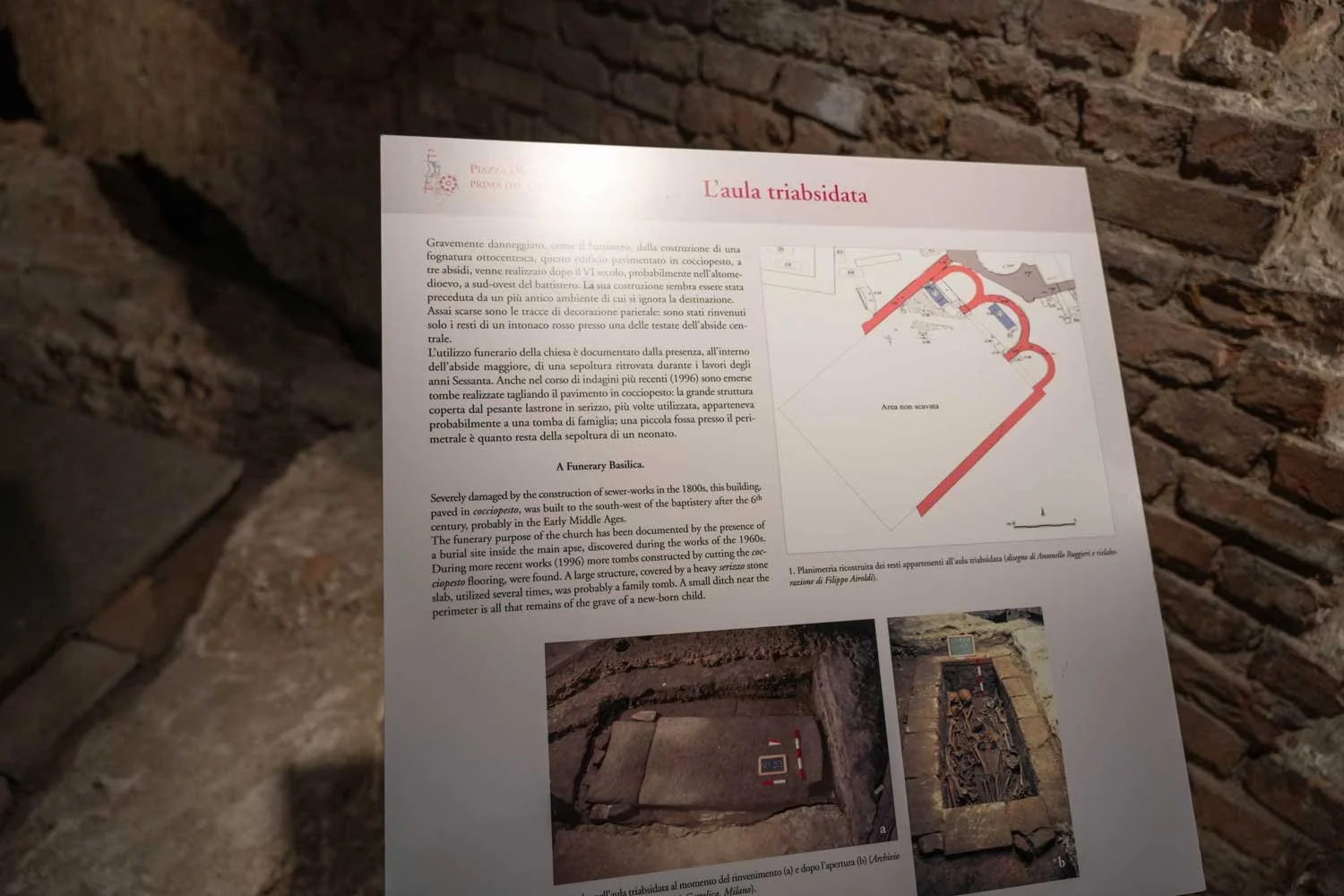
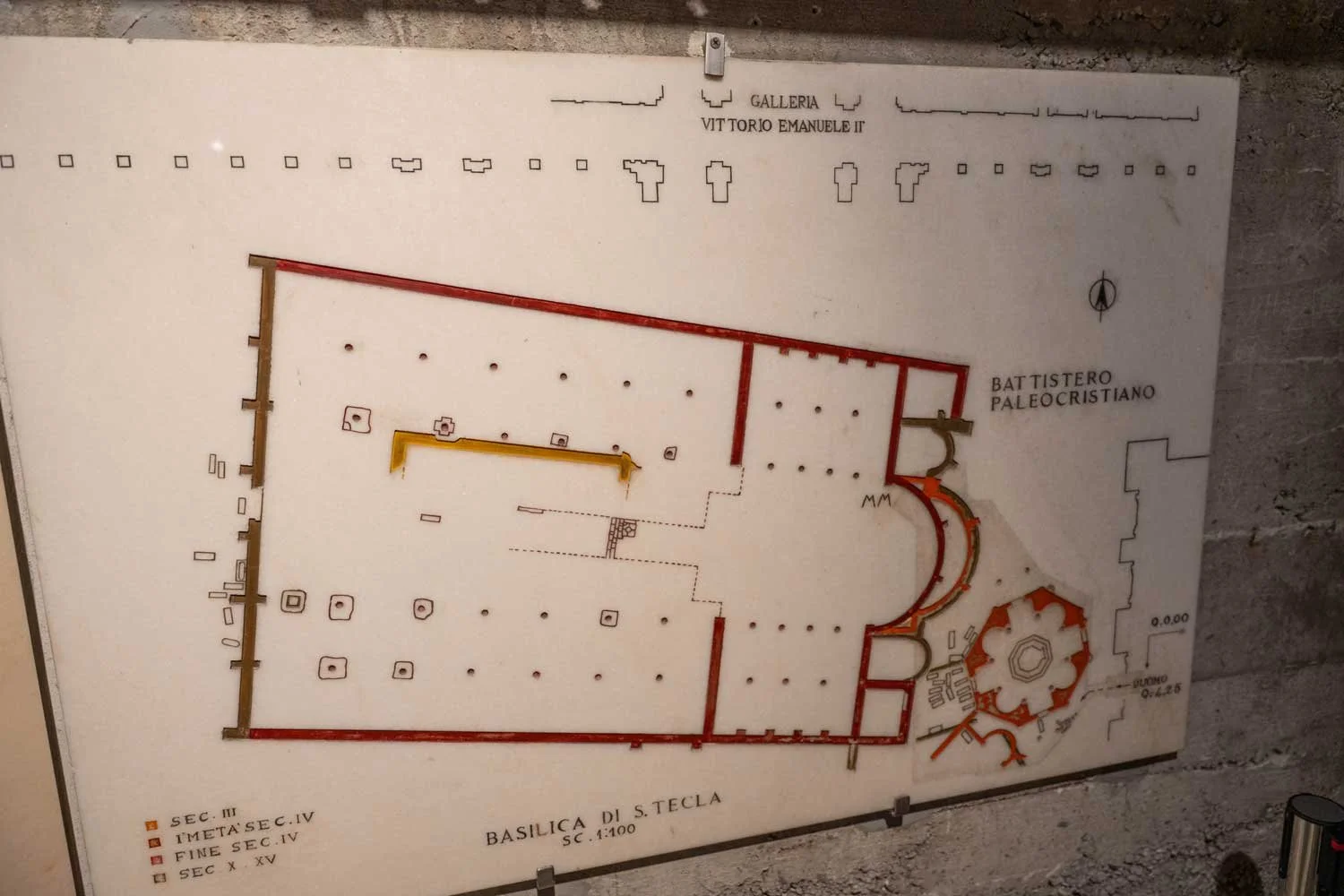
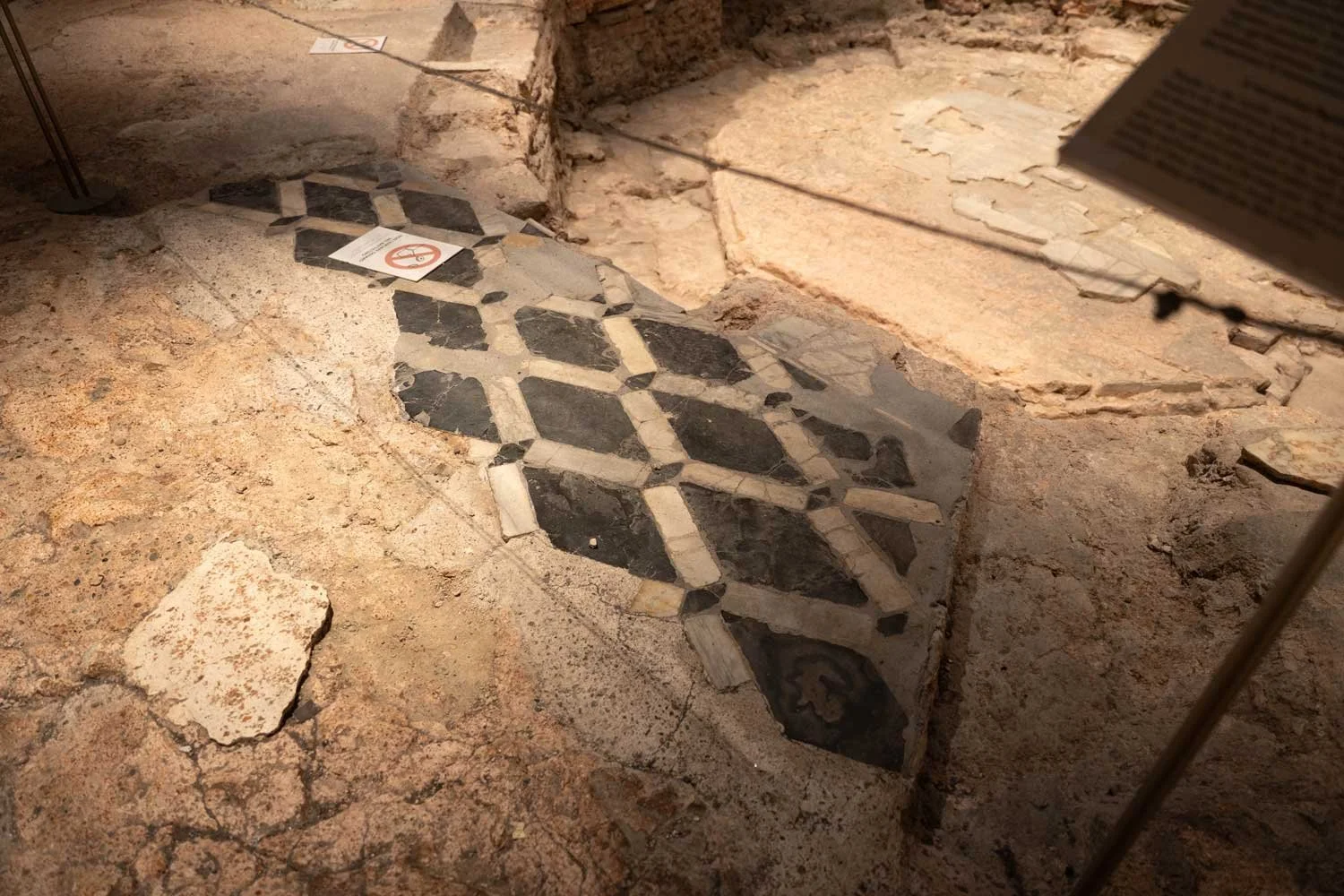
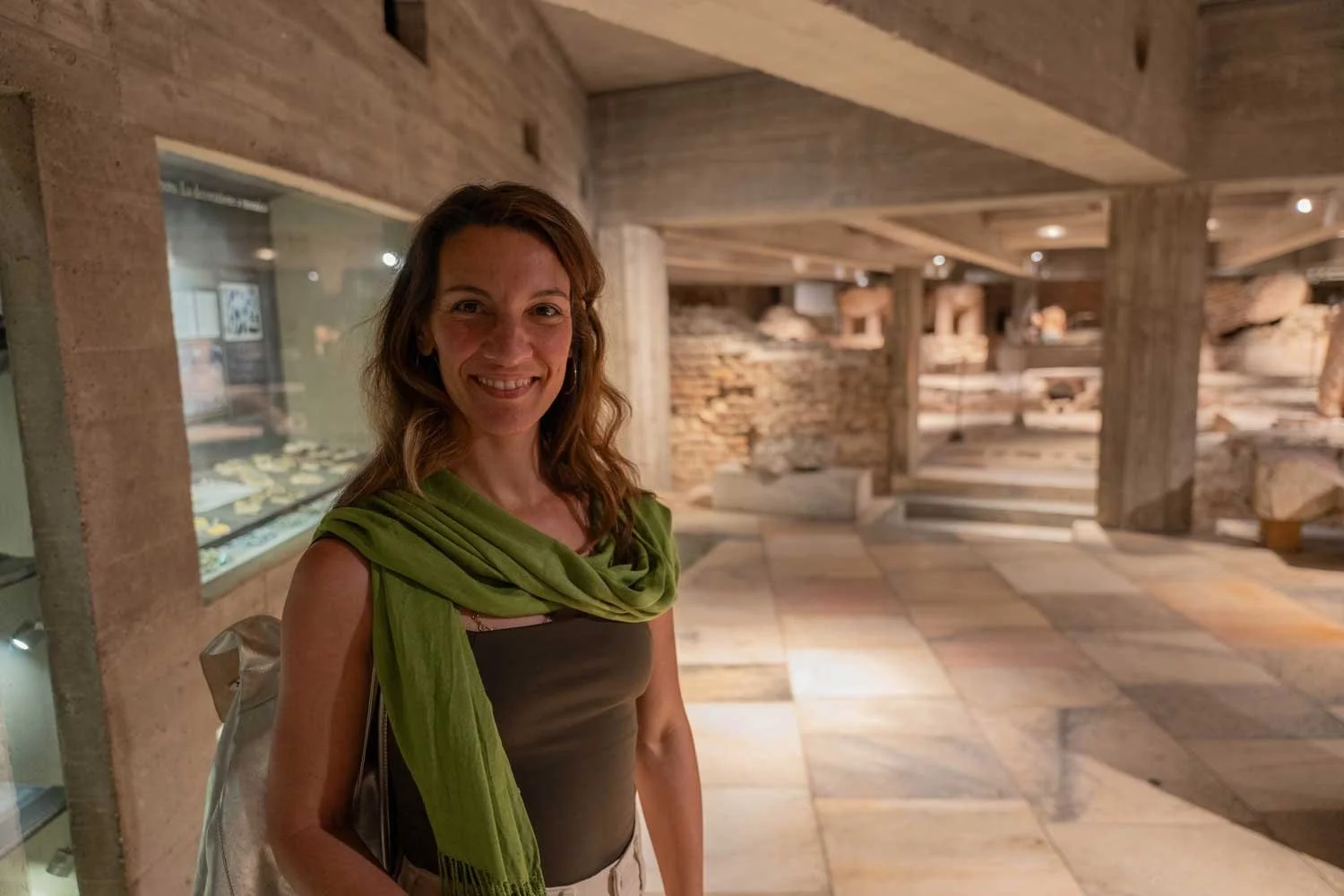
Though labels can be sparse, diagrams clarify layouts—the baptistery fronts Santa Tecla, with visible brick walls and pillars evoking ancient Milan. Discovered only in the 20th century during metro excavations, these ruins reveal layers of history, with some structures rebuilt and renamed over a millennium.
Touching 1,600-year-old craftsmanship is awe-inspiring, even if deciphering every detail proves challenging. It's a poignant reminder of the Duomo's foundations in early Christianity.
Planning Your Visit: Best Time to Visit Duomo di Milano and Ticket Tips
The best time to visit Duomo di Milano is early morning (opens at 9 AM) or late afternoon on weekdays to dodge crowds—avoid weekends, holidays, and peak summer months when lines swell. For the best experience, evenings offer illuminated views, though check seasonal hours.
Milan Duomo tickets vary by access: Basic cathedral entry ~€5–10; terraces add ~€10–15 (stairs cheaper than lift); full combos (cathedral, terraces, museum, archaeological area) ~€20–32. Book online in advance via the official Duomo website to skip queues, especially for timed terrace slots. Pro tip: The "Combo Stairs + Pinacoteca Ambrosiana" bundles multiple sites for value.
Dress code: Cover shoulders and knees—no shorts, tank tops, flip-flops or hats inside. Photography is allowed (no flash or tripods), but respect worshippers.
If planning a trip, reference my guide to selecting Milan Duomo tickets for the best deals.
Frequently Asked Questions
How long does it take to visit the Duomo di Milano? A full visit (cathedral, terraces, museum, archaeological area) typically takes 2–4 hours, depending on crowds and pace.
How much do Duomo di Milano tickets cost in 2026? Prices vary: Cathedral + Museum ≈ €10; Rooftops by stairs ≈ €16–22; Rooftops by lift ≈ €18–26; Combo passes (cathedral + terraces + extras) ≈ €20–32. Check official site for latest and see my guide to help make sense of the ticket variations.
Is it worth climbing to the Duomo terraces? Yes—stunning close-up views of spires, statues, and Milan skyline. Highly recommended for the "stone forest" experience.
Can you visit the Duomo terraces without stairs? There is an elevator option available (higher ticket price), however, it only allows you to skip the stairs on the way up. You still have to climb a short set of stairs to the second section and then descend about 250 stairs down to the ground floor.
What is the best time to visit the Duomo to avoid crowds? Early morning (right at opening) or late afternoon/evening on weekdays; avoid weekends and peak season (summer).
Is photography allowed inside the Duomo di Milano? Yes for personal use; no flash, tripods, or professional setups.
How do I see the Holy Nail (Santo Chiodo) relic? Visible year-round high in the apse (red light marks it). Public viewing during the annual Rite of the Nivola in September (lowered for ~40 hours).
Do I need to book Duomo tickets in advance? It’s not necessary, but I strongly recommend that you do. The ticket combos are quite extensive and it’s good to know exactly what you want to see before arriving - the terrace entry is particularly time sensitive.
Is the archaeological area included in every ticket? No—often in "Culture Pass" or combo tickets (e.g., cathedral + museum + arch. area ≈ €15); separate €5 add-on if you have cathedral entry.
What should I wear to visit the Duomo di Milano? Shoulders and knees must be covered; no shorts, sleeveless tops, miniskirts, flip-flops, or hats inside the cathedral. Modest attire required.
Closing Thoughts
The Duomo di Milano weaves artistry, faith, and history into an unparalleled marvel that continues to evolve. From its facade's legendary dragon to the rooftop's golden Madonnina, every element tells a story. I hope this expanded guide deepens your appreciation or motivates a visit to experience its wonders firsthand.